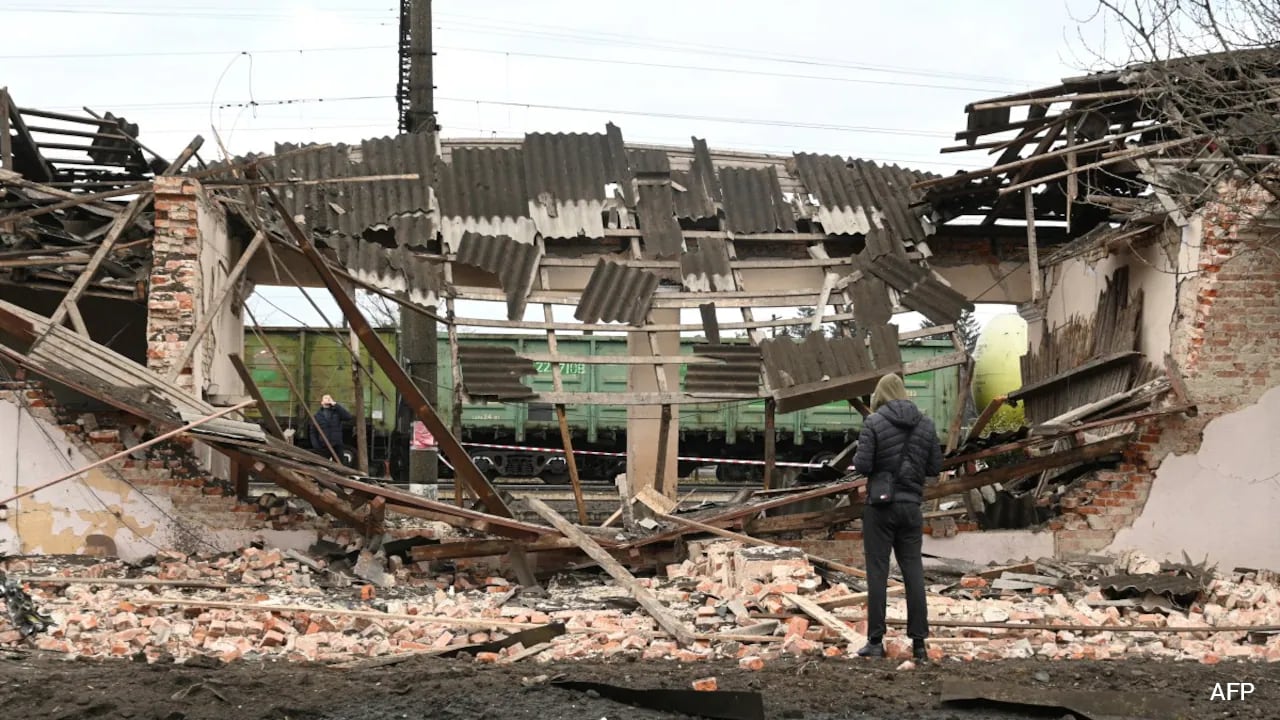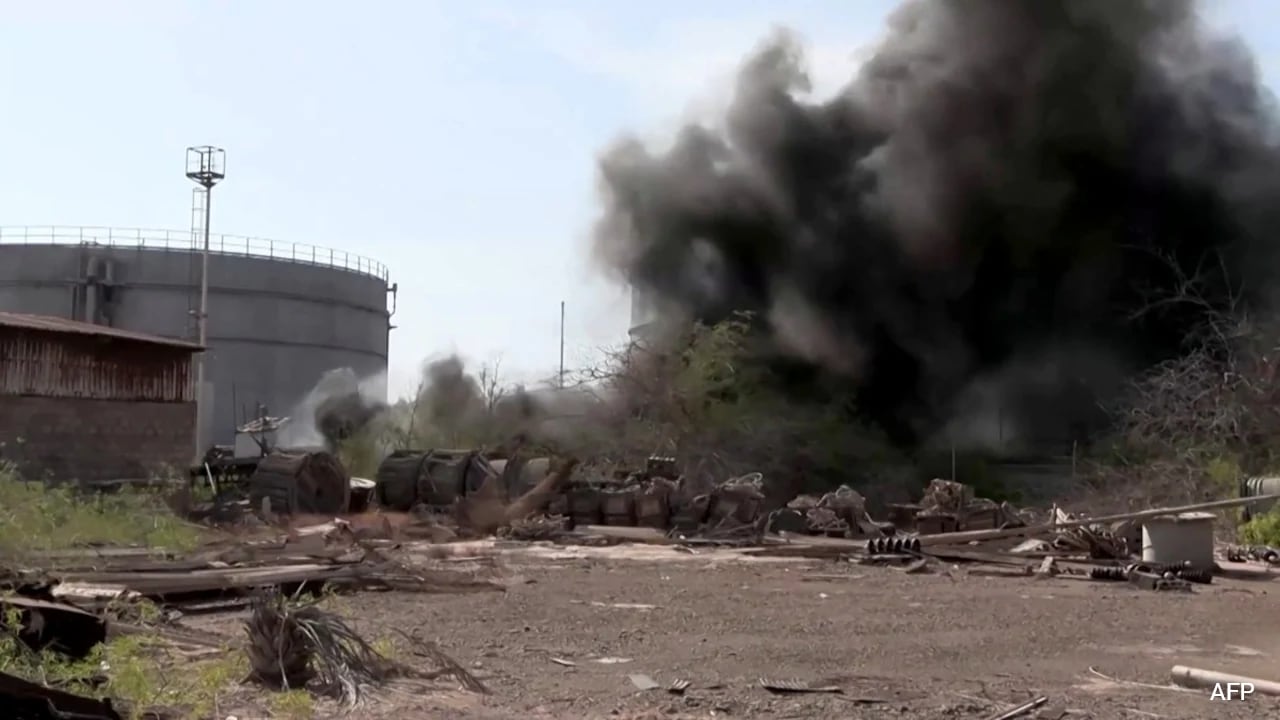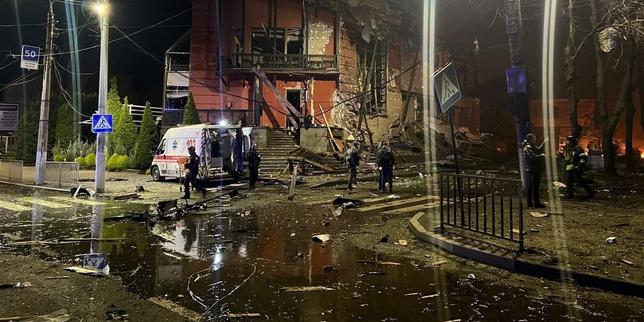
Every time Russian missiles hit Kryvyi Rih, Western newsrooms reach for the exact same lazy shorthand. They call it "Volodymyr Zelensky’s hometown." They frame the resulting carnage—two dead, forty-seven wounded, shattered apartment blocks, bloodied pavement—as a symbolic slap in the face to the Ukrainian president.
That framing isn't just intellectually bankrupt. It actively blinds the public to how modern attrition warfare actually functions.
When legacy outlets reduce a deadly strike on a major industrial hub to a psychological jab at one politician, they turn a calculated military and economic campaign into a soap opera. Moscow does not burn multimillion-dollar ballistic missiles just to hurt Volodymyr Zelensky’s feelings. If you want to understand why Kryvyi Rih bleeds repeatedly, you have to stop reading war coverage like a celebrity biography and start looking at steel, logistics, and cold-blooded military geography.
The "Symbolic Strike" Fallacy
The consensus narrative in mainstream live blogs is predictable. A missile lands in Kryvyi Rih. Within minutes, wire services push alerts highlighting the biographical trivia that Zelensky grew up there. Commentators immediately follow up with armchair psychology, arguing that Vladimir Putin is trying to humiliate his counterpart on a personal level.
This is a fundamental misreading of Russian targeting doctrine.
Russia’s aerospace forces operate with finite inventories of Iskander-M ballistic missiles, Kh-101 cruise missiles, and Shahed-136 one-way attack drones. Even with domestic defense production running on a wartime footing, long-range precision munitions remain expensive, scarce assets. Military planners in Moscow do not allocate scarce ballistic trajectories to score rhetorical points in foreign headlines.
They allocate them to break Ukraine’s capacity to fight.
Kryvyi Rih is not a sleepy provincial village famous only for producing a comedian-turned-president. Before the full-scale invasion, it was a city of more than 600,000 people stretching nearly 120 kilometers from north to south—one of the longest cities in Europe. More importantly, it sits atop the Kryvbas iron ore basin. It houses ArcelorMittal Kryvyi Rih, Ukraine’s largest integrated steelworks, alongside massive mining complexes, heavy machinery plants, and rail junctions that feed the southern front.
Calling Kryvyi Rih "Zelensky's hometown" in a headline about civilian casualties is like calling Pittsburgh "Andy Warhol's hometown" during a bombing raid on American steel mills. The trivia is technically true, and completely irrelevant to why the bombs are falling.
Geography Dictates the Casualty Count
Look at a map of southern Ukraine. Kryvyi Rih sits roughly 60 to 80 kilometers from Russian-held positions across the Dnipro River in Kherson and Zaporizhzhia oblasts.
In modern missile warfare, that distance is a death sentence for early warning systems.
When Russia launches cruise missiles from strategic bombers over the Caspian Sea, Ukrainian air defenders have up to two hours to track the incoming threats, scramble interceptors, and push civil defense alerts to residents’ phones. People have time to grab their children, walk down to basement shelters, and wait out the storm.
Kryvyi Rih does not get two hours. Often, it does not even get two minutes.
From launch sites in occupied Crimea or southern Kherson, an Iskander-M ballistic missile traveling at hypersonic terminal speeds covers the distance to Kryvyi Rih in roughly three to four minutes. Radar detects the launch. Sirens wail. Seconds later, high explosives detonate in residential neighborhoods, hotels, or administrative buildings.
That compressed timeline explains why strikes on Kryvyi Rih consistently produce massive numbers of wounded alongside fatalities. Two dead and forty-seven injured is the exact statistical signature of a blast wave hitting an unwarned civilian population standing near glass windows. People are caught in transit, in offices, in apartment kitchens—nowhere near concrete bunkers.
Yet live-blog journalism routinely glosses over flight-time physics to focus on political symbolism. By ignoring the geometry of the battlefield, reporters miss the actual operational crisis: Ukraine’s acute shortage of upper-tier ballistic missile defense systems capable of covering frontline-adjacent industrial cities.
Why Air Defense Math Breaks Down Near the Front
To stop an Iskander-M ballistic missile, you cannot rely on mobile machine-gun teams or legacy Soviet anti-aircraft artillery. You need advanced Western interceptors—specifically Patriot PAC-3 or SAMP/T batteries.
Ukraine simply does not have enough of them.
Every military analyst who has spent time studying European force structure knows the uncomfortable truth. NATO allies spent thirty years after the Cold War hollowing out their ground-based air defense networks. Raytheon and Lockheed Martin cannot conjure Patriot interceptors out of thin air overnight, and existing batteries have to be rationed across an entire country larger than France.
Kyiv gets dense coverage because it is the seat of government, the diplomatic hub, and a massive population center. Key energy substations and military airfields demand protection. That leaves cities like Kharkiv, Zaporizhzhia, Dnipro, and Kryvyi Rih exposed to a brutal calculus.
If Ukrainian commanders push a rare Patriot battery within 60 kilometers of the front line to shield Kryvyi Rih from ballistic strikes, they place that billion-dollar asset inside the range of Russian reconnaissance drones and counter-battery fire. We have already seen what happens when air defense launchers operate too close to the line of contact: Russian Orlan-10 and ZALA drones spot them, and an Iskander wipes out the launchers before they can fire.
So commanders face an impossible choice. Keep the interceptors back to survive, and accept that cities like Kryvyi Rih will absorb periodic ballistic hits. Or push them forward, risk losing irreplaceable hardware, and leave the entire region defenseless next month.
None of this nuance survives inside a breaking-news live ticker obsessed with Zelensky’s birthplace.
The Real Target Is Economic Asphyxiation
When Russian missiles slam into civilian infrastructure in Kryvyi Rih—wrecking hotels, apartment blocks, and municipal offices—critics rightly point out that these are war crimes under the Geneva Conventions. Indiscriminate attacks on civilian areas violate international humanitarian law.
Still, labeling an attack a war crime does not explain its strategic purpose. Moscow’s campaign against Ukrainian cities follows a ruthless logic of economic and demographic exhaustion.
Consider what happens to an industrial city after repeated, unannounced ballistic strikes:
- Workforce flight: Skilled metallurgists, engineers, and machinists pack up their families and move west toward Lviv or abroad to Poland and Germany. Without specialized labor, heavy industry cannot run at capacity even if the blast furnaces remain intact.
- Logistics paralysis: Rail yards and power substations feeding the mines suffer intermittent disruption, driving up the cost and time required to move raw materials.
- Fiscal drain: Every shattered apartment building forces the Ukrainian state to divert scarce capital from drone procurement and artillery shells toward emergency reconstruction, medical care for dozens of wounded civilians, and municipal repairs.
- Psychological attrition: Terrorizing a civilian population without warning erodes public morale far more effectively than hitting empty barracks. When people know the air raid siren might sound after the explosion, daily life becomes an exercise in low-grade trauma.
Russia’s General Staff, informed by decades of Soviet military theory on deep operations and rear-area disruption, understands that modern wars are won by collapsing the enemy’s economic base. Kryvyi Rih is a pillar of Ukraine’s domestic GDP and military-industrial survival. Bleeding the city dry is a cold, rational strategy to weaken Kyiv’s war effort from the inside out.
What People Get Wrong About Russian Strike Campaigns
If you look at public search queries and social media debates whenever a strike hits Kryvyi Rih, the same flawed questions keep surfacing. Dismantling them requires looking squarely at the mechanics of the war.
"Why doesn't Ukraine just intercept every missile?"
Because 100% air defense does not exist anywhere on earth. Even Israel’s multi-layered air defense network—operating over a territory a fraction of Ukraine’s size with unmatched interceptor density—experienced leakers during large ballistic salvos in 2024. Ukraine is defending 600,000 square kilometers with a patchwork of Western and Soviet systems while running low on ammunition. Intercepting 80% or 90% of incoming threats is a remarkable technical achievement, yet the remaining 10% still kills people and levels buildings.
"Are these strikes proof that Russia is running out of targets?"
The exact opposite. Residential casualties often spike when Russian planners shift from attacking hardened military bunkers—which require multiple direct hits with heavy warheads—to wide-area terror strikes against urban centers. Hitting a city block does not require pinpoint accuracy. A circular error probable of thirty meters still guarantees structural collapse, mass injuries, and front-page headlines.
"Does attacking Zelensky's hometown weaken his political standing?"
Historically, aerial bombardment of civilian centers almost never turns a population against its wartime leadership. During the London Blitz, British morale hardened around Winston Churchill. During the U.S. bombing campaigns in Vietnam, North Vietnamese resolve stiffened rather than fractured. In Ukraine, every ballistic strike on Kryvyi Rih reinforces the domestic consensus that negotiating with Moscow without ironclad security guarantees is national suicide. If Putin actually believed hitting Kryvyi Rih would topple Zelensky politically, he would be falling for his own propaganda.
The Uncomfortable Reality of Coverage Bias
Journalism thrives on narrative hooks. Editors know that readers scroll past complex breakdowns of iron ore output, terminal ballistic trajectories, and interceptor production bottlenecks. They click on human drama. Linking a missile strike to a recognizable global figure like Volodymyr Zelensky gives a foreign desk an instant hook.
There is a real cost to this editorial habit, however.
When Western audiences are fed a steady diet of "Putin strikes Zelensky’s hometown," they walk away believing the war in Ukraine is driven by personal spite between two leaders. That misconception fuels dangerous policy delusions. It convinces voters and lawmakers that the conflict could be resolved tomorrow if the two men simply sat in a room and set their egos aside.
It obscures the structural reality that Russia is prosecuting a systematic war of annihilation against Ukraine’s statehood, industrial capacity, and population centers.
Admittedly, my critique of mainstream war reporting carries its own blind spot. Focusing relentlessly on strategic calculus, munition inventories, and economic geography risks sanitizing human suffering into cold data points. Two people died in Kryvyi Rih. Forty-seven human beings had their bodies torn apart by shrapnel and falling concrete. Those lives matter infinitely more than any geopolitical chessboard, and journalists have a moral duty to document the human toll.
Honoring those victims, though, demands telling the truth about why they were targeted. They did not die because of where their president went to school. They died because an aggressive military power is systematically dismantling Ukraine’s industrial heartland while democratic allies drip-feed the air defenses needed to stop it.
How to Read War Coverage Without Getting Played
If you want to cut through the noise of live-blog journalism and understand what is actually happening on the ground in Ukraine, apply three filters to every breaking news alert:
- Check the munition type before reading the political analysis. If the strike involved ballistic missiles (Iskander-M, Kinzhal, or North Korean KN-23s) hitting a city within 150 kilometers of the front, the story is about warning times and air defense gaps—not political messaging.
- Look at the local economy, not the local celebrity. Identify the rail corridors, power substations, factories, and logistics hubs within ten kilometers of the impact zone. Every Ukrainian city under heavy fire sits on a vital military or economic artery.
- Track interceptor commitments, not rhetoric. Politicians offer condolences after every strike. Watch instead for actual deliveries of PAC-3 missiles, Iris-T batteries, and F-16 air-to-air munitions. Hardware stops warheads; statements do not.
Stop treating Kryvyi Rih like a biographical footnote in Volodymyr Zelensky’s Wikipedia entry. Start seeing it for what it really is—a frontline industrial fortress absorbing the full weight of a war of attrition while the world debates how much protection it deserves.