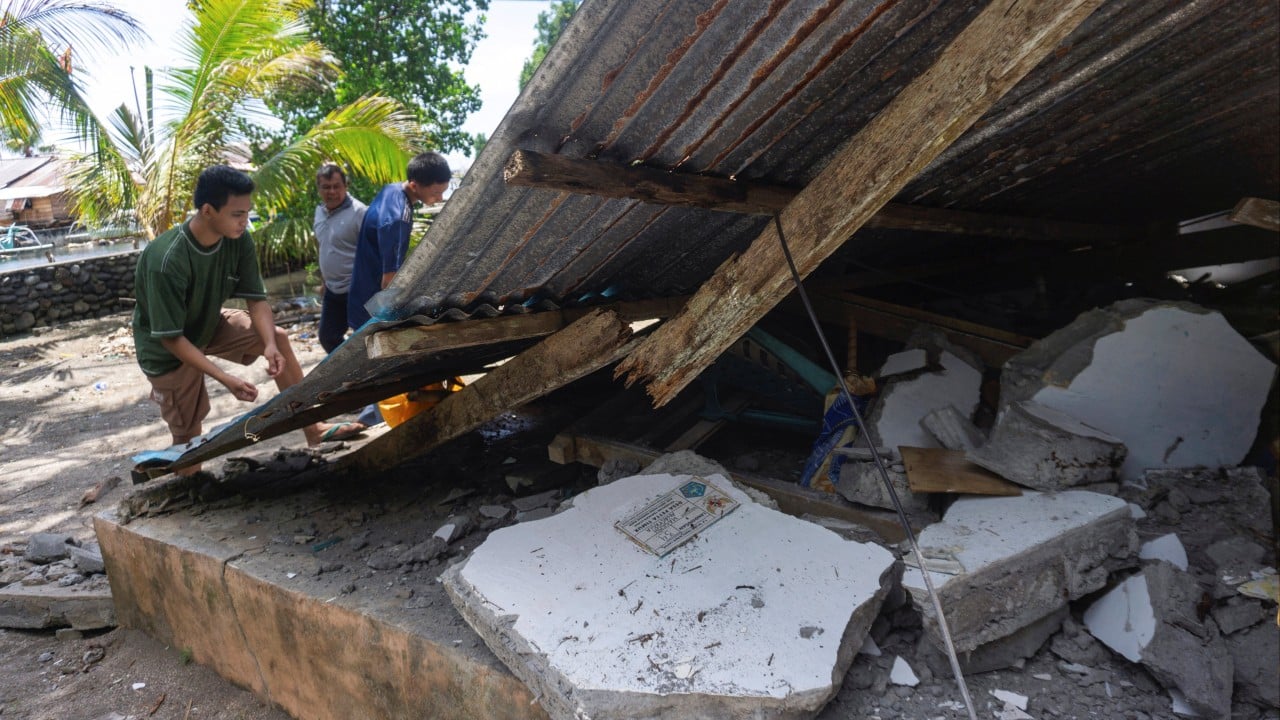
When a massive 7.8-magnitude earthquake violently shook Mindanao, the terrifying videos on social media immediately went viral. We saw school roofs collapsing in General Santos City and entire buildings swaying before crashing down. It felt like another wake-up call in a country that gets hit by tremors constantly. But the real panic isn't just about the southern islands. Every time Mindanao shakes, a collective shudder goes through the capital.
It forces everyone in Luzon to look at the ground beneath their feet and ask the terrifying question: What happens when this hits the capital?
The uncomfortable truth is that Metro Manila is sitting on a ticking time bomb known as the West Valley Fault. When this 100-kilometer fault line decides to slip, it will trigger what Filipinos call the Big One. We aren't talking about a distant, theoretical scenario. Experts from the Philippine Institute of Volcanology and Seismology (PHIVOLCS) state that this fault slips roughly every 200 to 400 years. The last major movement happened back in 1771.
Do the math. We are right in the strike zone. If you think the capital is prepared for a 7.2-magnitude earthquake, you're severely misjudging the reality on the ground.
The Nightmare Numbers Behind a 7.2 Magnitude Strike
Let's stop talking in vague terms. The potential destruction of the Big One has been extensively mapped out by the Earthquakes and Megacities Initiative (EMI) and government agencies. When a shallow 7.2-magnitude earthquake strikes directly beneath a hyper-dense metropolis of over 13 million people, the results are catastrophic.
- Immediate Casualties: Projections estimate at least 34,000 to 35,000 instant deaths.
- Injuries: Over 110,000 people will be severely injured in the initial collapse.
- Displacement: More than three million residents will immediately require evacuation and temporary shelter.
- Structural Ruin: Around 175,000 buildings will be heavily damaged or completely flattened.
The high casualty count isn't just because the ground shakes. It's because of where and how we build. The West Valley Fault runs directly through major urban hubs. It cuts across Quezon City, Marikina, Pasig, Taguig, and Muntinlupa, extending into neighboring provinces like Bulacan, Cavite, and Laguna.
There are thousands of structures built right on top of or within a 10-meter proximity to this active fault line. Residential subdivisions, hospitals, and at least 19 schools sit squarely in the danger zone. When the fault moves horizontally in a strike-slip motion, those foundations will simply tear apart.
Why the Mindanao Experience Exposes the Capital's Weakness
Mindanao has turned into an involuntary testing ground for Philippine disaster response. The region has endured multiple major quakes recently, proving that rural and provincial areas face massive hurdles. But comparing Mindanao to Metro Manila highlights a massive paradox. Mindanao has more space and lower population densities, which naturally limits casualties.
The capital has the exact opposite setup.
Metro Manila features an incredibly congested urban landscape. Think about the informal settler families living along narrow alleys in Tondo or the tightly packed mid-rise apartments across the metro. If a building collapses in a dense neighborhood, it creates a domino effect. It blocks narrow streets, completely trapping residents and preventing emergency vehicles from entering.
Another massive issue is fire. The 1990 Luzon earthquake and global disasters like the Tokyo seismic events show that broken gas lines and snapped electrical wires spark uncontrollable infernos. In a choked metropolis, fire trucks won't be able to get through the debris to put them out.
The Concrete Crisis of Weak Building Code Enforcement
The National Building Code of the Philippines looks great on paper. It requires structures to withstand severe seismic activity. Japan enforces its strict codes perfectly, which is why Tokyo can shrug off a magnitude 6.0 tremor with minor scratches. The Philippines handles this very differently.
Compliance is a massive issue. Millions of residential structures across Metro Manila are self-built homes. Families buy hollow blocks and mix concrete without engineering oversight, adding floors as their families grow. These structures are completely unreinforced. They will turn into concrete traps within the first ten seconds of severe shaking.
Even commercial developers cut corners. While modern high-rises in Bonifacio Global City or Makati use advanced structural dampers, the older mid-rise structures built in the 1970s and 1980s are incredibly vulnerable. Retrofitting these older buildings is expensive, and most property owners simply ignore the requirement because enforcement is weak.
How to Protect Yourself Before the Ground Starts Shaking
Waiting for the government to fix structural issues isn't an option. Survival depends entirely on personal and community preparedness. If you live in or around Metro Manila, you need to take specific steps right now.
Map the Fault Line
Don't guess where the danger is. Use the online VFS Atlas provided by DOST-PHIVOLCS or their FaultFinder web app. Type in your exact home and office address. You need to know if you're standing within the immediate danger zone of the West Valley Fault.
Audit Your Living Space
Walk through your house today. Heavy wardrobes, bookshelves, and appliances will crush you in an earthquake. Bolt tall furniture directly to the wall studs. Secure your heavy mirrors, television screens, and kitchen cabinets with latches. Make sure nothing heavy hangs directly over your bed.
Prepare a Long-Term Survival Go-Bag
Most people pack a small bag with a single water bottle and a snack. That's completely useless for the Big One. The capital's water lines and electrical grids will fail completely, and aid won't arrive for days. Your survival kit must sustain each family member for at least 72 hours.
- Four liters of water per person per day (for drinking and basic sanitation).
- Non-perishable, high-calorie food items that don't require cooking.
- A crank-powered or battery-operated transistor radio to receive emergency broadcasts when cell towers go dark.
- A heavy-duty flashlight with extra batteries.
- A comprehensive first-aid kit containing personal prescriptions and trauma bandages.
- A whistle to signal for help if you get trapped under debris.
Establish a Family Communication Protocol
When the earthquake hits, cell networks will crash instantly due to structural damage and massive traffic. You won't be able to call your family. You must agree on a physical meeting spot outside your neighborhood beforehand. Pick an open space like a public park or a wide sports field. Designate an out-of-province relative as your central contact person; long-distance SMS lines sometimes work even when local networks fail.
The terrifying images out of Mindanao aren't just news events to watch and forget. They are a direct look at our potential future. The West Valley Fault is locked and building up immense pressure every single day. The Big One is coming, and pretending otherwise is the biggest mistake we can make. Check your home, pack your survival gear, and secure your heavy furniture today.