Most people picture a Catholic pilgrimage as a quiet, solemn walk filled with whispered rosaries and blistered feet. They're completely wrong about Mexico City.
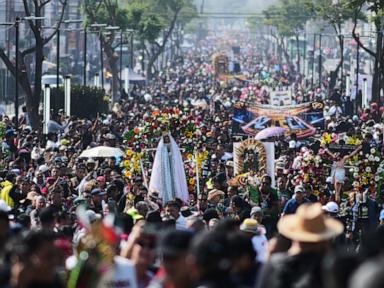
Every December, millions of devotees flood the streets leading to the Basilica of Our Lady of Guadalupe, and the soundtrack isn't just church bells or acoustic guitars. It's earth-shaking cumbia, reggaeton remixes, and high-voltage electronic beats blasted from towering stacks of speakers strapped to flatbed trucks. Mexico's Catholic street DJs—known locally as sonideros—have turned one of the world's largest religious gatherings into a rolling, multi-day block party.
If you've never stood next to a custom-built sonidero sound system at three in the morning on Calzada de Guadalupe, it's hard to grasp the sheer physical force of the bass. You don't just hear the music. You feel it rattle your ribcage while grandmothers, teenagers, and exhausted walkers dance side by side in the freezing night air.
What Most Outsiders Miss About Sonidero Culture
To understand why DJs are central to a Catholic pilgrimage, you have to understand what a sonidero actually is. They aren't just guys hitting play on a laptop.
Born in the working-class neighborhoods of Mexico City like Tepito and Peñón de los Baños in the mid-20th century, sonideros are mobile DJs, sound engineers, and community broadcasters rolled into one. Historically, when working-class families couldn't afford live bands for neighborhood weddings or saint's day festivals, sonideros stepped in with massive homemade speaker cabinets, turntables, and microphones.
Here's the catch that separates them from club DJs anywhere else in the world. A sonidero never shuts up—and the crowd loves them for it.
They talk constantly over the tracks, dropping echoing, reverb-drenched shout-outs (saludos) to specific neighborhoods, families, trucking companies, and pilgrims walking past their rigs. When a DJ yells out the name of a small town in Puebla or a specific family from Iztapalapa over a slowed-down Colombian cumbia beat, the crowd erupts. It transforms an anonymous sea of millions into a deeply personal, hyper-local celebration.
The Road to La Villa Isn't Supposed to Be Silent
Every year around December 12—the Feast Day of Our Lady of Guadalupe—millions of pilgrims (peregrinos) travel from every corner of Mexico to the Basilica at the foot of Tepeyac Hill in northern Mexico City. Some walk for weeks. Others ride bicycles in massive pelotons, run relay marathons carrying torches, or pack into decorated pickup trucks.
By the time they hit the final stretch along Calzada de Guadalupe or Avenida Insurgentes Norte, they're exhausted, cold, and running on pure adrenaline.
That's where the street DJs take over. Local neighborhoods, market vendors, and transport unions hire sonideros to set up along the pilgrimage routes as an offering (manda) to the Virgin of Guadalupe. Instead of handing out water bottles or tamales, these crews offer high-decibel joy.
Walk down the avenues surrounding La Villa on the night of December 11, and you'll pass dozens of competing sound systems parked just blocks apart. One rig might be spinning cumbia rebajada—a hypnotic, slowed-down style of cumbia pioneered in Monterrey—while the next block over blasts guaracha or high-energy tribal guarantees to keep tired legs moving.
It's a Devotional Act, Not a Hijacking
Critics from outside the culture sometimes look at the flashing strobe lights, smoke machines, and booming subwoofers and assume the religious meaning has been lost. That's a fundamental misreading of Mexican popular Catholicism.
In Mexico, faith isn't confined to quiet pews. Street festivals (fiestas patronales), fireworks, brass bands, and dancing have been woven into Catholic devotion for centuries. For a sonidero crew, hauling several tons of audio gear into the street, wiring up generators, and playing for free until dawn is a genuine act of gratitude.
Many of these DJs carry their own statues or framed banners of La Morenita—the Virgin of Guadalupe—mounted right on top of their mixing booths or speaker towers. Before the bass drops, they often bless the equipment or dedicate the night's set to family members who made it through a tough year.
Inside the Rigs That Power the Pilgrimage
You can't pull off an outdoor street party for tens of thousands of moving people with standard club gear. The technical setup behind these mobile rigs is serious business.
- Custom-Built Speaker Walls: Sonideros rarely rely on off-the-shelf PA systems. They commission carpenters and acoustic engineers to build massive folded-horn subwoofers and mid-range cabinets designed to throw sound blocks away without distorting.
- Heavy-Duty Transport: Moving this much gear requires flatbeds, box trucks, or modified trailers. Setting up a single major rig can take a crew of six to ten people several hours of heavy lifting and cable routing.
- The Effects Rack: The signature sound of Mexican street DJing comes from analog and digital delay units, pitch shifters, and echo processors wired directly into the DJ's microphone channel. Without that metallic, cavernous reverb on the voice, it doesn't sound authentic.
- Visual Spectacles: Modern rigs incorporate truss systems, LED video walls displaying religious imagery alongside psychedelic animations, and CO2 cannons that blast fog over the dancing pilgrims.
Where Tradition and Noise Collide
Not everyone loves a wall of subwoofers outside their apartment window at 4:00 AM.
As the sonidero scene has grown louder and more elaborate, tensions with city authorities and local residents have flared up. Mexico City officials regularly try to regulate street closures, generator safety, and noise ordinances during major religious holidays. In 2023, the city government formally declared sonidero culture part of Mexico City's Intangible Cultural Heritage—a massive win for DJs who spent decades fighting off police confiscations and permit headaches.
Even with official recognition, the balancing act remains tricky. Pilgrims need clear emergency lanes, nearby hospitals need manageable noise levels, and neighborhoods around Tepeyac Hill take a massive logistical hit every December.
Still, trying to ban street DJs from the Guadalupe pilgrimage would be like trying to ban fireworks from Independence Day. The community simply won't let it happen.
How to Experience It Without Getting Overwhelmed
If you're planning to witness Mexico City's December pilgrimage and the sonidero street parties firsthand, showing up unprepared is a mistake. Crowds routinely swell into the millions over a 48-hour window, and standard transit shuts down completely near the Basilica.
- Go on the night of December 11. The energy peaks between 9:00 PM and 3:00 AM on the eve of the feast day. That's when the largest processions arrive and the biggest sound systems are running at full tilt.
- Walk in from several stations away. Metro stations immediately adjacent to the Basilica—like La Villa-Basílica and Deportivo 18 de Marzo—frequently close or become dangerously bottlenecked. Get off a few stops south and walk north with the crowd along Calzada de Guadalupe.
- Dress for cold concrete, not tropical weather. Mexico City sits at over 7,300 feet above sea level. December nights drop into the 40s Fahrenheit (around 5 to 8 degrees Celsius), and standing on cold asphalt for hours will chill you fast if you only pack a light jacket.
- Protect your ears and keep your belongings tight. Standing ten feet from a sonidero bass bin without earplugs will leave your ears ringing for days. Bring high-fidelity earplugs, carry only cash and essentials in a front-facing crossbody bag, and expect zero cell reception when the crowd hits peak density.
Skip the tourist bus tours and walk the avenue on foot instead. Grab a hot atole or a cup of ponche from a street vendor, step into the middle of a cumbia circle next to a truck covered in neon lights, and watch how Mexico City turns exhaustion into celebration.