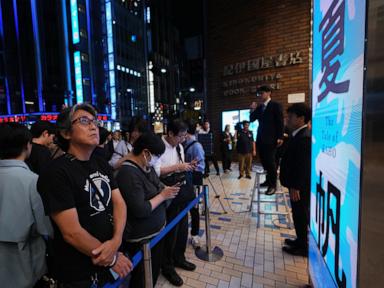
The rain in Tokyo does not fall so much as it hangs, a damp wool blanket pressing the neon glow of Shinjuku down into the asphalt. It is April. It is almost midnight. By all accounts of modern efficiency, the hundred or so people standing outside the Kinokuniya bookstore should not be there. They have smartphones in their pockets. They have high-speed internet waiting at home. If they wanted data, facts, or plot summaries, they could wait six hours and scrape the digital universe for everything they needed to know.
Yet, they stay. They shift from foot to foot. They clutch umbrellas. Expanding on this idea, you can find more in: The Geopolitical Economy of Cultural Resistance Analytics of the 51st State Friction.
They are waiting for paper. Specifically, they are waiting for The City and Its Uncertain Walls, the first novel in six years from Haruki Murakami.
To understand why a crowded sidewalk in Tokyo at midnight matters, you have to look past the standard news copy. The wire services will tell you the facts: Murakami is 74. The book is his first major release since Killing Commendatore. The publisher ran a midnight release event. These are data points. They are cold. They completely miss the invisible tether pulling these people out of their warm apartments and into the chilly night air. Observers at Rolling Stone have shared their thoughts on this situation.
This is not a story about a book release. It is a story about the stubborn, human refusal to let loneliness win.
The Architecture of Waiting
Consider a young woman near the front of the line. Let us call her Mayu. She is twenty-four, wears a trench coat damp at the shoulders, and works in digital marketing—a job that requires her to stare at metrics and optimization charts for forty-five hours a week. She lives alone in a room that smells faintly of tatami and convenience store tea. For Mayu, and for many in her generation, the world feels increasingly like a series of glass panes. You can see through them, but you can never quite touch what is on the other side.
When Murakami publishes a book, those glass panes shatter.
"I wanted to be here the exact moment the world changed," Mayu says, her voice small against the rumble of the late-night Chuo line train overhead. She is not talking about a geopolitical shift. She is talking about the internal landscape.
For decades, Murakami has operated less like a traditional novelist and more like a cultural tuning fork. His characters wander through jazz bars, cook spaghetti to classical music, and inevitably fall through wells or alleyways into alternate realities where the rules of logic bend. It is easy for critics to dismiss this as mere surrealism. But to the people standing in the midnight damp, it feels like the only accurate description of modern life. We all feel like we are living in a parallel version of our own lives sometimes. We all feel the weight of things that went missing years ago.
The crowd outside Kinokuniya is quiet. This is not the raucous, adrenaline-fueled line of a video game launch or a midnight superhero movie premiere. There are no costumes. There is very little chatter. It feels more like a vigil.
The Six-Year Silence
Why the intense gravity? Look at the timeline. The last time the world received a major Murakami novel, the global social fabric looked entirely different. Since then, humanity has collectively undergone a period of profound isolation. We locked our doors. We watched the world through screens. We learned the precise psychological cost of being cut off from one another.
During that long silence, Murakami was writing. He was working in his study, surrounded by thousands of vinyl records, waking up at 4:00 AM to run and write, channeling the collective subconsciousness of a traumatized planet.
When word leaked that the new novel was based on a story he published in a magazine back in 1980—a story he felt he hadn't gotten quite right—the anticipation shifted. This wasn't just a new product. This was an old master returning to an old wound, trying to heal it with forty more years of life experience.
The book itself is a massive physical object, thick and heavy, wrapped in an understated dust jacket. It represents hours of tactile engagement in an era where our attention spans are chopped into fifteen-second intervals. Buying it at midnight is an act of rebellion against the scroll. It is a commitment to slow down.
Inside the Glass Doors
The countdown begins. It is not shouted by a master of ceremonies. It is a collective glance at wristwatch faces and phone screens.
11:58.
11:59.
Midnight.
The glass doors of the bookstore slide open. The staff, dressed in neat aprons, bow deeply. There is no mad rush. The line moves with a rhythmic, almost solemn pace. Cash registers begin to click and chime. The sound of crisp paper bags being handed over fills the room.
Mayu steps up to the counter. She hands over her yen. The cashier hands her the book. For a brief second, both women hold onto the volume, a shared weight between them before the transaction is complete.
This is the moment the wire services photograph—the smiling fan holding the book up for the lens. But the photograph misses the texture. It misses the smell of ink and fresh glue that wafts through the bookstore air, a scent that carries the promise of hundreds of pages of unhurried solitude.
Outside, a man named Shunsuke sits on a concrete planter just out of the rain's reach. He has already opened his copy. He is thirty-eight, a salaryman who took the next day off work specifically for this. He isn't waiting to get home. He reads the first sentence under the yellow glare of a streetlamp.
"I needed to feel the weight of it in my hands," Shunsuke says, without looking up from the page. "When you read his words, it feels like he is writing the thoughts you were too afraid to say out loud."
The Solace of the Weird
It is a strange paradox that an author known for writing about profound isolation is the one who brings people together in the middle of the night. His stories are populated by people who cannot connect, who lose their lovers, who speak to cats, who get stuck in deep, dark places.
Perhaps that is the secret. When you are lonely, a cheerful story can feel like an insult. It highlights what you lack. But a story that acknowledges the darkness—that treats your internal melancholy as a vast, mysterious, and deeply important kingdom—makes you feel seen. It validates the ache.
The midnight buyers do not expect answers from the new book. They do not expect a neat resolution to the complexities of the 21st century. They expect a companion.
By 1:00 AM, the sidewalk outside the bookstore begins to clear. The neon signs of Shinjuku reflect in the widening puddles, long streaks of red and green bleeding into the dark pavement. The umbrellas scatter toward the subway entrances, carrying their prizes wrapped carefully in plastic bags to protect them from the mist.
Mayu walks toward the station, her hand resting inside her pocket, fingers brushing against the sharp corner of the book's cover. She will not sleep tonight. She will go home, turn on a small lamp, pour a glass of water, and open the cover.
In thousands of small apartments across Tokyo, the same light is flicking on. The readers are going underground into Murakami's world, together, apart.