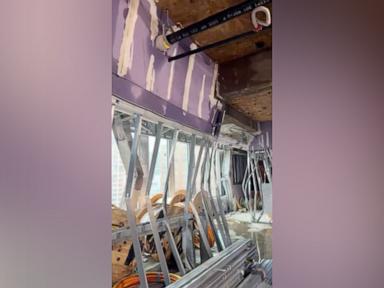
The sirens in Midtown Manhattan yesterday afternoon delivered exactly what the local news cycle craves: instant, unthinking panic. Commuters scrambled, police cordoned off blocks, and news anchors breathlessly reported that a construction site had been evacuated because load-bearing steel beams were "buckling." The immediate, lazy consensus formed within minutes: greedy developers, lax oversight, and a city on the brink of structural collapse.
It is a comforting narrative for a risk-aversive public. It is also entirely wrong.
As someone who has spent two decades auditing structural engineering firms and analyzing commercial real estate risk, I look at the Midtown evacuation and see a completely different crisis. The real crisis isn't that a beam deformed under load. The crisis is that our collective intolerance for temporary, controlled structural behavior is strangling urban development, inflating construction costs by billions, and forcing engineers to over-design buildings to a degree that defies basic economic logic.
We don't have a construction safety problem. We have a structural literacy problem.
The Myth of the Rigid Building
The public views steel buildings as static, unyielding monoliths. If a beam bends, it must be breaking.
This misconception ignores the fundamental mechanics of modern engineering. Steel is an elastic material. It is designed to deflect, bend, and redistribute stress long before it reaches a point of ultimate failure. What the mainstream media identifies as "buckling" is, in a vast majority of active construction scenarios, a temporary state of deformation known as elastic buckling or controlled deflection under transient construction loads.
When a skyscraper is being erected, the building undergoes its most chaotic stress testing. Temporary shoring, wet concrete pours, and shifting crane loads subject individual structural members to localized forces that they will never experience once the building is tied together and completed.
When an engineer notices a beam deflecting beyond the specified serviceability limit during a concrete pour, the protocol is clear: halt the pour, stabilize the member, and redistribute the load. This is not a failure of the system; it is the system working exactly as intended. Evacuating three surrounding blocks because a temporary structural member deflected an extra inch is the engineering equivalent of calling the fire department because your car’s check-engine light came on during a routine oil change.
The Financial Cruelty of Over-Engineering
Every time the city panics over a bending piece of iron, the regulatory screws tighten. The result? structural engineers are forced to use massive safety factors that defy rational risk assessment.
Consider the basic calculation for structural steel design under the American Institute of Steel Construction (AISC) specifications. Engineers routinely apply a factor of safety that forces components to be engineered to handle two to three times the maximum theoretical load the building will ever see. When you layer local municipal codes on top of that, you get structures that are essentially heavy, expensive bunkers disguised as office towers.
Imagine a scenario where aviation regulations required every commercial airliner to be built out of solid titanium to ensure it could withstand a direct hit from a surface-to-air missile. Sure, those planes would be "safer," but tickets would cost $50,000, and the aviation industry would collapse.
That is precisely what we are doing to our cities. By treating every minor structural anomaly as a near-catastrophic event, we push insurance premiums through the roof, extend construction timelines by years, and ensure that only mega-corporations can afford to build in major urban centers. We are trading economic vitality for a psychological security blanket.
Who Profits From Your Structural Terror?
To understand why the "buckling beam" narrative persists, you have to look at who benefits from the hysteria.
- Plaintiff Attorneys: A halted job site is a goldmine for litigation. If a sub-contractor can claim they were exposed to an "unsafe working environment" due to a deflecting beam, the lawsuits write themselves.
- Municipal Bureaucracies: Every high-profile evacuation justifies the expansion of local building departments. More inspectors, more red tape, more permit fees.
- Traditional Media: A story about a routine structural adjustment doesn't get clicks. A story about a skyscraper threatening to tip over onto a Broadway theater does.
The losers in this equation are the tenants, the taxpayers, and the city itself. The skyrocketing cost of structural compliance is a direct driver of the affordability crisis in commercial and residential real estate. You cannot demand that every building be built to survive an asteroid impact and then wonder why rent is $5,000 a month.
The Real Risk Is Doing Nothing
Let’s be brutally honest about the alternative. If we continue to penalize developers and engineers for routine structural movements during construction, the industry will stop innovating entirely. We will be stuck building low-rise, uninspired concrete boxes because nobody wants to take the reputational risk of using advanced, lightweight high-strength steels that require precise, dynamic tensioning during erection.
There is an inherent downside to a more rational approach: it requires accepting that construction sites are inherently dynamic, slightly unpredictable industrial zones. It means recognizing that a beam can bend without a building falling down. It means telling the public to look away and let the engineers do their jobs.
But the current trajectory is unsustainable. We are bankrupting our future to appease the anxieties of a population that doesn't understand the difference between yield strength and ultimate tensile capacity.
Stop looking at the Midtown evacuation as a warning sign of structural decay. It is a warning sign of cultural fragility. The next time you see a headline about a buckling beam, don't look for a place to hide. Look for the engineer who is currently fixing the issue, and thank them for building something that actually moves.
Fix your risk tolerance, or stop building altogether.