Water has a way of looking eternal until you try to build something on top of it.
I remember standing on the edge of a jagged limestone shelf years ago, watching the salt spray catch the afternoon sun. It looked like diamonds floating in the air. People see that kind of beauty and they think ownership. They think permanence. They think that if they write a big enough check, they can freeze a shifting piece of the earth and call it home.
Mark Pentecost found out how expensive that illusion really is.
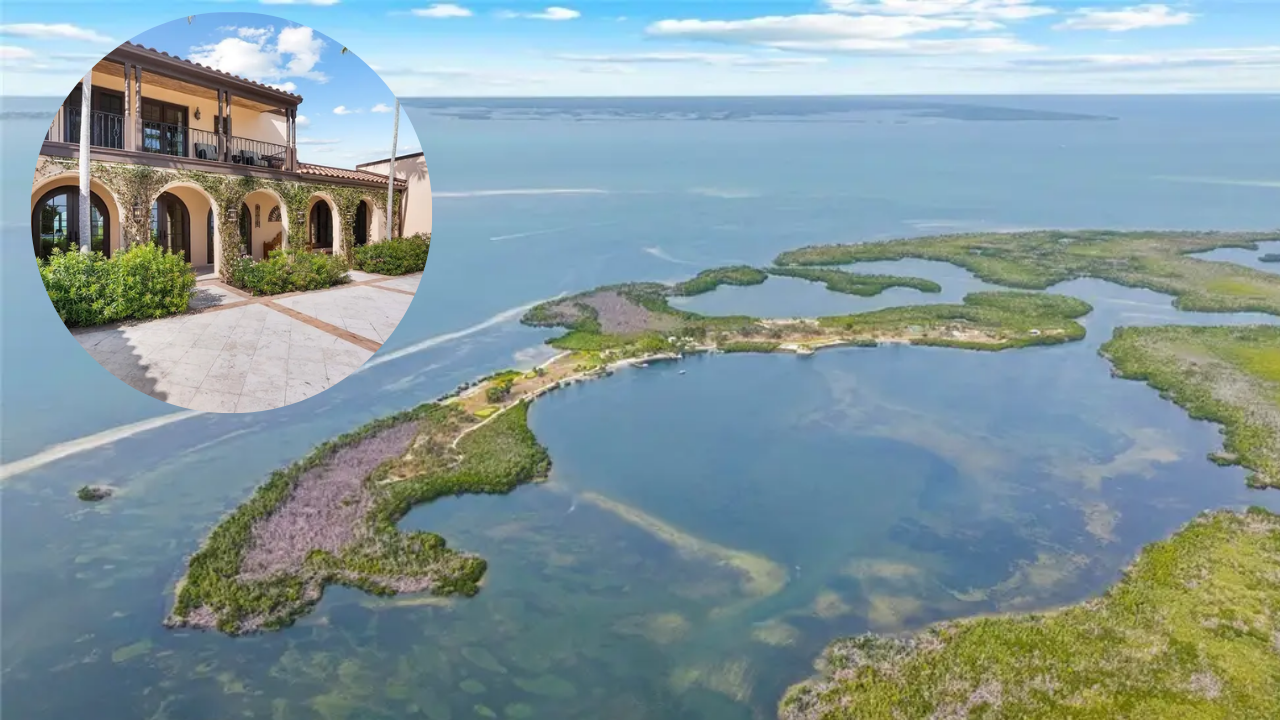
Back in 2015, the founder of It Works!—a multi-level marketing giant built on body wraps and wellness promises—had cash burning a hole through a pocket deep enough to swallow whole zip codes. He turned his eyes toward the Gulf of Mexico, right near Cedar Key, Florida. He spotted Snake Key. Or rather, he spotted a blank canvas.
A hundred and four acres of raw Florida wilderness. Scrub brush, nesting pelicans, biting insects, and absolute isolation.
He didn't just buy an island. He bought a fantasy. The price tag was fourteen and a half million dollars.
To most of us, that number is a typo. To a man who built an empire on the theology of upward mobility, it was just the entry fee. But nature doesn't care about corporate revenue streams. Saltwater does not negotiate. Hurricanes do not check your net worth before they strip a coastline down to its skeleton.
The Price of Isolation
Logistics are a quiet violence.
When you buy a plot of land that you can only reach by boat or helicopter, you stop buying real estate and start managing a supply chain disaster. Every bag of concrete, every foot of electrical wire, every gallon of fresh water has to float across miles of unpredictable chop.
Think about what it takes to build a dream home. Now, remove the road. Remove the local hardware store ten minutes down the highway. Remove the municipal water main.
Pentecost poured millions more into the dirt. Permits crawled through bureaucratic molasses. Environmental groups watched every shovel turn, guarding the delicate ecosystem of the Cedar Key area like hawks. This wasn't a standard subdivision where you bulldoze the trees and lay down asphalt. This was a fragile sanctuary where construction equipment had to be barged in, piece by agonizing piece, under the watchful eyes of conservationists.
I have watched people chase remote property before. They fall in love with the silence. They forget that silence is maintained by a complete lack of infrastructure.
By the time the vision began to take physical shape—complete with luxury structures meant to withstand the brutal temper of the Gulf—the bill had ballooned. Millions turned into multi-millions. The island was no longer just a retreat. It was a money sink with an ocean view.
The Myth of Mastery
We are obsessed with conquering things.
We look at an untamed piece of geography and our first instinct is to pin it down like a butterfly in a display case. We want to pave it, wire it, air-condition it, and stamp our initials on the mailbox.
History is littered with the bleached bones of these ambitions. Florida is particularly good at chewing up human hubris and spitting it out into the tide. From boom-and-bust real estate bubbles in the roaring twenties to abandoned developments swallowed by the everglades, the state is a graveyard of good intentions and bad math.
When Pentecost acquired Snake Key, the local fishermen just shook their heads. They knew the water. They knew how fast a summer squall could turn a glassy bay into a washing machine. They knew what a Category 4 storm does to low-lying keys.
You can engineer steel pilings to go twenty feet into the limestone. You can install state-of-the-art generators. You can insure the structure until the underwriters sweat. But you cannot convince the ocean to respect your property lines.
The human element here isn't just about a rich guy losing some pocket change on a vanity project. It is about that universal itch we all share: the desperate desire to carve out a permanent fortress in a world that refuses to stand still.
The Quiet Aftermath
Real estate isn't just an asset class. It is a mirror.
When you look at what happened to that Florida investment—the stalled dreams, the endless permits, the astronomical construction costs, the sheer stubbornness required to force civilization onto a seabird rookery—you see a parable of modern wealth. We accumulate resources not just to use them, but to insulate ourselves from the chaos of being alive.
We think that if we buy enough acres, we can lock the rest of the world out.
Instead, we often just lock ourselves into a very expensive, very lonely cage. The project on Snake Key stands as a monument to that paradox. It represents the collision between corporate ambition and ecological reality.
The pelicans are still there. The salt is still eating the metal. The wind is still howling across the Gulf, indifferent to the millions of dollars spent trying to tame its backyard.
Sometimes, the smartest thing you can do with a piece of the earth is to leave it alone. But where is the fun in that? We are creatures of motion, of ambition, of excess. We will keep writing the checks. We will keep loading the barges.
And the tide will keep coming in.