If you missed your state’s voter registration deadline, you are not automatically locked out of the election. According to the National Conference of State Legislatures (NCSL), more than twenty states and the District of Columbia offer Same-Day Voter Registration (SDR), allowing eligible residents to register and cast a ballot on the exact same day—either during early voting or on Election Day itself. Even in states without same-day registration, federal law under the Help America Vote Act guarantees your right to cast a provisional ballot if you believe you are eligible, forcing election officials to investigate your status before your vote is dismissed.
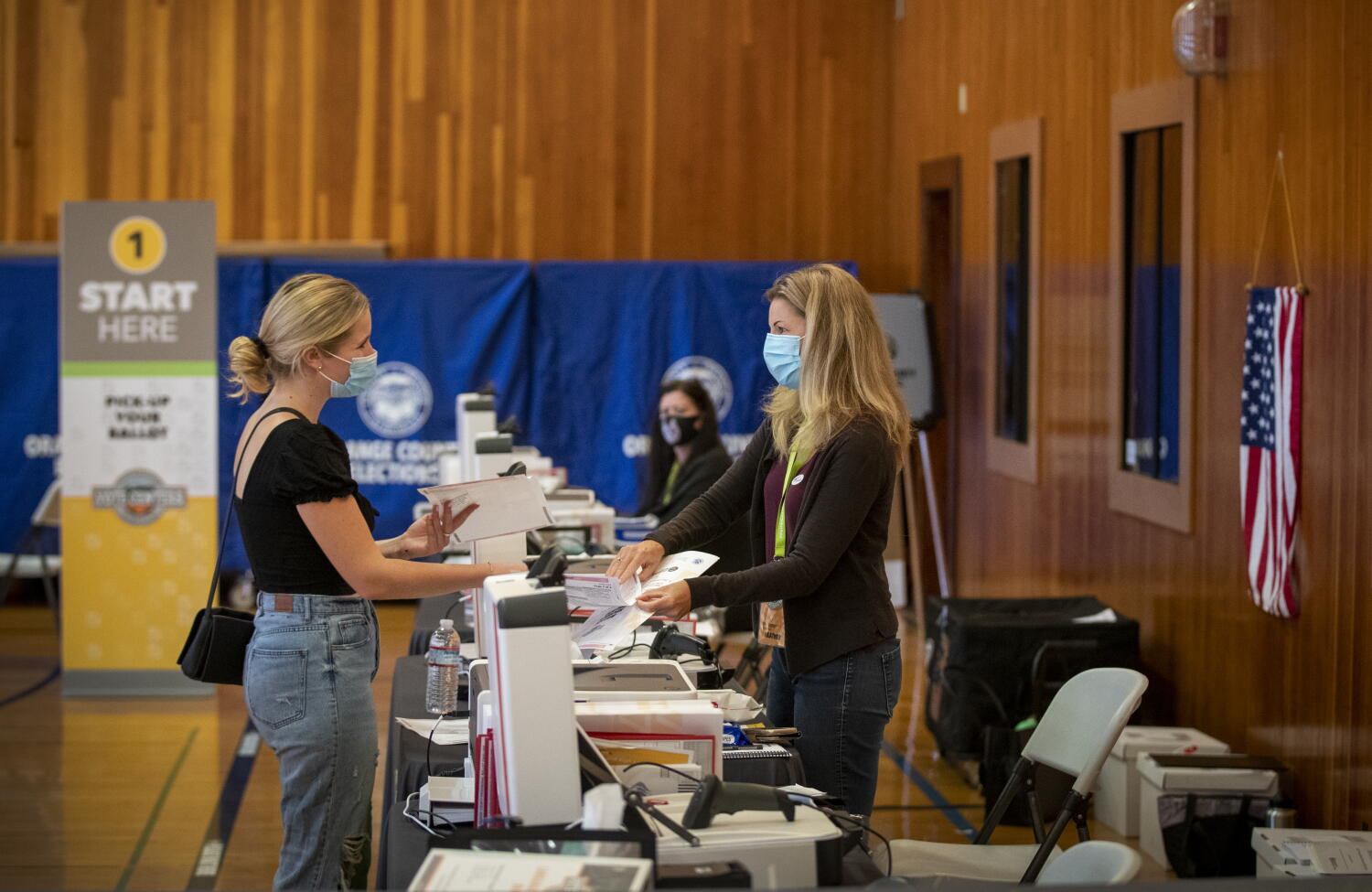
The panic that sets in on the first Tuesday in November is predictable. You show up at a community center, church basement, or high school gymnasium, hand over your ID, and watch a poll worker shake their head because your name is missing from the rolls. Most people turn around and walk out. They assume the bureaucratic door has slammed shut. That reaction is a mistake born from a fundamental misunderstanding of how American election administration actually works.
Election systems across the United States are not a single monolith. They are a fractured patchwork of fifty different state statutes, county-level administrative quirks, and federal baselines. Because state legislatures constantly alter voting windows, purge inactive rolls, and update identification mandates, the rules governing late registration are notoriously opaque. Knowing which lever to pull when you are standing at the check-in table makes the difference between going home disenfranchised and having your voice recorded.
The Geography of Same-Day Voter Registration
Same-day voter registration is the cleanest, most direct route to the ballot box for anyone who missed an advance deadline. According to data compiled by the NCSL and Vote.org, 23 states plus Washington, D.C., have enacted laws allowing qualified residents to register and vote simultaneously.
In these jurisdictions, the traditional 15- to 30-day advance registration cutoff simply does not apply to in-person voters. You walk in, fill out a registration application on the spot, present proof of identity and residency, and receive a standard ballot.
The states offering full Election Day same-day registration include:
- California
- Colorado
- Connecticut
- Hawaii
- Idaho
- Illinois
- Iowa
- Maine
- Maryland
- Michigan
- Minnesota
- Montana
- Nevada
- New Hampshire
- New Mexico
- North Carolina (available during the early voting period only, not on Election Day)
- Utah
- Vermont
- Virginia
- Washington
- Wisconsin
- Wyoming
Notice the asterisk next to North Carolina. Election law rarely moves in straight lines. North Carolina permits same-day registration exclusively during its in-person early voting window. If you wait until Election Day in Charlotte or Raleigh without being registered, the option evaporates. Montana has experienced similar legislative whiplash; lawmakers attempted to eliminate Election Day registration in 2021, sparking years of litigation before the Montana Supreme Court struck down the restriction in 2024, restoring the practice.
Alaska and Rhode Island operate under a narrower hybrid rule. Under their statutes, unregistered voters can show up on Election Day, register, and cast a ballot—but only for the presidential race. Down-ballot contests for Congress, governor, state legislature, and local school boards remain off-limits until the registration is processed for future cycles.
What You Actually Need at the Check-In Table
Walking into a same-day registration state without documentation will stall you immediately. Election clerks cannot take your word for where you live. Under state election codes, you must establish two distinct facts: who you are and where you reside.
A standard driver's license or state-issued non-driver ID usually satisfies both requirements at once, provided the address printed on the card matches your current residence. Problems arise when people move across town, update their lease, and forget to visit the Department of Motor Vehicles.
If your photo ID lists an old address, or if you do not have a state driver's license, election boards accept alternative combinations of documents. According to guidelines published by the U.S. Election Assistance Commission (EAC) and individual Secretaries of State, acceptable proof of residency typically includes:
- A current utility bill (electric, water, gas, or internet) dated within the last 30 to 90 days.
- A bank statement or credit card statement showing your name and current street address.
- A government check, paycheck, or official correspondence from a federal, state, or local agency.
- A current residential lease agreement or mortgage statement.
- A college or university fee statement paired with a student ID (accepted in several states, though rules tightened recently in states like Idaho and New Hampshire).
In a handful of states—including Minnesota, Wisconsin, and Maine—an already-registered voter from your precinct can sometimes vouch for your residency in person by signing an oath. This "vouching" system exists specifically to prevent bureaucratic technicalities from blocking otherwise eligible citizens, such as elderly residents without utility bills in their names or students living in dormitories.
The Provisional Ballot Safety Net
What happens if you live in Texas, Florida, Georgia, New York, or any of the other states that enforce strict advance registration deadlines?
Suppose it is Election Day, you live in a state without same-day registration, and the poll worker tells you that you are not on the list. You are convinced you registered months ago—perhaps when you renewed your driver's license at the DMV, or through an online portal, or via a campus voter drive. Do not leave the building. Ask for a provisional ballot.
Mandated nationwide by Section 302 of the federal Help America Vote Act of 2002 (HAVA), a provisional ballot is a fail-safe mechanism. Federal law requires poll workers to offer you one if your eligibility is in question, if your name does not appear on the precinct register, or if you lack the specific form of ID required by state law.
A provisional ballot looks identical to a regular ballot, though it is sealed inside a specialized envelope marked with your name, address, and the reason your eligibility was challenged. It is kept separate from the main ballot box. Over the days following the election, county boards of canvassers review every provisional envelope. They cross-reference your information against DMV databases, Social Security records, and state voter rolls.
If the board discovers that a clerical error dropped your name from the precinct book, or that your DMV registration application was delayed in transit, your provisional ballot is opened and counted.
The Harsh Reality of Provisional Counting
Investigative reporting and EAC post-election surveys reveal a sobering truth about provisional ballots: they are an imperfect safety net. Nationally, hundreds of thousands of provisional ballots are cast in federal elections, and a substantial percentage are rejected.
The primary reason for rejection is simple. Voters who never actually submitted a registration form before their state’s deadline often cast provisional ballots hoping for leniency. In states without same-day registration, election boards have zero legal authority to count a provisional ballot from someone who never registered on time. The law views a provisional ballot as a tool to verify existing registration, not a backdoor way to bypass state deadlines.
Furthermore, if you cast a provisional ballot because you lacked required voter ID, your work is not done when you leave the polling place. In states with strict ID laws—such as Indiana, Wisconsin, or Georgia—you must typically visit your local county election office within a narrow window (often three to six days after the election) to present valid identification. If you fail to cure the ballot within that timeframe, the envelope remains sealed and uncounted.
Why Voters Vanish from the Rolls
Many people who think they missed the registration deadline actually registered years ago. They only discover they are unlisted when they arrive at the polls. Understanding how and why names disappear from active voter rolls helps explain why checking your status before Election Day is critical.
States are legally required under the National Voter Registration Act of 1993 (commonly known as the "Motor Voter" law) to maintain accurate voter rolls. Election administrators remove names when voters move out of state, pass away, or receive disqualifying felony convictions under state law. However, the methods states use to identify inactive voters vary wildly and remain the subject of fierce legal battles.
When a county clerk sends a confirmation postcard to a voter who has skipped two consecutive federal elections and that card goes unreturned, the voter is flagged as "inactive." If the voter fails to cast a ballot or update their information through two more federal election cycles, their registration can be canceled entirely.
Data entry errors also plague state systems. A transposed birth date, a misspelled hyphenated last name, or an apartment number left off a DMV form can cause a voter’s record to fail a database match. In states that have adopted aggressive list-maintenance programs or withdrawn from interstate data-sharing consortiums like the Electronic Registration Information Center (ERIC), administrative removals have occasionally swept up eligible, active voters by mistake.
The Check-In Table Protocol
If you find yourself standing at a polling place and the clerk cannot find your name, emotion will work against you. Poll workers are usually temporary civic volunteers working 14-hour shifts for minimal pay. They are following checklists, not making policy.
Follow a strict sequence to protect your right to vote:
- Ask the worker to check alternate spellings and old addresses. Database searches at check-in tables are notoriously literal. If your last name is O'Connor, have them search "OConnor" without the apostrophe. If you moved recently within the same county, ask them to look up your previous street address.
- Verify you are in the correct precinct. In many states, showing up at the wrong polling location invalidates your ballot entirely. In jurisdictions that enforce "out-of-precinct" disqualification rules, casting a provisional ballot at the wrong church or school down the street results in an automatic rejection—even for statewide races like president or governor. Ask the poll worker to check the master county lookup to confirm your exact assigned precinct, and travel there if necessary.
- Request a same-day registration form if your state allows it. If you live in an SDR state, do not accept a provisional ballot if you have the proper ID and proof of residency on you. Insist on completing a standard same-day registration application so your vote goes directly into the scanner.
- Demand a provisional ballot as a last resort. If the system still shows you as unregistered and your state lacks same-day registration, state clearly that you are requesting a provisional ballot under federal law.
- Take the receipt. Every provisional ballot comes with a tracking number or receipt explaining how to check whether your vote was counted and what steps—such as bringing an ID to the county clerk's office—are required to cure any defects.
The Structural Divide in Ballot Access
The gap between states that allow Election Day registration and those that cut off registration a month prior reflects a deep ideological divide in American governance.
Voting rights advocates and academic researchers, including analysts at the Brennan Center for Justice and MIT’s Election Data and Science Lab, point to empirical data showing that same-day registration consistently boosts turnout, particularly among younger voters, renters, and lower-income residents who change addresses frequently. Because election interest peaks in the final days of a campaign, advance deadlines inevitably exclude citizens who tune into the race late.
Opponents of same-day registration—including conservative policy groups like the Heritage Foundation and several state attorneys general—argue that advance deadlines are necessary to give local clerks time to verify citizenship, prevent duplicate voting across jurisdictions, and manage polling place logistics. Processing hundreds of new registrations on Election Day creates long lines, strains temporary poll workers, and delays final vote tallies—a flashpoint in an era where slow results routinely fuel public skepticism.
Neither side is likely to yield ground soon, which leaves the burden squarely on the individual voter. If you live in a state with a 30-day cutoff and you missed it without ever having registered previously, no legal loophole will conjure a valid registration out of thin air. Conversely, if you live in a same-day registration state—or if you are an existing voter caught in an administrative snare—walking away from the polling place without demanding your statutory options means surrendering a right you still legally hold. Verify your state’s specific rules through your Secretary of State’s official portal today, gather a utility bill and photo ID before you leave the house, and do not leave the precinct until a ballot is in your hand.