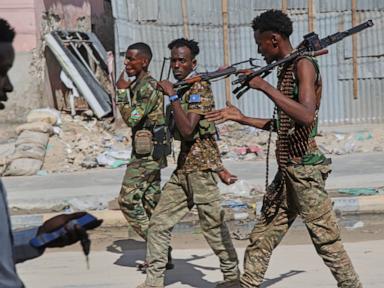
Mogadishu just spent over twenty hours under the crush of artillery fire. Drones, anti-tank weapons, and mortars turned major thoroughfares like the Maka al-Mukarama road into literal combat zones. This isn't the familiar, tragic story of a state fighting a terrorist group like al-Shabaab. It's the state fighting itself.
The immediate trigger was a planned anti-government protest. But the real issue runs much deeper. President Hassan Sheikh Mohamud announced a one-year extension of his term after it expired on May 15. The opposition exploded in anger. Now, the capital is paying the price for another massive political miscalculation.
If you want to understand why Somalia's fragile progress keeps getting derailed by its own leadership, you have to look at the exact mechanics of this latest breakdown.
The Mandate Trap Repeating Itself
We've seen this movie before. In 2021, former President Mohamed Abdullahi Farmaajo tried to stretch his time in office. The opposition back then was led by none other than Hassan Sheikh Mohamud. He used protests, clan militias, and street clashes to force Farmaajo to back down. Mohamud won the subsequent election by positioning himself as the defender of constitutional order.
Fast forward to mid-May. President Mohamud announced his own one-year extension. He claims it's necessary for electoral reforms and state stability. The opposition calls it a blatant coup against the constitution. The hypocrisy is staggering, and it highlights a systemic failure in Somali governance. Power centralization remains an irresistible drug for whoever holds the villa.
The opposition didn't just plan a march. They embedded themselves with powerful clan militias in their urban strongholds. When the government tried to force the demonstrations into a single, easily contained stadium, the situation snapped.
When Political Rallies Turn Into Urban Warfare
Heavy gunfire and explosions started tearing through residential neighborhoods on Wednesday evening. By Thursday morning, the city center was completely paralyzed. Densely populated areas like the Howlwadaag district bore the brunt of the heavy weapons fire.
The government claims it was defending the city against coordinated armed acts by illegal militias. Benadir Regional Police Commissioner Mahdi Omar stated that an arms recovery operation at the residence of former Prime Minister Hassan Ali Khaire uncovered heavy machine guns. The state's narrative is simple: this wasn't a peaceful protest; it was an attempted armed uprising.
The opposition tells a radically different story. Khaire and former President Sheikh Sharif Sheikh Ahmed accused government forces of encircling and attacking their private residences with heavy battlefield weaponry. While traditional elders and politicians were meeting at Khaire's house to mediate the political standoff, mortar shells were hitting the roof.
The truth lies somewhere in the messy middle. The opposition absolutely mobilized heavily armed clan networks. At the same time, the government used conventional military hardware—including armored vehicles and drones—in crowded civilian zones to crush political dissent.
The Devastating Cost of Political Ego
Civilians are always the ones who pay for these elite power struggles. Mortar rounds landed squarely in Bakara Market, the largest commercial hub in the country. The market emptied out instantly. Businesses shut down, and the ubiquitous bajaj three-wheelers vanished from the streets.
Ali Wardheere, the deputy central bank governor, estimated the economic loss from just one day of total shutdown at $3.8 million. For a city built on a fragile, day-to-day informal economy, that's a catastrophic hit.
Worse than the financial damage is the human toll. Stray bullets and mortar fragments tore through residential homes. In the Mirinayo neighborhood, families packed what they could carry and fled on foot. An injured elderly woman, struck in the leg by a stray round, had to be carried through the streets by young men scrambling to find an open hospital. The African Union, the United Nations, and the US Embassy have all issued urgent statements condemning the use of heavy weapons in civilian areas. But statements don't fix blown-out walls or broken bones.
Where Does Somalia Go From Here
A fragile truce was cobbled together on Thursday afternoon. The director of the National Intelligence and Security Agency stepped in to mediate, holding face-to-face talks with Khaire. The guns have gone quiet for now, but the underlying crisis hasn't changed. The President still wants his extension, and the opposition still has the firepower to resist it.
If you are tracking the stability of the Horn of Africa, watch these three specific factors over the next few weeks:
- Military Fragmentation: Keep a close eye on whether the Somali National Army splits along clan lines. The army is made up of integrated clan units. If the political fight deepens, these soldiers often look to their clan elders for direction rather than the defense ministry.
- Regional Backlash: Watch the reactions from federal member states like Puntland and Jubaland. They are already deeply suspicious of Mogadishu's centralization efforts. This violence gives them a perfect reason to pull further away from the federal government.
- Al-Shabaab Exploitation: Every soldier used to guard a checkpoint against an opposition politician is a soldier removed from the frontlines of the counter-terrorism fight. Al-Shabaab thrives in the gaps created by political chaos in the capital.
The immediate step forward requires the federal government to freeze the term extension and pull heavy armor off the streets of Mogadishu. True stability won't come from a security state that locks down its own capital. It requires a negotiated electoral roadmap that all major factions actually trust. Until that happens, Mogadishu remains just one political argument away from another firefight.