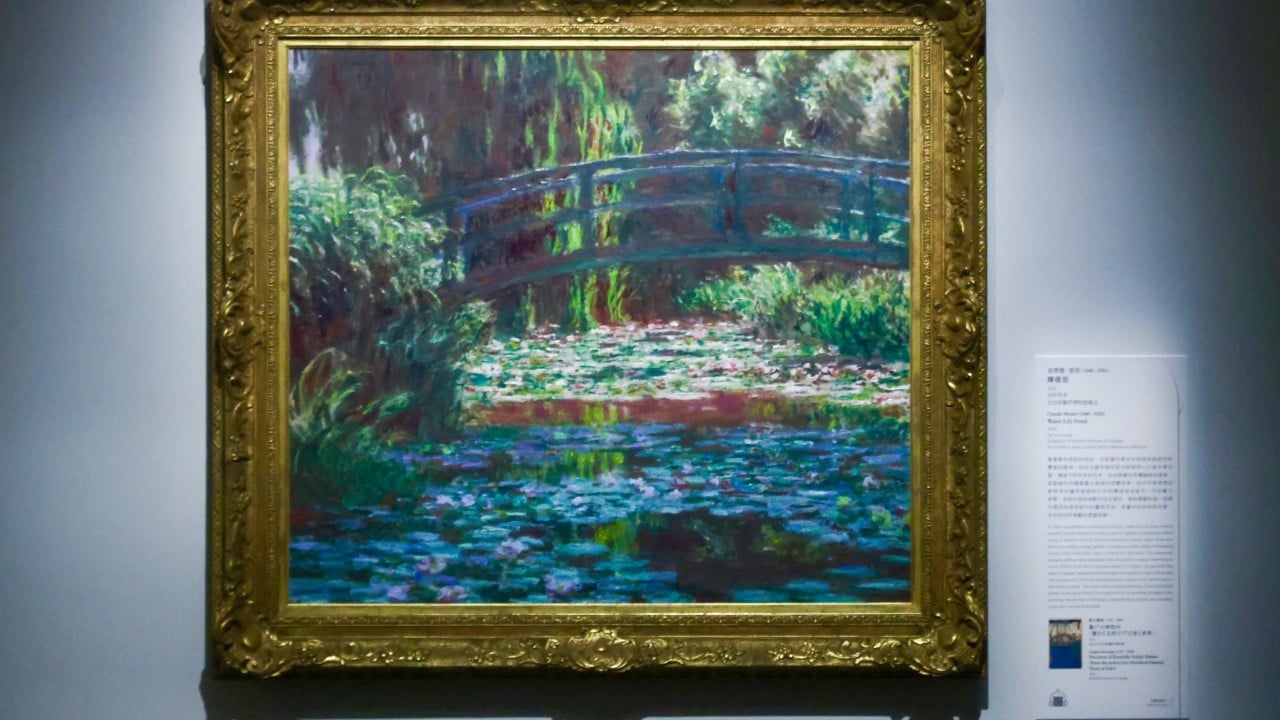
The global art market is obsessed with "bridges." Every time a curator hangs a French Impressionist next to a Qing dynasty scroll, we are subjected to the same tired narrative: art is a universal language that heals geopolitical rifts through the shared love of a well-manicured peony.
It is a beautiful lie. It is also a lazy one.
The recent surge in exhibitions claiming that garden art "bridges East and West" isn't an intellectual breakthrough. It is a marketing hedge. By leaning on the soft, unoffensive imagery of lilies and koi ponds, institutions are dodging the gritty, friction-heavy reality of cultural exchange. They aren't building bridges; they are paving over the cracks with expensive petals.
The Myth of the Universal Lily
The standard argument suggests that because Claude Monet loved Japanese prints and Asian poets loved their plum blossoms, we are all looking at the same thing. This is fundamentally wrong.
In the West, the garden was a conquest. Whether it was the rigid geometry of Versailles or Monet’s diversion of the Epte river to create his Giverny pond, the garden was a testament to the artist’s ego—the ability to bend nature to a specific, framed perspective. It was about the viewer.
In the East, historically, the garden was a site of retreat and metaphysical alignment. It wasn't about "looking at" nature; it was about being an inhabitant of its rhythms. When we smash these two together in a gallery and call it a "bridge," we strip both traditions of their specific, radical identities. We trade depth for a "vibe."
I’ve sat in boardrooms where "Cultural Synergy" is a line item. I’ve seen museums dump millions into these "East-West" blockbusters because they are safe. They don't offend sensors. They don't require the audience to confront uncomfortable history. They just require you to think flowers are pretty.
Monet as the Ultimate PR Shield
Why is Monet always the centerpiece of these cross-cultural conversations? Because he is the path of least resistance.
Monet’s later work—specifically the Nymphéas—is often cited as the point where Western art "touched" Eastern philosophy. Critics point to the lack of a horizon line as proof of an "Oriental" influence. This is a massive oversimplification that ignores Monet’s actual motivation: a desperate, obsessive pursuit of light and the refractive properties of water.
Using Monet to explain the East is like using a translation app to read poetry; you get the gist, but you miss the soul.
The "bridge" narrative suggests that Monet "understood" Japan. In reality, he consumed a romanticized, flattened version of it through the japonisme craze of the 19th century. He was an enthusiast, not a bridge-builder. By pretending his work is a diplomatic tool today, we are just continuing that same cycle of consumption. We aren't learning about the "East"; we are looking at the West looking at the East.
The Aesthetic of Avoidance
If you want to truly understand the friction between different worldviews, you don’t look at what they have in common. You look at where they clash.
The garden-art industrial complex avoids clash at all costs. It chooses the garden because the garden is a controlled environment. There are no protests in a painted garden. There is no economic warfare in a digital projection of a cherry blossom.
This is "safe art." It is art that functions as a sedative.
When we say these exhibitions "shine," what we really mean is they provide a high-end backdrop for gala photos. They allow corporations to sponsor "culture" without engaging in the messy, polarizing reality of what culture actually is. True cultural exchange is supposed to be difficult. It should involve a degree of "un-learning" and a confrontation with the fact that our perspectives might be incompatible.
The Data of Disengagement
Let’s look at the numbers—not the ticket sales, but the retention of information.
Surveys of museum-goers at these "East-West" garden exhibitions show a high "satisfaction rate" but a near-zero increase in the understanding of the specific philosophical differences between, say, Zen rock gardening and English landscape design.
People leave these shows with a vague sense of "oneness." That is the opposite of education. Education is the ability to distinguish. To categorize. To appreciate the otherness of the other. By blurring the lines, we are making the world smaller and more boring.
Stop Looking for Harmony
The obsession with "harmony" is killing art criticism.
We are told that garden art represents a "peaceful dialogue." Why? Art should be a provocation. If the art of the East and the West is truly different, then putting them together should create a spark, a tension, a visible seam.
Instead, we get "immersive experiences."
The current trend of digital "garden" rooms—where pixels of petals fall on your shoulders to a soundtrack of flutes—is the final stage of this decline. It is the commodification of the "bridge." It is art as a theme park. It is the removal of the physical, the historical, and the intellectual in favor of the sensory.
The Cost of the Bridge
There is a downside to my skepticism, and I’ll admit it: without these "bridge" narratives, funding for international art exchanges would likely crater. The "peace and flowers" pitch is an easy sell to government grants and billionaire donors.
But we have to ask what we are sacrificing.
When we prioritize the "bridge," we ignore the "island." We forget that the strength of Chinese ink painting lies in its specific, un-Western relationship to white space (ma). We forget that the strength of Impressionism was its radical break from the Academy's grip on reality.
When you blend them into a smoothie of "Garden Art," you lose the nutrients of both.
The Actionable Pivot
Stop going to these shows to feel "connected" to a global community. That connection is an illusion curated by a marketing department.
If you want to understand the "East," study the history of the Song Dynasty. Study the impact of the Opium Wars on visual culture. Look at the contemporary artists in Beijing or Tokyo who are actually grappling with the collision of tradition and hyper-modernity—artists who use gardens as symbols of exclusion or environmental decay, not just "beauty."
If you want to understand the "West," look at Monet’s grief, his failing eyesight, and his brutal struggle to capture a single moment of light before it died.
Don't look for the bridge. Look for the gap.
The gap is where the truth lives. The gap is where the two cultures actually define themselves against one another. The garden isn't a bridge; it’s a border. And borders are far more interesting than the platitudes we use to ignore them.
Stop buying the bouquet. Demand the dirt.