Municipal headlines announcing thousands of emergency shelter spots routinely conflate raw capacity targets with habitable beds, permanent housing exits, and multi-year fiscal sustainability. When Montreal Mayor Soraya Martinez Ferrada announced plans to scale Montreal's emergency and transitional housing network to roughly 3,000 spaces ahead of winter—including nine warming centres and 500 seasonal spots—the headline created an impression of immediate supply relief. Yet a rigorous operational audit reveals a sharp divergence between headline "spots," physical sleeping furniture, and actual housing throughput. To understand whether a municipal winter surge stabilizes a crisis or merely redistributes strain, analysts must decompose the announcement into four structural components: the Spot Quality Mix, the Fiscal Cost Function, Intergovernmental Jurisdictional Friction, and Encampment Flow Dynamics.
Deconstructing the Headline Logic
Conventional news coverage treats a municipal shelter announcement as a simple supply-and-demand ledger: winter approaches, homelessness rises, the city opens spaces, and exposure drops. That linear model misses three critical operational mechanics that govern urban crisis response in cold climates.
First, a "spot" in a winter warming centre is not equivalent to a permanent emergency bed or a supportive housing unit. When shelters run at or above saturation, emergency overflow often relies on chairs or mats rather than beds, degrading rest quality, privacy, and daytime recovery. While Montreal has moved to purchase hundreds of beds and shift away from rows of chairs, the gap between total network spots and dedicated beds remains a core constraint.
Second, emergency shelters function as containment valves, not exit doors. Without parallel inflows into transitional and permanent supportive housing, adding winter spaces increases temporary retention without reducing the underlying stock of unhoused residents. When seasonal warming centres close in spring, unanchored clients face a cliff unless transition pathways are funded and operational.
Third, acute political triggers distort timing and framing. Major municipal announcements frequently cluster around visible tragedies—such as fatal encampment fires or severe cold snaps—and intergovernmental budget negotiations. Tragedy accelerates executive urgency, but reactive scaling under tight timelines strains staffing, security, fire safety compliance, and clinical integration.
The Four Pillars of Winter Shelter Capacity
Evaluating any major municipal shelter expansion requires testing four distinct dimensions rather than accepting an aggregate headcount.
1. The Spot Quality Mix
Every shelter space sits on a spectrum of habitability and service intensity. A high-performing winter response distinguishes among distinct tiers of accommodation:
- Dedicated beds vs. chair or mat spaces: Chair-based warming spaces prevent acute hypothermia during extreme cold, but prolonged reliance impairs sleep architecture and health recovery.
- Seasonal vs. year-round capacity: Seasonal spaces address peak winter risk (such as openings starting in November) but create recurring spring demobilization costs and re-entry friction.
- Low-barrier vs. high-threshold entry: Rules regarding pets, couples, possessions, sobriety, or psychiatric acuity determine whether unsheltered residents actually use available spots or remain in encampments.
- Co-located wraparound care: Access to primary health care, addiction treatment, mental health support, and housing navigation separates a passive warming room from a stabilization hub.
2. The Cost Function of Emergency Surge Operations
In economic terms, municipal winter shelter expansion exhibits step-function marginal costs. Below baseline capacity, cities utilize existing facilities and permanent staff. Crossing seasonal thresholds requires leasing non-standard buildings, hiring temporary security and support workers, procuring beds and linens, enforcing fire and life-safety standards, and funding extended operating hours.
Montreal's estimated roughly $20 million annual cold-weather requirement—alongside broader provincial emergency allocations—illustrates how quickly operating expenses scale once a municipality moves from routine shelter operations to winter surge mode. Furthermore, emergency shelter spending carries high opportunity cost if funded out of general municipal reserves without multi-year predictability: money absorbed by acute winter stabilization is unavailable for capital housing construction or long-term rent supplements unless senior governments underwrite the cost.
3. Intergovernmental Jurisdictional Friction
Urban homelessness sits at the intersection of municipal operations and provincial or federal policy levers. Municipalities typically manage local bylaws, public spaces, emergency coordination, and front-line service partnerships, while provinces control core health care delivery, mental health and addiction systems, social assistance rates, and large-scale housing programs. Federal and provincial funding envelopes shape what cities can build and sustain.
This division creates a classic fiscal-operational mismatch. When provincial funding arrives on short-term or ad hoc cycles, cities face a choice between under-provisioning winter safety or committing local taxpayers to recurring costs that belong to a broader statutory mandate. Even when senior governments announce emergency funds or summits, translation into frontline staffing and operational beds lags behind weather shifts.
4. Encampment Flow Dynamics and Legal Constraints
Encampments are not static objects that disappear simply because a city opens warming centres or issues dismantling orders. Treating encampments as a pure enforcement problem ignores stock-and-flow dynamics:
- Inflows are driven by housing affordability pressures, eviction risks, discharge from hospitals or correctional institutions without housing, and migration or displacement.
- Outflows depend on transitions into permanent housing, family/community reunification, or movement between neighbourhoods and shelters.
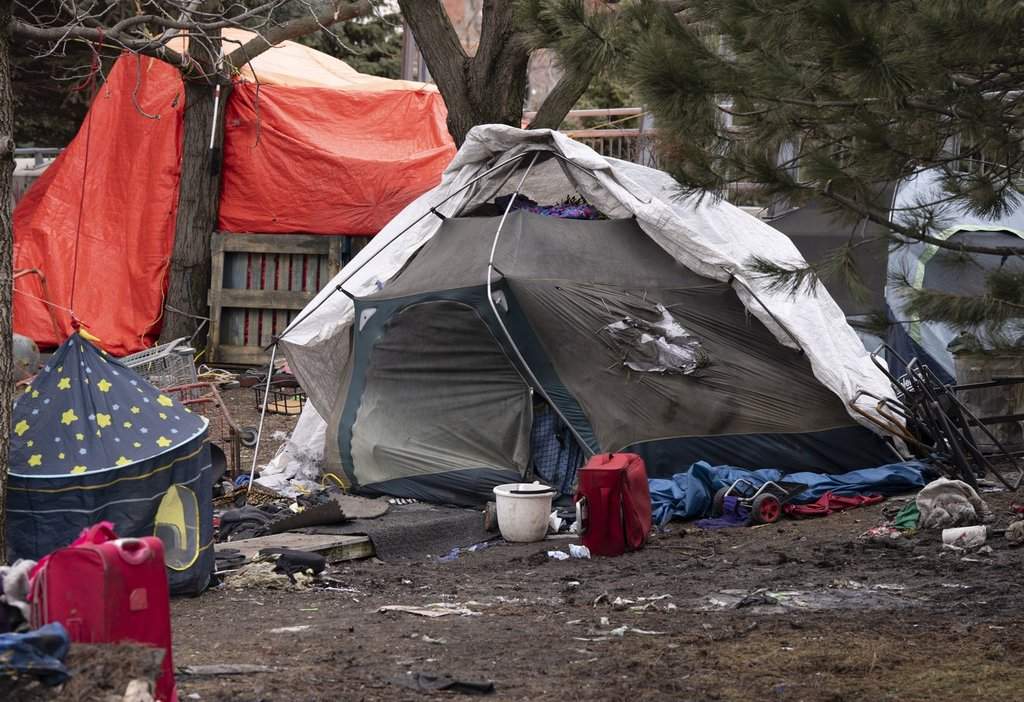
- Legal and spatial friction shapes clearing attempts. Court rulings, public space conflicts (such as encampments near parks or winter recreation infrastructure), and weekly tent relocations demonstrate that clearing a site without matched, acceptable housing options often displaces individuals rather than resolving unsheltered homelessness.
Known Facts vs. Educated Hypotheses
Separating verified operational realities from analytical projections prevents policy misdiagnosis.
Known Facts:
- Montreal has moved to scale its emergency and transitional network to around 3,000 spaces across nine warming centres ahead of winter, including seasonal capacity and efforts to expand bed availability rather than relying solely on chairs.
- Fatalities in encampments and rising demand have heightened political urgency around cold-weather survival, while city officials have sought multi-year provincial commitments and cited roughly $20 million in annual cold-weather needs alongside provincial emergency funding announcements.
- Across Canada, federal enumeration and shelter capacity reporting show multi-year growth in homelessness and shelter demand alongside persistent unsheltered and encampment populations.
Educated Hypotheses:
- Opening 3,000 total network spots will reduce acute cold-related fatalities and improve short-term thermal safety, provided low-barrier access and bed availability match client needs during extreme cold alerts.
- Relying heavily on short-term seasonal expansions without corresponding inflows into supportive or permanent housing will produce a spring rebound effect, where a substantial share of winter shelter users returns to street or encampment settings when seasonal sites close.
- Legal pushback against encampment removals will continue to constrain unilateral municipal clearing strategies wherever alternative housing placements remain scarce.
Why Standard Shelter Metrics Mislead
Public officials and media reports often rely on three convenient metrics that obscure system performance:
- Total "spots" announced: Combines permanent beds, transitional units, overflow mats, and warming chairs into a single number, masking wide differences in comfort, safety, and length-of-stay suitability.
- Nightly occupancy rate: A shelter running at 98% occupancy may look efficient, yet in crisis operations it signals zero buffer for sudden cold snaps, hospital discharges, or families in crisis.
- Encampment counts after sweeps: A drop in tents at one location (such as a borough park or overpass) often reflects spatial displacement to another block or borough rather than a net reduction in unsheltered homelessness.
A more diagnostic scorecard tracks bed-to-chair ratios, median length of stay, percentage of exits into permanent or supportive housing, unsheltered count across the entire metropolitan footprint, and return-to-homelessness rates after seasonal closures.
Step-by-Step Operational Framework for Winter Surge Execution
For municipal leaders, shelter operators, and policy analysts evaluating or running a winter shelter expansion, execution should follow a disciplined sequence rather than an ad hoc scramble:
- Audit baseline deficits by subpopulation. Segment demand across single adults, youth, women, couples, families, and individuals with high medical or psychiatric acuity so site rules and layouts fit actual users.
- Convert chair capacity into beds wherever floorplates allow. Prioritize fire-safe bed spacing, sanitation, and acoustic recovery over maximizing raw headcount through chair rows.
- Standardize low-barrier entry protocols. Define clear, transparent safety standards while minimizing administrative hurdles that deter people facing severe cold or substance use challenges.
- Embed clinical and housing triage on-site. Station outreach nurses, mental health workers, and housing navigators inside warming centres so shelter stays initiate housing applications rather than serving as dead-end holding areas.
- Lock in multi-year funding covenants before winter peaks. Tie municipal surge execution to multi-year provincial and federal operating commitments so operators can recruit trained staff and plan spring transitions.
- Publish transparent weekly utilization and exit metrics. Track bed counts, chair counts, turnaways, and housing placements openly to calibrate mid-winter adjustments.
Limitations and Trade-Offs
Even a well-engineered winter shelter surge faces hard constraints. Rapidly opening temporary sites in large municipal buildings can create friction with nearby residents and businesses, strain local transit and emergency services, and face permitting or fire-code bottlenecks. High-acuity clients with untreated psychosis, severe withdrawal, or complex trauma often struggle in large congregate warming spaces, requiring specialized clinical environments that take longer to staff and license. Finally, emergency shelter capacity addresses symptom acuity and survival—it cannot substitute for non-market housing supply, income adequacy, or long-term supportive housing, which operate on multi-year capital and policy timelines.
Strategic Play
Municipalities cannot solve structural homelessness through winter shelter announcements alone, nor can they abandon emergency expansion when freezing weather arrives. The decisive strategic move for Montreal—and any cold-climate city scaling emergency capacity—is to treat every winter warming centre as a mandatory housing-intake funnel backed by binding multi-year intergovernmental funding. Specifically, city leadership should pair its 3,000-spot winter footprint with a public Winter-to-Spring Transition Guarantee: dedicating dedicated case-management quotas and transitional or supportive housing pipelines to high-acuity and long-stay shelter users before seasonal centres wind down, while making multi-year provincial cost-sharing a formal condition of ongoing surge operations. Without that bridge from emergency warmth to permanent housing, winter expansion remains a recurring annual reset rather than a durable reduction in street homelessness.