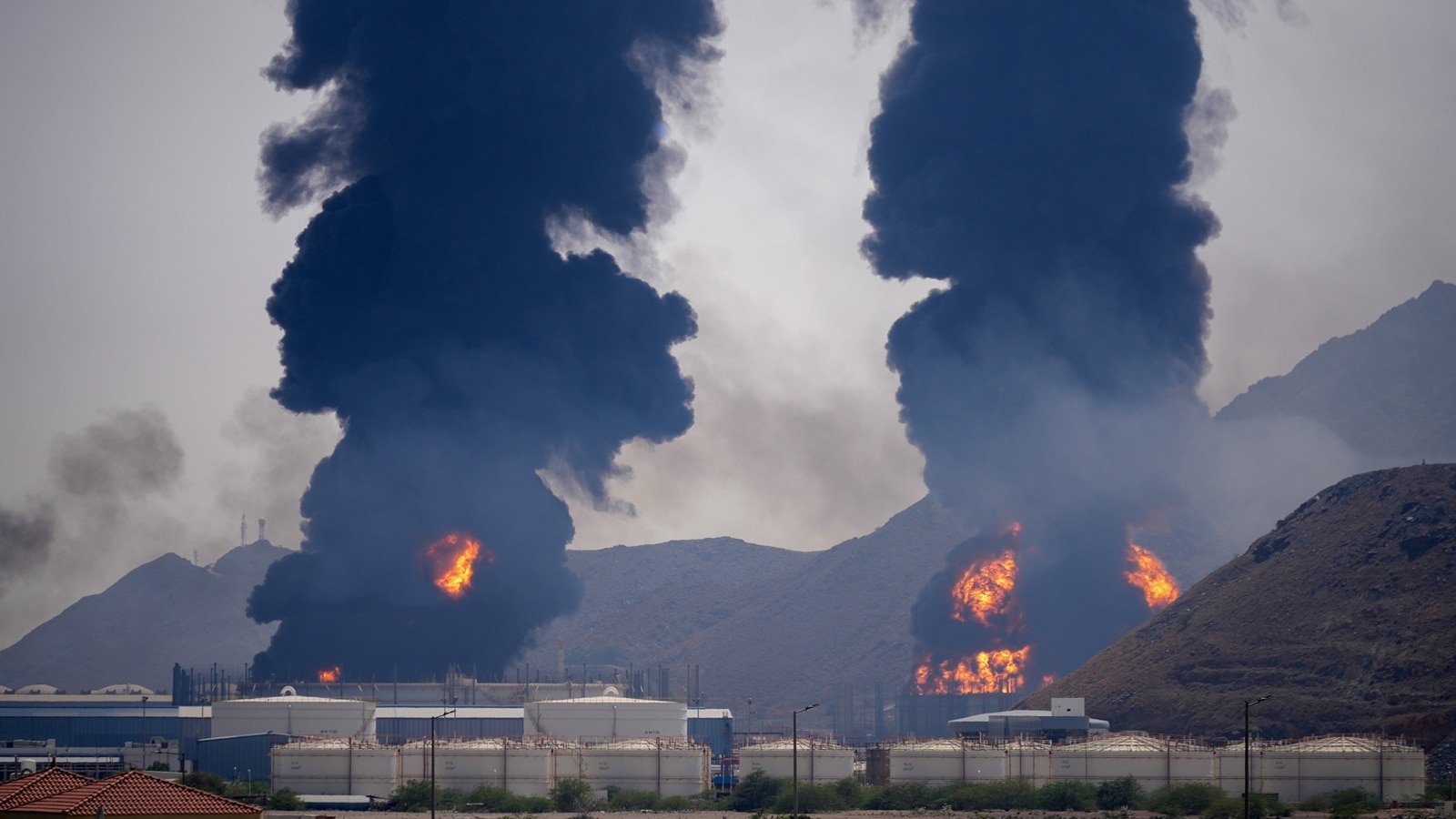
The catastrophic strike on Muwaffaq Salti Air Base in Jordan, which killed two American service members and left a third missing, was not a localized act of defiance. It was an exhibition of foreign military enablement. While Washington exchanges heavy fire with Tehran along the Iranian coastline, intelligence circles are looking far beyond the Persian Gulf to trace the electronic and logistical DNA of the weapons that bypassed American air defenses.
Iran did not build the capacity to penetrate a high-density American air base in isolation. The sophisticated swarm of ballistic missiles and synchronized drones that struck the facility on July 17 was underpinned by technologies, satellite guidance, and electronic components originating directly from Russia and China. By providing Beijing’s microchips and Moscow’s electronic warfare insights, these superpowers have turned the 2026 Iran war into a highly transparent proxy arena designed to bleed American military hardware and attention away from Europe and the Indo-Pacific. For a deeper dive into similar topics, we suggest: this related article.
The Industrial Pipeline Behind the Swarm
The physical remnants of the drones recovered from the Jordan wreckage reveal an undeniable truth about the modern defense supply chain. For years, Western analysts treated Iranian drone manufacturing as a domestic miracle of reverse-engineering. The current intensity of the conflict exposes that narrative as a myth.
Tehran is expending hundreds of high-end loitering munitions and short-range ballistic missiles every week across multiple fronts, including recent strikes targeting assets in Kuwait, Qatar, and Bahrain. Maintaining this high rate of fire requires an unbroken industrial pipeline. Chinese state-adjacent enterprises have shifted from covertly supplying dual-use components to explicitly routing industrial-grade semiconductors, optical lenses, and specialized engine parts through Central Asian transit networks. To get more details on the matter, comprehensive coverage is available at Al Jazeera.
These components are the lifeblood of the Shahed-series iterations now hitting allied targets. Without Chinese commercial logistics functioning as an back-door procurement network, Iran’s manufacturing lines would have ground to a halt within the first month of the conflict after the initial joint U.S.-Israeli strikes in February.
The Russian Electronic Shield
The more alarming development for Pentagon planners is the sudden drop in the interception rate of American defense platforms like the Patriot and theater-level jammer systems. The July 17 strike bypassed layered defenses that had previously maintained a near-flawless record.
This sudden leap in evasion capability points to Russian technical intervention. Over two years of intensive warfare in Ukraine, Russian forces accumulated the world's most extensive dataset on how to spoof, jam, and saturate Western radar systems. Intelligence indicators suggest that Moscow has shared detailed algorithmic profiles of American radar signatures with the Islamic Revolutionary Guard Corps (IRGC).
Furthermore, the integration of advanced anti-jamming modules in Iranian guidance packages closely mirrors Russian modifications used to counter Western GPS-guided munitions. By shielding Iranian missiles from localized electronic countermeasures, Russian engineering directly enabled the lethal strike in Jordan.
Strategic Dividends for Beijing and Moscow
Neither Russia nor China is acting out of ideological affection for the regime in Tehran. For both superpowers, the expansion of the Middle East conflict serves cold, calculative geopolitical objectives.
Superpower Strategic Motivations in the 2026 Iran War
┌─────────────────────────────────────────────────────────────┐
│ RUSSIA:                                                     │
│ • Divert Western munitions stockpiles away from Ukraine     │
│ • Drive global oil prices up via Strait of Hormuz pressure  │
│ • Combat-test electronic warfare algorithms against U.S. air│
└─────────────────────────────────────────────────────────────┘
                              │
                              ▼
┌─────────────────────────────────────────────────────────────┐
│ CHINA:                                                      │
│ • Entangle U.S. naval forces in a permanent blockade regime │
│ • Secure discounted Iranian crude via parallel trade routes │
│ • Observe U.S. air defense vulnerabilities in real-time     │
└─────────────────────────────────────────────────────────────┘
For Moscow, every Patriot missile fired over Jordan or Kuwait is one less interceptor available for Eastern Europe. The resumption of full-scale war following the collapse of the June ceasefire has successfully re-centered global anxiety onto the Strait of Hormuz. This pressure cooker drives energy market volatility, directly benefiting Russian state revenues.
Beijing views the conflict through the lens of a long-term attrition strategy. By forcing the United States to deploy advanced F-35 and F-16 squadrons back into Middle Eastern theaters, China is thinning the American deterrent posture in the Western Pacific. Simultaneously, Chinese diplomats can position themselves as neutral arbiters—as seen in recent joint statements with regional actors calling for a return to the negotiating table—while their domestic factories quietly supply the components that keep the war running.
The Limits of Western Deterrence
The U.S. Central Command's campaign of retaliatory strikes against Iranian infrastructure, bridges, and coastal facilities has failed to restore deterrence. The administration's strategy relies on the assumption that punishing economic and logistical nodes inside Iran will force the regime to back down.
This calculations changes entirely when Iran's industrial and technological losses are being continuously subsidized by external superpowers. Sanctions cannot choke off an economy that has successfully anchored its trade to an alternative Eurasian financial architecture. As long as Moscow provides the tactical blueprints and Beijing guarantees the industrial inputs, Tehran can afford to treat its domestic infrastructure as expendable in exchange for inflicting direct costs on the United States military footprint.
The United States is no longer fighting a isolated regional state. It is engaged with the highly integrated output of a modern authoritarian supply chain.