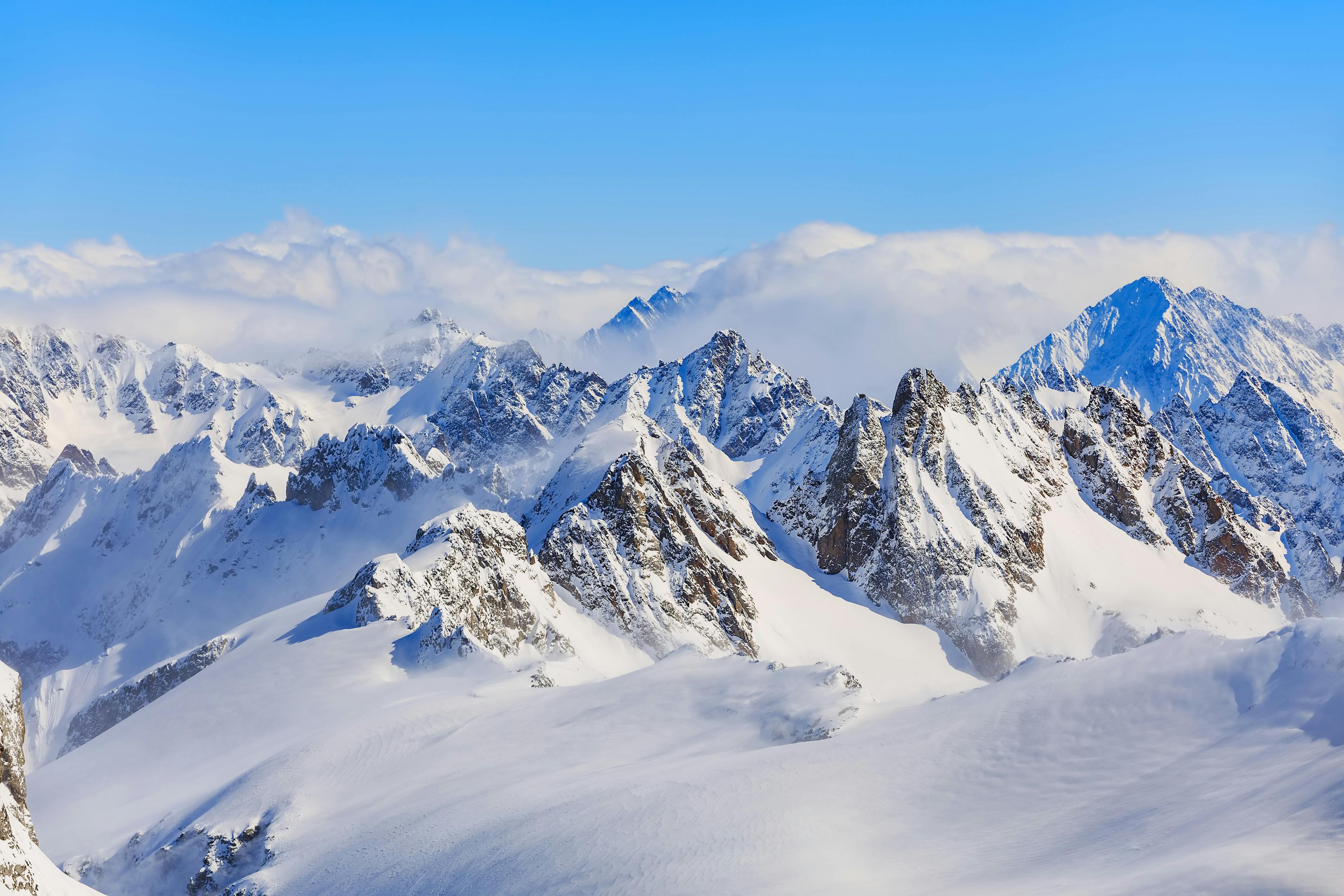
Rain in the Himalayas does not fall. It detonates.
If you have ever stood on a terraced hillside in eastern Nepal during the height of the monsoon, you know the sound before you ever see the water. It begins as a low, metallic vibration in the soles of your boots. Then comes the smell—wet slate, crushed pine needles, and the sudden, copper tang of freshly sheared earth. Within minutes, the mountain loses its grip on itself. Roads that took a decade of dynamite and sweat to carve into sheer limestone vanish into gray slurry. Bridges fold like wet cardboard.
For generations, the people living along the steep, unstable folds of the Koshi and Gandaki river basins have lived under a quiet, terrifying calculus. Geography gives them beauty, water, and fertile valleys, and then, without warning, geography tries to erase them. When the earth splits or the sky opens up, the distance between a village and the nearest hospital is no longer measured in kilometers. It is measured in hours of mud, broken telecom towers, and the agonizing wait for the sound of rotor blades cutting through the fog.
That visceral reality—the sheer, suffocating isolation of a mountain nation under siege by nature—is what makes diplomatic speeches usually feel so hollow. Politicians love stone and water metaphors. They stand behind polished podiums in air-conditioned halls, reading off teleprompters about ancient brotherhood and shared heritage while farmers three hundred kilometers away are digging through wet rubble with their bare hands.
Yet every once in a while, a phrase escapes a leader’s mouth that actually carries the weight of mud on boots.
"Ties firm as the Himalayas and vast as the ocean."
When Nepal’s Prime Minister Balendra Shah spoke those words while praising India’s disaster response, the diplomatic press corps dutifully transcribed the quote, filed it under routine bilateral warmth, and moved on to the next briefing. They treated it like standard statecraft. They missed the point entirely.
To understand why those ten words matter—and why the machinery behind them is quietly reshaping survival across South Asia—you have to step away from the microphones in Kathmandu and New Delhi. You have to look at what happens in the first seventy-two hours after a catastrophe, when treaties are useless and only logistics keep people alive.
The Anatomy of a Seventy-Two-Hour Window
Consider a hypothetical scenario, built directly from the hard arithmetic of Himalayan rescue operations.
Imagine a small settlement—call it Dhading-Khola—perched four thousand feet above a swollen tributary. At two in the morning, a cloudburst dumps twelve inches of rain onto an already saturated ridge. A wall of boulders and clay shears off the slope, burying the local health post, snapping the single-lane highway in four places, and knocking out the cellular relay mast. Three hundred people are trapped on a shrinking island of mud. Forty of them have crush injuries. Five need emergency surgery before sundown.
In the cold math of emergency medicine, this is the golden window. After seventy-two hours without clean water, antibiotics, or trauma care, survivable fractures turn into fatal sepsis. Hypothermia sets in as night temperatures plunge.
Now ask yourself a brutal, practical question. Where does help come from?
Nepal’s own security forces—the Nepal Army, the Armed Police Force, and the Nepal Police—are among the most resilient mountain rescuers on earth. They hike into places where helicopters cannot land, carrying stretchers on their backs over razorback ridges. I have watched them work in freezing sleet, fueled by nothing more than lukewarm tea and sheer stubbornness.
Still, heroism cannot manufacture heavy-lift aviation out of thin air. A small, landlocked economy with a mountainous spine cannot maintain an infinite fleet of all-weather transport aircraft, satellite-linked mobile hospitals, and heavy earthmoving rigs sitting idle in hangars waiting for a disaster that might strike three valleys at once.
Look south, across an open, thousand-mile border that has no fences, no visas, and no natural barriers.
Within hours of an official distress signal from Kathmandu, giant C-17 Globemasters and C-130J Super Hercules transports of the Indian Air Force can lift off from bases in Hindon or Gorakhpur. Specialized teams from India’s National Disaster Response Force—men and women trained specifically to cut through reinforced concrete, extract victims from collapsed tunnels, and deploy self-sustaining field clinics—can be on the ground in Kathmandu before the mud in the hills has even stopped sliding.
This is not charity. It is a shared survival architecture born out of geological necessity.
The Weight of Shared Geography
People outside South Asia often view the relationship between India and Nepal through the narrow, noisy lens of cable news politics. They see border disputes over cartographic lines, trade friction at customs checkpoints, or nationalist posturing during election cycles. Those tensions are real. Pretending otherwise would be dishonest, and frankly, anyone who has spent time in Kathmandu’s tea shops knows how fiercely Nepalis guard their sovereignty.
Water, however, does not care about border pillars.
Every major river system that sustains the fertile plains of northern India—the Koshi, the Gandaki, the Karnali, the Mahakali—begins its life in the high glaciers and steep watersheds of Nepal. When a glacial lake bursts in the Solukhumbu region or a landslide dams a river in Sindhupalchok, the disaster does not stop at the border town of Birgunj or Raxaul. Forty-eight hours later, that exact same wall of water is drowning villages in Bihar and Uttar Pradesh.
Think of the two countries not as separate houses on a street, but as the upper and lower floors of the exact same mountain home. If a pipe bursts on the second floor, the family downstairs does not stop to argue about who owns the stairwell. They grab buckets.
History proves this pattern with haunting consistency.
Cast your mind back to April 25, 2015. At 11:56 in the morning, a 7.8-magnitude earthquake tore across central Nepal. The earth liquefied beneath Kathmandu. Centuries-old temples collapsed into clouds of brick dust. Nearly nine thousand people died, and hundreds of thousands were left sleeping under plastic tarps as violent aftershocks rattled the valley every hour.
Within six hours—before most international news networks had even figured out how to pronounce the names of the affected districts—Indian military aircraft were touching down at Tribhuvan International Airport. Operation Maitri became the largest foreign disaster relief mission India had ever launched. Over a thousand NDRF personnel, dozens of medical teams, engineering task forces, and hundreds of tons of food, water, blankets, and heavy rescue equipment poured across the border by air and road.
Then came the floods of 2017. Then the Jajarkot earthquake in late 2023, where remote stone houses crumbled in the dead of night, and Indian relief flights delivered emergency shelter and medical supplies within days. And when devastating floods and landslides battered Nepal again in the seasons that followed, washing away highways leading into the capital itself, the reflex remained identical.
Why Balendra Shah’s Words Hit Differently
To appreciate the significance of Balendra Shah standing up and praising that response, you have to understand who he is and what he represents.
Balen—as almost everyone in Nepal calls him—did not rise through the traditional, dusty corridors of old-guard Nepali politics. Before entering public office, he was a structural engineer and an underground hip-hop artist whose lyrics tore into corruption, bureaucratic incompetence, and foreign interference alike. When he surged to power, first shaking the establishment as an independent mayor of Kathmandu and eventually ascending to the premiership, his entire political brand was built on unapologetic Nepali self-reliance and a refusal to bow to external pressure.
He is not a man who hands out diplomatic flattery for free.
For years, skeptics in New Delhi worried that a new generation of fiercely independent Nepali leaders might view India solely with suspicion, trading historical closeness for cold transactionalism. Meanwhile, skeptics in Kathmandu worried that accepting rapid Indian aid always came with invisible political strings attached.
Balen’s public acknowledgment cut straight through both anxieties.
By framing the partnership as "firm as the Himalayas and vast as the ocean," he was doing something far smarter than reciting poetry. He was anchoring the relationship in permanence rather than personalities. Prime ministers change. Coalitions fracture every eighteen months in Kathmandu. Parties rise and fall in New Delhi. Yet the mountains do not move, and the ocean does not dry up.
There is a quiet maturity in recognizing that true sovereignty does not mean refusing help when your house is on fire. True sovereignty means having the confidence to build alliances that protect your citizens without compromising your dignity.
Behind the Curtain of "First Responder" Diplomacy
What actually goes into making a cross-border rescue mission work when roads are gone and communication lines are dead?
Most people picture relief work as boxes of noodles and bottles of water being handed out for television cameras. That is the easiest, least consequential part of the operation. The real miracle happens in the invisible logistics—the unglamorous, grueling work that never makes the evening broadcast.
Consider the fuel problem. When landslides sever the highways connecting the southern Terai plains to the mid-hills, Nepal runs out of aviation turbine fuel and diesel within days. Without fuel, Nepal’s own rescue helicopters are grounded. Excavators sit silent beside piles of rock. Generators at trauma hospitals flicker and die.
In those moments, coordinated cross-border supply corridors become the literal bloodstream of the nation. Tankers rerouted through alternative border crossings, emergency air-bridges ferrying fuel bladders alongside trauma surgeons, and joint engineering units laying down modular Bailey bridges over washed-out gorges—this is where lives are actually saved.
Take the Bailey bridge as an analogy for the entire relationship. Invented during World War II, a Bailey bridge is a portable, pre-fabricated truss bridge that can be assembled by hand without heavy cranes, strong enough to carry tanks across a shattered river gorge in a matter of hours. It is not meant to replace permanent infrastructure forever. It is designed to restore movement immediately so that commerce, ambulances, and daily life can resume while the permanent road is rebuilt.
Disaster diplomacy works the exact same way.
When India deploys its Neighbourhood First policy in the middle of a crisis, it is laying down a human Bailey bridge. It stabilizes the immediate trauma. It buys time for local institutions to catch their breath, clear the debris, and restore normal governance.
Yet, if we are being completely honest—and any serious look at this subject demands candor—relying on emergency heroics is also a warning sign.
The Uncomfortable Truth Beneath the Praise
Gratitude should never blind us to vulnerability.
Every time a disaster forces Nepal to rely on emergency airlifts and foreign rescue teams, it exposes a sobering reality: the Himalayas are warming faster than the global average, and our infrastructure is losing the race against climate volatility.
Glaciers that have held steady for ten thousand years are thinning at an alarming pace, swelling high-altitude lakes behind unstable walls of loose rock and ice. Monsoon patterns that farmers once predicted down to the week have mutated into erratic, violent bursts—weeks of drought followed by forty-eight hours of biblical rain that strips entire hillsides down to bare bedrock.
At the same time, rapid, poorly planned road construction across Nepal’s hills—often carved haphazardly by local bulldozers without proper drainage or geological surveys—has turned stable slopes into ticking time bombs. Every monsoon, we watch videos of whole mountainsides sliding into rivers, taking newly paved roads and freshly built concrete homes with them.
No fleet of C-17s, no matter how fast or generous, can outrun a climate crisis if prevention is ignored on the ground.
I remember speaking with an elderly shopkeeper in Sindhupalchok years after an earthquake and a massive landslide had wiped out his town twice in a decade. He pointed up at a jagged scar on the ridge above his tin-roofed stall. "The helicopters come when we are bleeding," he told me quietly, wiping dust off a row of glass jars. "And we pray for the pilots. Truly, we do. But we need the mountain to stop falling before we bleed."
His words stay with you because they strip away all romanticism. Disaster response is a triumph of human solidarity, yes, but it is also a monument to what we failed to prevent.
Building Before the Rain Returns
This is where the next chapter of India-Nepal cooperation has to move—from reactive rescue to shared resilience.
The encouraging sign is that the conversation is already shifting in that direction. Early warning systems along transboundary rivers are becoming more sophisticated. When rainfall gauges in the upper reaches of Nepal spike past critical thresholds, automated alerts now flash across control rooms on both sides of the border hours before the flood wave hits downstream communities. Satellite data sharing from India’s space agency helps map unstable glacial lakes and track landslide risks before settlements are swallowed.
Joint training exercises between the NDRF and Nepali security forces are also quietly standardizing how teams communicate in the chaos of a collapse. When a Nepali rescuer and an Indian engineer use the same radio protocols, the same triage tags, and the same heavy cutting gear, precious minutes are saved in the dark.
Think about what that means for the next Dhading-Khola.
It means the rescue does not begin when the mountain falls. It begins six months earlier, when a joint geological survey flags an unstable slope, when a local community receives solar-powered satellite communicators that work even when cell towers topple, and when pre-positioned medical caches are stored safely in high-altitude depots.
Diplomatic rhetoric often fades as soon as the press conference ends. Camera lights shut off, aides gather their folders, and motorcades speed back toward government quarters.
Out in the hills, however, the monsoon always comes back.
Somewhere along a winding ridge above a roaring river, a farmer is looking up at dark clouds gathering over the peaks, listening for that familiar, terrifying rumble beneath his boots. He does not care about geopolitical strategy papers or television panels debating regional influence. He cares about one thing: whether the bridge down in the valley will hold, and whether someone will hear him if the mountain gives way.
When the sky breaks open at two in the morning, the only border that matters is the thin, fragile line between life and death—and the speed of the hands reaching across it.