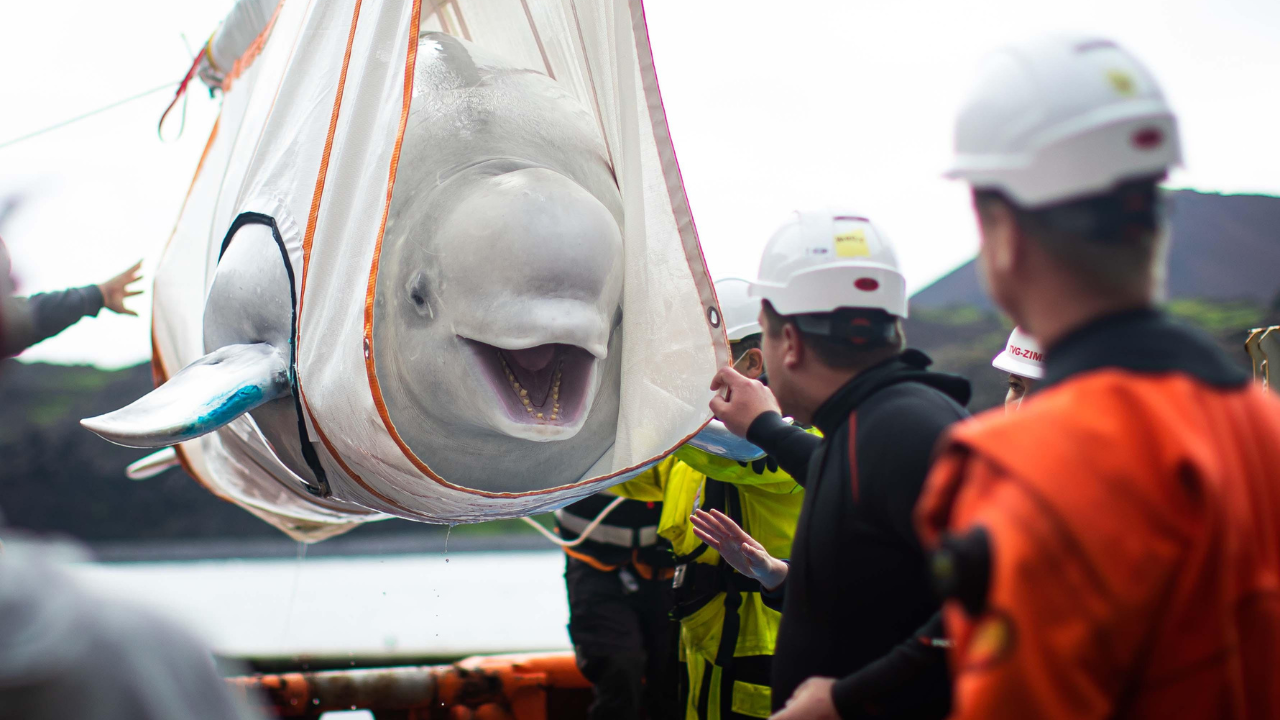
Thirty beluga whales were trapped in financial limbo at a shuttered Niagara Falls amusement park, facing the real possibility of euthanasia. Now, an emergency international airlift is underway to save them in what has quickly become the largest marine mammal rescue in history.
If you've followed animal welfare stories over the years, you know park closures usually mean endless bureaucratic finger-pointing while animals sit in stagnant water. This time, a coalition of North American facilities actually pulled off an extraordinary emergency evacuation. Six belugas have already made it out—four landed at Shedd Aquarium in Chicago and two at SeaWorld San Antonio—with two dozen more set to move across North America and Europe over the next few weeks.
It sounds like a straightforward success story, but moving 4,000-pound marine predators thousands of miles without killing them from stress requires sheer technical brilliance.
How to Airlift a Four Thousand Pound Whale
You don't just put a beluga whale in a crate and drop it on a commercial flight. Moving a single beluga requires months of desensitization, custom heavy-lifting equipment, dedicated convoy logistics, and a chartered Boeing 777 freighter.
The operation starts right at the poolside at Marineland. Teams of veterinarians, animal trainers, and heavy-rigging specialists guide each whale into a custom-padded stretcher sling. Specialized overhead cranes hoist the massive mammal—weighing up to 1,900 kilograms—out of its tank and gently lower it into a custom, temperature-controlled transport container filled with chilly, oxygenated water.
[ Tank Lift ] ➔ [ Custom Sling ] ➔ [ Chilled Transport Tank ] ➔ [ Paddock Convoy ] ➔ [ Boeing 777 Cargo ]
From Niagara Falls, convoy trucks transport the whales directly to Toronto Pearson International Airport. Veterinary staff ride inside the trucks and fly alongside the whales, constantly monitoring breathing rates, skin moisture, and heart stats. If a whale panics or stops breathing properly mid-flight, team members step in immediately to stabilize the animal.
Why Marineland Ran Out of Options
Marineland Canada permanently shut its gates in September 2024 following years of intense legal battles, public boycotts, and animal cruelty allegations. While the tourists vanished, the high cost of keeping 30 massive arctic mammals alive didn't.
Care for thirty belugas costs millions of dollars annually. Feed, filtration chemicals, veterinary staff, and facility upkeep drain capital fast. Donations covered immediate expenses right after the park closed, but by late 2025, those funds dried up completely.
When Marineland petitioned the Canadian government for emergency operating funds in October 2025, officials dragged their feet. That triggered alarm bells across the global marine science community. Without state intervention or private money, caretakers faced an unthinkable choice: find immediate homes for 30 belugas or consider mass euthanasia.
That crisis pushed a consortium of accredited facilities—including Shedd Aquarium, SeaWorld, Georgia Aquarium, Oceanogràfic Valencia, and Mystic Aquarium—to stepped up with emergency logistics and funding. The U.S. National Oceanic and Atmospheric Administration (NOAA) expedited emergency import permits, while Canadian authorities quickly cleared export permits to dodge a disaster.
Social Pods and Medical Care
The easiest mistake in a massive rescue operation like this is treating animals like cargo packages. Beluga whales are deeply social, intelligent, and emotional creatures. If you tear apart established social groups, the resulting psychological trauma can suppress their immune systems and cause fatal health declines during transition.
Researchers and trainers mapped out the social dynamics of the 30 belugas at Marineland months before moving anyone. They identified bonded pairs, matriarchal groups, and juvenile playmates.
The first flight relocated four connected belugas—Sierra, Acadia, Osiris, and Lillooet—together to Chicago's Shedd Aquarium. Another pair, Bertie Botts and Frankie, flew together to San Antonio. Keeping social groups intact gives these animals familiar vocalizations and bonds during an overwhelming experience.
The upcoming waves will send the remaining 24 belugas to Georgia Aquarium in Atlanta, SeaWorld San Diego, and Oceanogràfic Valencia in Spain once international permits clear.
Can Solitary Sanctuaries Work Instead
A common criticism from animal rights activists is that these belugas should go straight to open-ocean sea sanctuaries rather than other accredited aquariums. It sounds good on social media, but it ignores harsh biological reality.
- Captive Reliance: These whales were either born in captivity or spent decades relying on humans for food, medical care, and thermal management. They lack the hunting skills and pod survival strategies needed to live in the wild.
- Sanctuary Capacity Limits: True net-pen ocean sanctuaries simply don't have space for 30 massive belugas at once. Building secure sea pens takes years and tens of millions of dollars—time and money that didn't exist when Marineland's bank accounts hit zero.
- Immediate Lifesaving Needs: Accredited aquariums offered existing, highly regulated cold-water habitats with full veterinary hospital capabilities available right now.
Refusing to send these whales to world-class facilities because they aren't "wild sea sanctuaries" would have signed their death warrants. The accredited consortium stepped up when no one else could.
What Success Looks Like for Relocated Whales
Getting the belugas onto the tarmac in Chicago and San Antonio was just the first leg of the race. The critical phase is happening right now in quarantine pools.
Veterinarians monitor specific behavioral benchmarks to confirm a whale is adapting successfully:
- Active Foraging: Taking restaurant-quality whole fish from trainers within 24 to 48 hours of arrival.
- Vocalization: Emitting high-pitched whistles, clicks, and chirps to communicate with pod mates and test pool acoustics.
- Exploratory Swimming: Actively navigating the full depth and perimeter of new habitat pools rather than hovering near the surface or resting on the bottom.
- Social Re-engagement: Rubbing, swimming in formation, and interacting naturally with both old pod members and resident animals.
Initial reports from Shedd Aquarium show Sierra, Acadia, Osiris, and Lillooet are already swimming comfortably, taking food, and vocalizing with staff.
Keep a close eye on updates from the consortium as the remaining 24 belugas make their journeys over the coming weeks. If you want to support long-term marine welfare, direct your contributions toward accredited facilities that fund real emergency operations, emergency veterinary care, and active rescue infrastructure.

/https://i.s3.glbimg.com/v1/AUTH_e84042ef78cb4708aeebdf1c68c6cbd6/internal_photos/bs/2026/g/B/3vpkvHQKizRKAfzDxjXA/vini-jr-antes-e-depois.jpg)