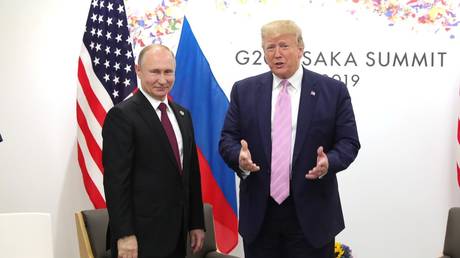
Inviting Vladimir Putin to the December 2026 G20 summit in Miami is not a simple act of diplomatic defiance; it is a calculated attempt to arbitrage multilateral legitimacy and break the diplomatic isolation imposed on Moscow since the full-scale invasion of Ukraine. Standard news coverage frames this episode around surface-level friction: Washington extends an invitation, European allies object, and commentators debate whether the move rewards aggression. That framing misses the structural mechanics driving the clash.
To understand what is actually shifting inside global economic governance, this analysis deconstructs the core claims behind the dispute into four operational frameworks: the Legitimacy Arbitrage Model, the Coalition Fracture Matrix, the Sanctions-and-Access Cost Function, and the Asymmetric Signaling Mechanism. Throughout this breakdown, established events and verified diplomatic statements are treated as known facts, while predictions about Moscow's final attendance decision or the long-term durability of G20 consensus remain educated hypotheses.
Deconstructing Conventional Coverage and Mapping the Logic
Typical reporting on the invitation follows a familiar binary script. On one side stands the White House arguing that direct engagement with Moscow is necessary to pursue a settlement in Ukraine. On the other stand European officials and bipartisan lawmakers in Washington warning that hosting Putin normalizes a war leader and weakens Western pressure.
That binary leaves three blind spots:
- It treats G20 membership as a moral trophy rather than an institutional mechanism. The G20 was designed to coordinate macroeconomic stability among major economies, not to adjudicate international law or serve as a permanent security council.
- It conflates an invitation with attendance. Even if Washington extends a formal invitation to Miami, Putin retains strategic discretion over whether to travel or send senior delegates.
- It overlooks sequential steps already taken at lower diplomatic tiers. Re-engagement did not begin with a presidential invite to Miami; it gained visible momentum through Russian participation in G20 finance and diplomatic tracks in 2026.
Standard coverage captures the outrage but misses the sequence. When a host nation alters guest-list norms at a flagship multilateral forum, the immediate consequence is not a sudden policy reversal by every member state. The first consequence is a change in the baseline of acceptable contact, which forces every other participant to pay a visible political cost to object.
The Legitimacy Arbitrage Model
In international politics, legitimacy arbitrage occurs when an actor uses access to a prestigious multilateral institution to convert contested diplomatic standing into perceived normalcy. The G20 carries high signaling value because it convenes heads of state and finance chiefs from the world's largest economies.
Known facts show that Washington chairs the 2026 summit in Miami and has pushed for renewed contact with Russian officials across diplomatic and economic tracks, including prior appearances by Russian finance officials at a G20 finance gathering in North Carolina in late summer 2026 and Russian representation at a G20 diplomatic meeting in Atlanta in October 2026. Meanwhile, Putin has publicly acknowledged the invitation while keeping his attendance uncertain, citing domestic priorities, travel constraints, and the state of dialogue with Europe.
The strategic mechanism works through three distinct channels:
- Reframing isolation as an anomaly. Every year a sanctioned or diplomatically ostracized leader stays outside major summits reinforces the perception of containment. Placing the invitation on the table shifts the burden onto critics to explain why engagement should remain blocked.
- Extracting leverage without paying upfront concessions. Extending an invitation costs the host very little in immediate material terms while creating potential bargaining room in parallel tracks, such as negotiations over Ukraine or commercial arrangements.
- Preserving optionality for the invitee. Whether Putin attends in person or relies on senior envoys, the invitation itself alters the diplomatic baseline. Declining or hedging allows Moscow to project selectivity rather than exclusion.
An invitation to a premier summit changes the diplomatic baseline even before a plane takes off; once normalcy is offered, maintaining a boycott requires active political effort rather than passive inertia.
My educated hypothesis is that Putin will weigh domestic optics, security logistics, and negotiations with European and U.S. counterparts before committing to travel to the United States. Even if he stays away, the invitation already functions as a wedge inside Western coordination.
Coalition Fracture Matrix
Multilateral pressure depends on coalition cohesion—the degree to which allies align on entry conditions, diplomatic protocol, and enforcement boundaries. When the G20 host favors engagement while European partners prioritize diplomatic distance, cohesion degrades along predictable fault lines.
At the August–September 2026 G20 finance gathering in North Carolina, tensions surfaced publicly when U.S. Treasury officials engaged with Russian counterparts and European delegates pushed back against symbolic inclusion such as the group photograph. That episode illustrates how a single host decision forces allies into reactive posture management.
Three structural frictions explain why Western allies struggle to present a unified front:
- Divergent threat proximity and domestic politics. European capitals face immediate security, energy, and political spillovers from the war in Ukraine, whereas the U.S. presidency has emphasized bilateral dealmaking and transactional leverage.
- Asymmetric agenda control. As summit host, the United States shapes venue logistics, invitation lists, and bilateral optics in ways individual dissenting members cannot easily veto.
- Reputational trade-offs of walkouts. Boycotting a session or group photo signals disapproval, yet absenting oneself from a major economic gathering also cedes influence over communiques, trade rules, and global financing discussions.
A practical example makes the dynamic concrete. Suppose a finance minister objects to a counterpart's presence at a multilateral meeting. Refusing to share a stage or a photo creates a clear headline of protest, but it also shrinks the room in which that minister can press allies on sanctions enforcement or supply-chain security. Allies face a recurring dilemma: stay in the room and risk appearing to normalize an adversary, or step out and lose direct leverage over the host's agenda.
The Sanctions-and-Access Cost Function
Diplomatic access and economic pressure interact through a cost function where easing diplomatic isolation can lower the political and commercial friction around sanctions enforcement. Critics of the invitation warn that reintegrating Russia into high-level forums coincides with broader debates over sanctions relief, energy trade, and commercial channels.
Known facts establish that sanctions pressure, shadow-fleet shipping, energy revenues, and selective diplomatic or sanctions adjustments remain central points of contention between Washington, European capitals, and Moscow. What remains an educated hypothesis is the exact magnitude of any future economic concessions tied to G20 diplomacy, which will depend on negotiation outcomes rather than the invitation alone.
In analytical terms, the cost function has four moving variables:
- Diplomatic signaling cost. Hosting a leader at a major summit reduces the stigma attached to dealing with that government in secondary forums or private business channels.
- Enforcement friction. When key powers disagree on diplomatic posture, coordinating compliance across customs, maritime insurance, and financial clearing systems becomes harder.
- Revenue and trade elasticity. Any relaxation of energy or trade restrictions affects fiscal breathing room in Moscow, though actual revenue shifts depend on prices, volumes, and transit routes rather than summit rhetoric alone.
- Negotiation leverage. Proponents of engagement argue that offering a path back into normal diplomacy can serve as a bargaining chip to extract concessions on conflict termination, whereas critics argue it surrenders leverage prematurely.
This framework exposes a critical limitation of unilateral diplomatic gambits. An invitation alone does not rewrite international sanctions law or erase existing legal and political constraints overnight. Yet it can soften the surrounding political climate, making strict enforcement harder to sustain if allies drift out of alignment.
Asymmetric Signaling Mechanism
At the level of statecraft, the invitation operates as an asymmetric signal—it communicates different strategic messages to different audiences simultaneously. For the domestic audience in the host country, it can be framed as pragmatic leadership pursuing direct talks to end a costly conflict. For allies, it signals a willingness to bypass consensus when consensus slows the host's preferred strategy. For Moscow, it signals division within the Western bloc and opens a channel to test whether diplomatic normalization is attainable without conceding core war aims.
Notice the asymmetry: Washington bears the criticism of allies and domestic opponents, while Russia gains diplomatic optionality without committing to attendance or concessions. Putin's public remarks—thanking Trump for the invitation while noting travel considerations and conditioning broader cooperation on dialogue with Europe—illustrate how an invitee can extract signaling value while keeping his next move ambiguous.
Two operational risks govern how this signal plays out:
- Credibility risk for the host. Inviting a leader who ultimately declines, or who attends only to reject core demands on the sidelines, can leave the host with diplomatic friction among allies and little tangible breakthrough.
- Fragmentation risk for multilateral forums. When geopolitical rivalries dominate G20 meetings, technical cooperation on debt restructuring, inflation, and trade rules risks becoming collateral damage.
No diplomatic move is a silver bullet. Treating engagement as an automatic peace mechanism ignores the incentives of an adversary that views multilateral friction as a strategic asset. Equally, treating every contact as total capitulation overstates what a single invitation accomplishes when structural disputes over security and sanctions remain unresolved.
Operational Playbook for Navigating the G20 Rift
For policymakers, corporate risk teams, and institutional analysts tracking the Miami summit and subsequent G20 cycles, reacting to headlines is a losing approach. Operational discipline requires separating protocol theater from material policy shifts.
- Audit actual policy changes ahead of summit rhetoric. Track concrete actions—sanctions designations or waivers, export controls, maritime enforcement, and bilateral communiques—rather than treating a guest list or photo arrangement as proof of a settled deal.
- Map bilateral side-channels rather than plenary statements. High-stakes outcomes in contested summits rarely emerge from broad plenary sessions; watch who meets privately, which technical working groups reconvene, and whether parallel talks advance.
- Price coalition divergence into risk models. Businesses exposed to energy markets, defense supply chains, sanctions compliance, or cross-border payments should model uneven enforcement between the United States and European jurisdictions instead of assuming uniform Western rules.
- Separate attendance from influence. Prepare contingency scenarios for both a Putin appearance and a high-level Russian delegation led by senior ministers. Either outcome will test G20 cohesion in different ways.
The decisive strategic play for Western allies and institutional planners is to ring-fence core economic and security rules while refusing to let summit protocol dictate strategy. Allies should stop treating every diplomatic gesture by the host as an existential collapse of Western policy, and instead focus energy on locking in binding coordination on sanctions enforcement, energy resilience, and diplomatic red lines before the gavel falls in Miami.