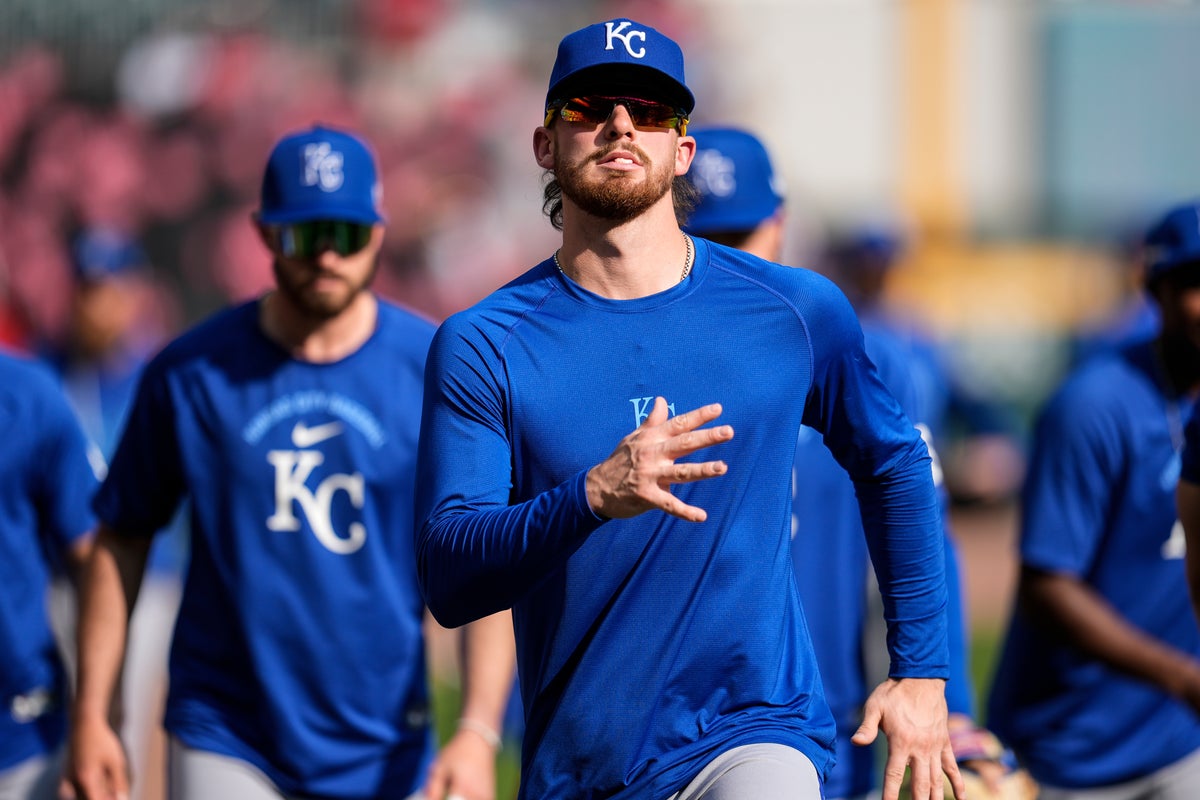
The pursuit of a new stadium for the Kansas City Royals is not a matter of architectural preference or fan experience; it is a high-stakes negotiation over the distribution of economic rents between a private entity and a municipal tax base. When owner John Sherman cites a "sense of urgency," he is referencing the accelerating decay of the club’s current lease-utility curve. The Royals are approaching a terminal point where the cost of remaining at the Truman Sports Complex—measured in opportunity costs, deferred maintenance, and suppressed revenue—exceeds the political friction of securing a new site.
The Economic Obsolescence of the Truman Sports Complex
The current lease at Kauffman Stadium expires in 2031. However, the stadium’s functional lifespan is declining faster than the calendar suggests. The "sense of urgency" is driven by three specific economic pressures that the club can no longer ignore. Don't forget to check out our previous article on this related article.
1. The Revenue Ceiling of Suburban Isolation
Kauffman Stadium operates on a "destination-only" model. Because the stadium is isolated from high-density commercial districts, the club’s capture of "ancillary spend" is limited to the hours immediately preceding and following the first pitch. In contrast, modern urban ballparks function as 365-day real estate assets.
The Royals are currently unable to capture: If you want more about the context here, The Motley Fool provides an excellent breakdown.
- Residential premiums: High-density housing adjacent to the park that commands higher rents due to proximity.
- Commercial tenancy: Office space and retail that remains active during the 284 days of the year when the Royals are not playing at home.
- Hospitality integration: Owning the hotels and bars where fans stay, rather than outsourcing that revenue to the suburban sprawl surrounding I-70.
2. The Maintenance-to-Value Ratio
Concrete cancer and aging infrastructure at Kauffman Stadium create a "maintenance trap." As the structure ages, the capital expenditure required just to maintain safety and basic operations begins to cannibalize the budget for player payroll or fan-facing upgrades. At a certain threshold, the Net Present Value (NPV) of a $1 billion+ new build becomes superior to the NPV of $300 million in recursive repairs on a depreciating asset that offers no new revenue streams.
3. The Competitive Imbalance of "Small Market" Labels
The Royals frequently rely on the "small market" designation to explain payroll limitations. However, "market size" in modern MLB is increasingly a function of real estate footprint rather than television households. By failing to secure a mixed-use development, the Royals remain tethered to a traditional, gate-reliant revenue model that is highly sensitive to team performance. A new stadium is a hedge against on-field volatility; it ensures cash flow even during rebuilding seasons.
The Strategic Failure of the Jackson County Vote
The April 2024 referendum failure, which sought to extend a 3/8th-cent sales tax to fund a downtown stadium, revealed a breakdown in the club’s "Value Proposition Alignment." The Royals and the NFL’s Kansas City Chiefs attempted a unified front that failed to account for distinct voter incentives.
The rejection was not necessarily a rejection of baseball, but a failure of the following logical pillars:
The Displacement Paradox
The proposed Crossroads district location faced intense "community friction." In strategy consulting terms, the club failed to mitigate the perceived loss of "cultural capital" (existing small businesses) with a quantifiable "public ROI." Voters saw the destruction of a functioning ecosystem for the promise of a speculative one.
The Chief-Royals Divergence
By tethering their fate to the Chiefs, the Royals entered a "Joint Venture" where the risks were asymmetrical. The Chiefs hold immense leverage due to their global brand and Super Bowl success. The Royals, conversely, are asking for a transformation of identity. When voters looked at the combined price tag, the Royals’ portion was viewed as a luxury rather than a necessity.
Taxpayer Fatigue and the "Owner Net Worth" Heuristic
Voters increasingly apply a "Net Worth Filter" to public subsidies. The logical argument that "stadiums are public infrastructure" is being defeated by the data-driven reality that team valuations have outpaced inflation by orders of magnitude. Sherman’s urgency is a response to this closing window of public tolerance for billionaire subsidies.
Mapping the Site Selection Matrix
The club is now forced to re-evaluate its "Site Selection Matrix." This is no longer just about Kansas City, Missouri (KCMO). The "urgency" Sherman describes is a signal to Kansas politicians that the club is now an "Open Market Asset."
The Kansas "STAR Bonds" Strategy
Kansas has a specialized financing tool known as Sales Tax Revenue (STAR) bonds. This mechanism allows the state to issue bonds to fund major commercial projects, which are then paid back using the sales tax generated within the new district.
The logic for a Kansas move (specifically to Wyandotte County or Johnson County) is predicated on:
- Lower Political Friction: Kansas leadership has signaled a more aggressive "hunter" mentality to poach Missouri assets.
- Greenfield vs. Brownfield: A Kansas site likely offers more "Greenfield" opportunity—unoccupied land where the club can build a massive "Ballpark Village" from scratch without the displacement optics of a downtown KCMO site.
- Tax Capture Efficiency: STAR bonds allow for a more direct "user-pays" model, which is easier to sell to the broader public than a general county-wide sales tax.
The KCMO Counter-Play: Washington Square Park or East Village
If the club stays in Missouri, they must choose between two distinct urban strategies:
- The Connectivity Play (Washington Square Park): Proximity to the existing Power & Light District. This leverages existing infrastructure but limits the club’s ability to control 100% of the surrounding real estate.
- The Regeneration Play (East Village): Building in a relatively desolate area allows for total control of the ecosystem but requires a much higher initial investment in infrastructure and "placemaking."
The Risks of Perpetual Limbo
The greatest threat to the Royals is not a "No" vote, but "Indecision Paralysis." The timeline for stadium construction—from site acquisition to first pitch—is approximately 48 to 60 months.
If a decision is not finalized by late 2026, the club enters the "Lease Squeeze":
- Financing Volatility: Interest rates and construction costs are moving targets. Every year of delay increases the total debt service required for the project.
- Fan Attrition: The "lame duck" effect at Kauffman Stadium will lead to decreased season ticket renewals and corporate sponsorships as the brand begins to feel transient rather than permanent.
- Recruitment Friction: Top-tier free agents consider facilities and long-term organizational stability. An organization without a confirmed home is a risky career move.
Strategic Action: The Path Forward
To resolve the deadlock, the Royals must shift from a "Civic Appeal" to a "Financial Partnership" model. The "Sense of Urgency" must be translated into a hard-data ultimatum.
1. Decouple from the Chiefs. The Royals must establish a standalone economic identity. The synergies of the Truman Sports Complex no longer apply in an urban or STAR bond scenario. A solo pursuit allows for a more focused, nimble negotiation.
2. Pivot to a "Private-Heavy" Capital Stack. To regain public trust, the ownership group must signal a willingness to cover a larger portion of the "vertical" construction (the stadium itself) while asking the public to fund only the "horizontal" infrastructure (roads, sewers, and public transit). This aligns with modern municipal finance trends where the public pays for the "bones" and the private entity pays for the "skin."
3. Execute a "Dual-Track" Negotiation. The club should simultaneously move to "Term Sheet" status with both Kansas and Missouri. True leverage only exists when there is a credible "Best Alternative to a Negotiated Agreement" (BATNA). Sherman’s urgency is the sound of the club finally admitting they are willing to cross the state line to secure their 50-year future.
The Royals are no longer playing for a stadium; they are playing for the right to control the territory around the stadium. The municipality that understands this shift in the "Sports-Industrial Complex" will be the one that hosts the first pitch in 2031.