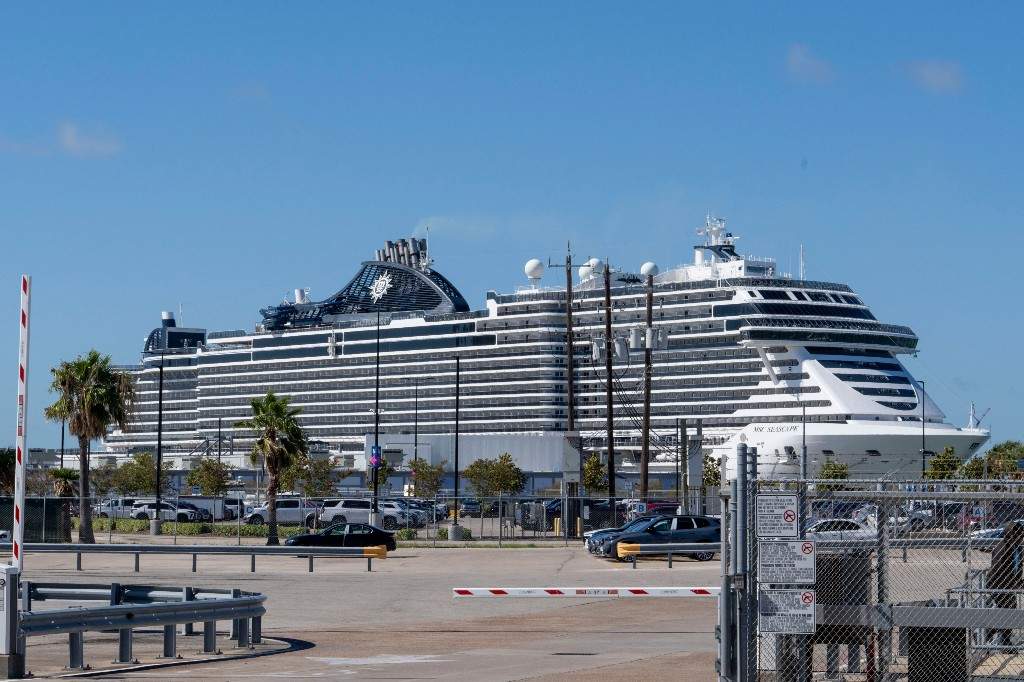
A 48-year-old man faces federal murder charges following a fatal incident aboard the MSC Seascape, a mega-ship that departed from Galveston, Texas. While local headlines treat this tragedy as an isolated shock, the case exposes a brutal reality about maritime travel. When a violent crime occurs in international waters, justice does not move at the speed of a standard terrestrial investigation. Instead, prosecutors, federal agents, and grieving families must navigate a tangled web of overlapping jurisdictions, foreign flags, and delayed evidence collection.
Cruise lines market their vessels as floating utopias detached from everyday rules. Yet the moment a passenger is killed miles off the coast, that carefully curated illusion shatters. The legal machinery that kicks into gear is slow, complex, and heavily reliant on federal statutes written centuries ago to combat piracy.
The Anatomy of a Crime on the Open Ocean
When a ship like the MSC Seascape leaves Galveston, it enters a legal gray zone almost immediately. Within twelve nautical miles of the coastline, the vessel sits in American territorial waters. Beyond that invisible line, the rules change entirely.
Most major cruise ships do not fly the American flag. The MSC Seascape, for instance, is registered in Malta. Under international maritime law, a vessel is legally considered an extension of the territory whose flag it flies. In theory, Malta holds primary jurisdiction over crimes committed aboard the ship while in international waters.
In practice, small flag states rarely prosecute violent crimes involving American tourists departing from American ports. That responsibility falls to the United States through a specific legal mechanism known as the Special Maritime and Territorial Jurisdiction.
Under 18 U.S.C. § 7, the United States claims criminal jurisdiction over offenses committed on the high seas if the vessel departed from or is scheduled to arrive in an American port, and the victim or perpetrator is a U.S. national. This statute is the exact hammer federal prosecutors use when charging a suspect in connection with a death on a Galveston-bound cruise.
Why Galveston Has Become a Focal Point
Galveston is no longer a sleepy regional port. Over the last decade, it has transformed into one of the busiest cruise hubs in North America, funneling millions of passengers into the Gulf of Mexico every year.
More passengers mean more friction. Ships like the MSC Seascape carry over 5,000 guests and roughly 1,600 crew members. You are effectively locking the population of a small town into a steel hull, feeding them unlimited alcohol packages, and placing them in high-stress, unfamiliar environments.
When violence erupts in that pressure cooker, the local port city inherits the legal fallout. Because the voyage originated in Texas, the Federal Bureau of Investigation's Houston field office and the U.S. Attorney's Office for the Southern District of Texas become the primary arbiters of the case. Local Galveston police have zero authority over what happens in the middle of the Gulf.
The Evidence Problem Nobody Talks About
On land, a homicide triggers an immediate, sterile lockdown. Yellow tape goes up. Forensic technicians swarm the scene within minutes. Detectives canvass neighbors while memories are fresh.
At sea, none of that happens.
Cruise ship security officers are private employees, not sworn law enforcement officers. Their primary training involves crowd control, lost passports, and breaking up bar fights. They are not homicide detectives. When a body is discovered in a cabin or on a deck, ship security must secure the room, detain the suspect in the vessel's brig, and wait.
That wait can last days.
Consider what happens to forensic evidence during a two-day sail back to Galveston. Cabin stewards may have already entered the room before an alarm was raised. Ventilation systems circulate air and contaminants. Witnesses disperse across twenty decks, drinking at different bars, discussing what they saw, and inadvertently contaminating each other's recollections.
To illustrate how this plays out, take a hypothetical scenario. Suppose an altercation occurs inside a stateroom at 2:00 AM while the ship is 300 miles south of Texas. Ship security detains the suspect and locks the cabin door. However, the ship cannot simply turn around at full speed without risking navigational hazards or violating international port schedules, unless a medical evacuation is viable. Even if the FBI is notified via satellite phone, federal agents cannot board the vessel until it docks or meets a Coast Guard cutter. By the time trained forensic specialists step over the threshold, forty-eight hours have passed.
The Role of the Cruise Vessel Security and Safety Act
For decades, victims of crimes at sea complained that cruise lines swept violent incidents under the rug to protect their stock prices. In 2010, Congress passed the Cruise Vessel Security and Safety Act (CVSSA) to force transparency and establish baseline investigative standards.
The law mandates several critical protocols:
- Mandatory Reporting: Cruise lines must report serious crimes—including homicide, suspicious deaths, missing U.S. nationals, and sexual assaults—to the FBI immediately by telephone.
- Evidence Preservation: Vessels must carry specific forensic kits and maintain staff trained in basic crime scene preservation until federal agents arrive.
- Public Disclosure: The Department of Transportation maintains a public database of alleged crimes reported by cruise lines, stripping companies of the ability to hide behind quiet settlements.
- Surveillance Requirements: Ships must maintain operational video surveillance systems in public areas to track passenger movements.
While the CVSSA improved reporting, it did not turn private security guards into federal agents. The gap between when a crime occurs and when the FBI takes custody remains the single greatest vulnerability in any maritime prosecution. Defense attorneys routinely attack the chain of custody on cruise ship evidence, arguing that private corporate employees mishandled DNA, failed to log witness statements properly, or violated constitutional rights during onboard interrogations.
How Federal Prosecutors Build the Case
When the MSC Seascape pulls back into the Port of Galveston, the operation resembles a military extraction. FBI Evidence Response Teams board the vessel before general disembarkation begins. Passengers are often held in dining rooms or theaters while agents sweep the ship, download thousands of hours of closed-circuit television footage, and seize keycard access logs.
Every modern cruise ship operates as a digital panopticon. Your keycard is not just a room key; it is a tracking device. Every time you buy a drink, enter a spa, tap into your stateroom, or pass through a gangway, the ship's central server logs a timestamp.
Prosecutors rely heavily on this digital trail to overcome physical forensic delays. If a suspect claims they were at a casino bar at the time of a murder, the ship's point-of-sale system and facial recognition cameras will immediately expose the lie. When physical evidence is compromised by time and maritime conditions, electronic metadata often becomes the centerpiece of the government's case.
The Constitutional Gray Zone of Shipboard Detention
Another major battleground in these prosecutions involves the Fifth Amendment. When cruise ship security detains a suspect and asks questions, are they required to read Miranda rights?
Generally, no. Miranda warnings apply only to custodial interrogations conducted by government law enforcement agents. Private security guards working for a foreign-flagged corporation are not agents of the United States government. Consequently, any incriminating statements a suspect makes to a ship's security officer before the FBI boards can often be used against them in federal court, even without a Miranda warning.
Defense lawyers frequently challenge this distinction, arguing that once ship security coordinates with the FBI via phone or email, they become de facto government agents. Courts have largely rejected this argument unless federal agents actively directed the questioning from shore.
The Illusion of Safety on Mega-Ships
The cruise industry likes to point out that violent crime rates at sea are statistically lower than those in major American cities. That comparison is mathematically flawed.
Cruise passengers are self-selecting demographics who have passed through federal customs screening and paid thousands of dollars for a vacation. Comparing a luxury resort vessel to a major metropolitan area with complex socioeconomic challenges is apples to oranges.
Furthermore, the industry's statistics only reflect crimes that are definitively reported and investigated. When someone goes overboard in the middle of the night, it is frequently classified as a missing person incident or a suicide unless clear evidence of foul play emerges. Without a body and without witnesses, a homicide at sea can easily vanish into the ocean's depths.
The case involving the 48-year-old suspect from the MSC Seascape did not vanish because the incident occurred within the ship's physical boundaries, leaving behind a crime scene, witnesses, and a clear jurisdictional hook for federal authorities in Texas.
What Passengers Actually Need to Know
Most travelers step onto a cruise ship assuming they carry the full weight of American legal protections in their back pocket. They do not.
When you cross that gangway, you enter a private corporate environment governed by a ticket contract written entirely in the cruise line's favor. That contract dictates where you can sue, limits corporate liability for emotional distress, and shields the company from responsibility for the criminal acts of fellow passengers unless you can prove gross negligence in security staffing.
Criminal justice and civil accountability operate on two entirely separate tracks. Even if federal prosecutors secure a murder conviction against the suspect in Texas, the victim's family faces an uphill battle holding the cruise operator financially accountable. Maritime tort law—specifically the Death on the High Seas Act (DOHSA)—strictly limits financial recovery for fatal incidents occurring more than three nautical miles from shore, often restricting damages solely to pecuniary losses like lost future wages, while excluding compensation for grief or loss of companionship.
The arrest of a suspect on a Galveston cruise ship proves that the long arm of federal law can reach into international waters. It does not prove that the system is built to make victims whole. Until Congress modernizes maritime liability laws and mandates sworn law enforcement presence on mega-ships carrying thousands of Americans, passengers remain dependent on corporate security teams and centuries-old legal patchwork every time the lines are cast off.