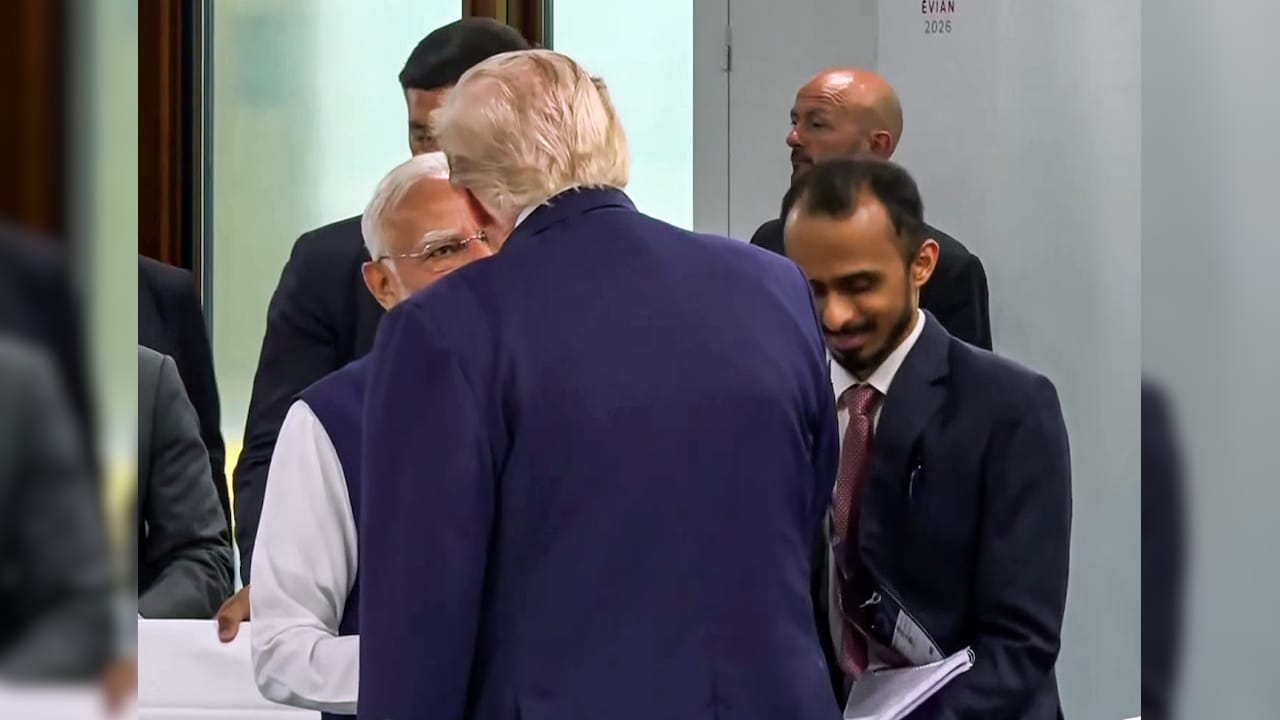
The global media apparatus is currently hyperventilating over a handshake.
If you glance at the mainstream coverage of the recent G7 summit, the narrative is painfully predictable. Headlines trumpet the "first meeting in 16 months" between Indian Prime Minister Narendra Modi and US President Donald Trump. They dissect the body language. They count the seconds of the grip. They frame this brief interaction on the sidelines of a multilateral summit as a monumental geopolitical reset—a sudden, dramatic thawing of relations after a period of supposed drift. For another perspective, check out: this related article.
It is pure theater. And it is completely wrong.
The obsession with bilateral optics at multilateral summits treats international relations like a high school drama. The premise is flawed, the analysis is lazy, and the conclusions are dangerous for anyone trying to navigate the actual realities of global trade and defense policy. Further coverage on the subject has been provided by The New York Times.
Let's dismantle the consensus.
The 16 Month Gap is a Meaningless Metric
The core argument of the mainstream press is built on a fallacy: that a lack of public, face-to-face meetings between top leaders equates to a stagnation in bilateral ties.
This is not how modern statecraft works.
I have spent years watching corporate boards and diplomatic circles mistake proximity for progress. They assume that if the CEOs aren't golfing together, the merger is off. In reality, the most profound structural alignments happen when the cameras are turned off and the principals are nowhere near the room.
During those "silent" 16 months, the bureaucratic and institutional machinery of the US-India partnership did not freeze. It accelerated. Look at the data that actually matters:
- The Initiative on Critical and Emerging Technology (iCET): Joint mechanisms continued to iron out defense supply chain integrations, semiconductor roadmaps, and co-production agreements for jet engines.
- Trade Volume: Bilateral trade figures did not plummet during the optical drought; they held steady, governed by market demand and supply chain diversification away from Beijing, not by presidential smiles.
- Defense Exercises: Mid-level military interoperability drills in the Indo-Pacific continued without a single hitch.
To suggest that a 16-month gap in face-to-face meetings represents a vacuum that needs saving by a G7 handshake is to misunderstand the sheer inertia of state bureaucracies. Foreign policy is not driven by personal chemistry; it is driven by cold, hard structural imperatives.
The Illusion of Personal Diplomacy
We love the narrative of the Great Man theory of history. It is comforting to believe that two powerful leaders can sit in a room, look each other in the eye, and alter the trajectory of global economics.
It is a fantasy.
The Reality Check: A handshake cannot override a domestic tariff. A warm embrace cannot repeal a local manufacturing mandate.
When Donald Trump views global interactions through the lens of trade deficits and transactional bilateralism, a photo-op at the G7 does not wipe away the fundamental friction points between Washington and New Delhi.
Consider the structural contradictions that a handshake completely fails to address:
| Friction Point | US Position | India Position |
|---|---|---|
| Tariffs & Protectionism | Demands reciprocal tariff reductions and market access for American agricultural and medical goods. | Maintains high tariffs to protect domestic industries under the "Make in India" initiative. |
| Immigration & Visas | Tends toward restrictive H-1B visa policies to protect domestic tech labor. | Relies on fluid talent mobility to sustain its massive technology services sector. |
| Geopolitical Autonomy | Prefers clear-cut alliances to contain adversarial spheres of influence. | Rejects formal alliances in favor of strategic autonomy, continuing to purchase Russian oil and maintaining independent regional relationships. |
No amount of personal rapport between Modi and Trump changes the fact that India will always prioritize its strategic autonomy, and the US will always prioritize its domestic economic interests. To view their relationship through the prism of a "renewed friendship" is to ignore the structural realities that compel both nations to cooperate on some fronts while aggressively competing on others.
Dismantling the Public Premise
If you look at the questions frequently asked by market analysts and political observers, the anxiety is misplaced.
Does a lack of meetings mean the US India alliance is weakening?
This question assumes an alliance exists. It does not. India is not Japan; it is not Australia. It is a strategic partner, not a treaty ally. The distinction is critical. Allies sign mutual defense pacts; partners cooperate where interests align and agree to disagree where they do not. The lack of meetings merely reflects that both leaders were buried in domestic election cycles, not a shift in geopolitical alignment.
Will this G7 meeting accelerate a bilateral trade deal?
Absolutely not. Major trade agreements are grinding, multi-year endeavors managed by career trade representatives who fight over the tariff rates of almonds and dairy products. A brief meeting on the sidelines of a summit about global governance does not magically resolve deep-seated protectionist impulses on both sides.
The Danger of Optimizing for Optics
There is a distinct downside to this contrarian view: it lacks the easy comfort of the mainstream narrative. It is far more reassuring to believe that global stability hangs on a successful meeting than to accept that we are locked in a permanent state of complex, transactional negotiation.
When businesses and investors make capital allocation decisions based on the optical high of a summit handshake, they lose. I have seen multinational firms greenlight massive expansions based on the political euphoria of a state visit, only to watch those initiatives choke on regulatory red tape six months later because the structural underlying friction was never resolved.
Stop reading the tea leaves of diplomatic body language.
The G7 handshake was not a reset. It was not a breakthrough. It was a scheduled piece of political choreography designed for domestic consumption in both Washington and New Delhi.
The real work is boring. It happens in draft memos, working groups, and regulatory filings. If you want to know where the US-India relationship is going, ignore the flashes on the G7 red carpet. Look at the defense procurement logs and the semiconductor supply chain data instead. Everything else is just noise.