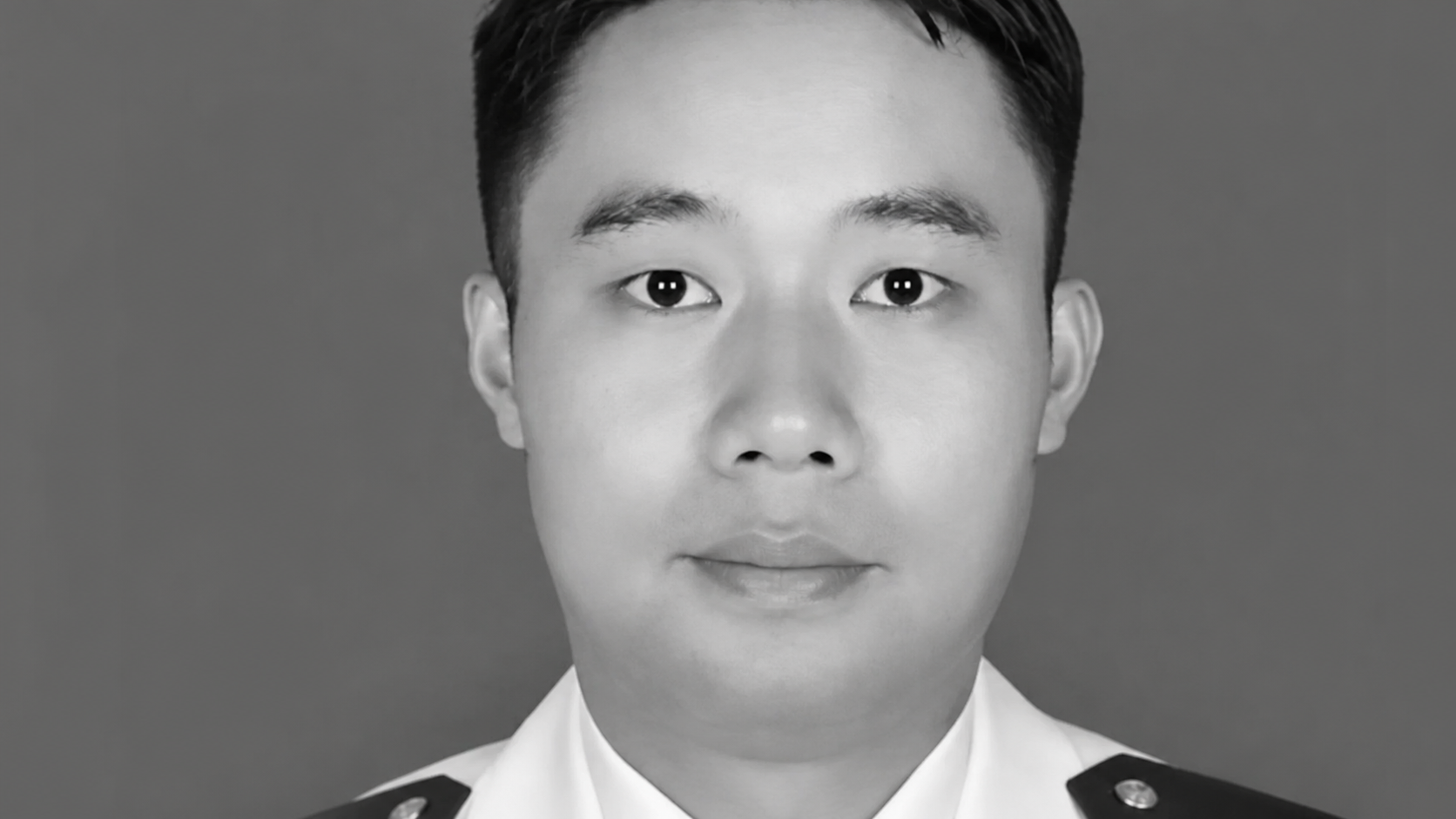
Western media loves a predictable script. A Chinese military aircraft goes down during a routine exercise, two People’s Liberation Army (PLA) pilots tragically lose their lives, and the immediate headline behaves as if it uncovered a deep-state conspiracy. "Beijing stays silent," the reports scream. They frame the lack of an immediate, Western-style breaking news press conference as proof of a massive cover-up, a sign of structural weakness, or a panic move by the Central Military Commission.
This interpretation is lazy, flawed, and fundamentally misunderstands how modern militaries operate. You might also find this connected coverage insightful: The Strategic Math Behind India’s Quiet Diplomatic Surge in Oman.
The Western defense press operates under the assumption that if a military doesn't immediately tweet about its losses, it is hiding a systemic failure. Having spent years analyzing global defense logistics and aviation mishap data, I can tell you that treating operational security as a political cover-up is a rookie mistake. Beijing isn't staying silent because they are terrified of the geopolitical fallout. They are following a standard, highly deliberate military protocol that values data integrity over the 24-hour news cycle.
The Western Double Standard on Mishap Reporting
When a US Navy F/A-18 crashes during carrier qualifications, the initial press release is sparse. It acknowledges the incident, states the status of the crew, and immediately locks down the data. The actual investigation takes months, sometimes years. The public receives a sanitized, heavily redacted summary long after the news cycle has moved on. As discussed in recent articles by The Guardian, the effects are significant.
Yet, when the PLA Air Force (PLAAF) follows a similar, arguably tighter protocol, it is branded as an authoritarian information blackout.
Let's look at the mechanics of military aviation. During high-tempo training cycles, accidents are a statistical certainty. Aviation safety data across the US, NATO, and the PLA shows a direct correlation between increased flight hours, complex joint-force exercises, and mishap rates.
Imagine a scenario where a military force is rapidly modernizing its fleet—moving from third-generation legacy fighters to fifth-generation platforms like the J-20, while simultaneously ramping up night-sorties and low-altitude electronic warfare drills. The operational friction is immense.
[High-Tempo Modernization] -> [Increased Sortie Density] -> [Elevated Statistical Risk]
To expect any military to broadcast the precise telemetry, pilot identities, and tactical contexts of a training failure while the wreckage is still smoldering is absurd. It is not political damage control; it is basic counterintelligence.
Dismantling the People Also Ask Premise
The internet is flooded with variations of the same naive question: Why does China hide its military accidents?
The premise itself is broken. China does not hide its accidents; it contextualizes them internally. The PLA honors its fallen pilots within its own ranks and local communities, often granting them martyr status. What it does not do is feed the appetite of foreign intelligence agencies looking for free data on PLAAF readiness, airframe vulnerabilities, or pilot training deficiencies.
Every piece of information released during an active mishap investigation is a data point for an adversary.
- The exact time and location? It reveals transit corridors and radar coverage gaps.
- The airframe variant? It hints at potential fleet-wide maintenance or structural issues.
- The pilot experience level? It exposes the depth of the training pipeline.
If you are running a near-peer military force, you do not hand this data to your competitors on a silver platter just to satisfy the optical demands of foreign journalists.
The Real Cost of Rushing the Narrative
I have watched defense analysts butcher the technical reality of aviation mishaps by rushing to judgment based on early, unverified leaks. They mistake a localized engine flameout for a systemic manufacturing defect. They attribute pilot spatial disorientation to poor training doctrines rather than the physiological limits of human flight.
The downside to the contrarian reality—that Beijing's silence is just standard operational security—is that it lacks the cinematic drama of a spy thriller. It is boring. It is bureaucratic. It is deeply technical. It forces us to acknowledge that the PLAAF is operating like a mature, modern superpower military rather than a panicked regime.
Consider the transition from older WS-10 engines to newer, domestic propulsion systems. Testing these limits requires pushing pilots to the edge of the envelope. When Western commentators view an accident through a purely political lens, they miss the actual technical narrative: the PLA is flying harder, in worse conditions, and with more complex profiles than ever before. The accidents are a lagging indicator of an aggressive, real-world training posture, not a failing force.
Stop Looking for Conspiracies Where Logistics Exist
If you want to understand the state of Chinese military aviation, stop reading the tea leaves of state media silence. Look at the satellite imagery of their runways. Look at the sortie frequencies over the Taiwan Strait and the South China Sea. Look at the defense procurement cycles.
Militaries that are failing or crippled by fear do not increase their operational footprint. They ground their fleets. They reduce flight hours to preserve airframes and avoid embarrassing headlines. The PLAAF is doing the exact opposite. They are absorbing the losses, adjusting their parameters, and keeping their birds in the air.
The next time a report drops claiming Beijing is hiding a training tragedy, flip the script. Recognize the silence for what it actually is: a professional military closing ranks to fix a technical problem, completely indifferent to the noise of the outside world. Treat the absence of noise not as a secret to be unlocked, but as a warning that the machine is working exactly as intended.