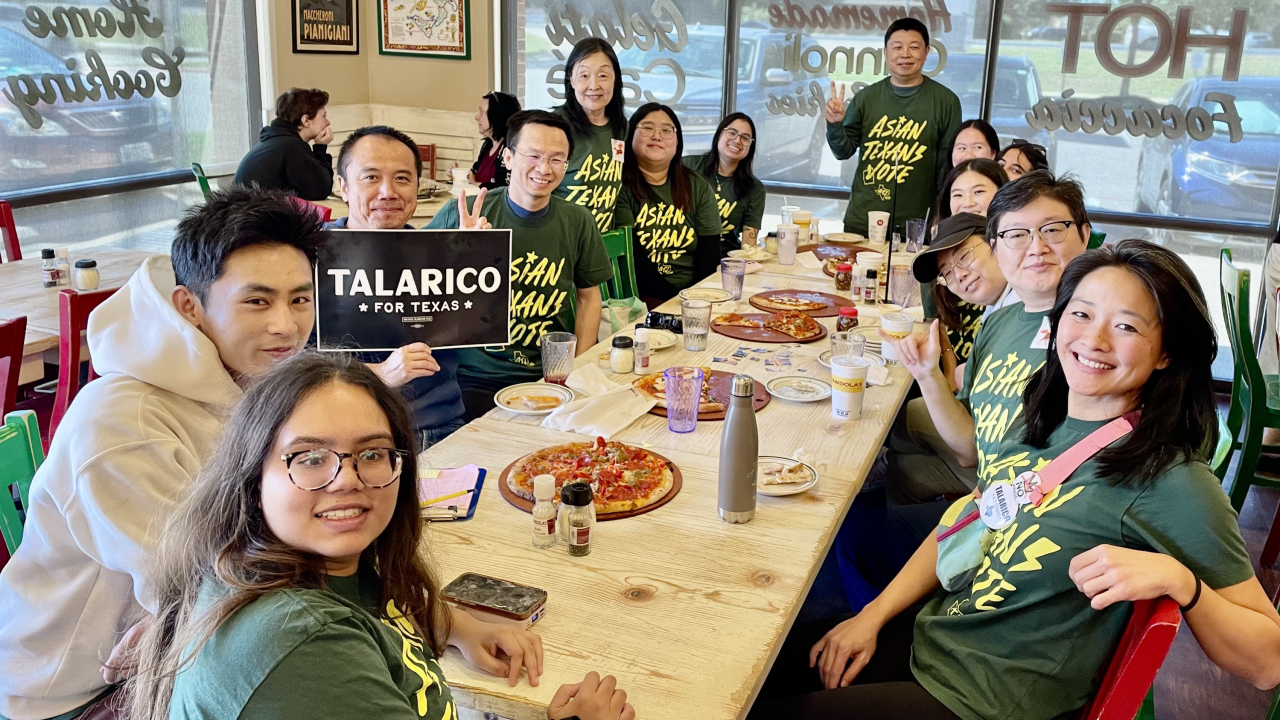
Political pundits love a neat victory lap. Following the 2020 presidential election and the 2021 Georgia Senate runoffs, mainstream political coverage settled on a tidy, triumphant narrative: grassroots Asian-American campaigners mobilized a sleeping giant and turned the deep-red American South permanently blue.
That narrative is dangerously incomplete. It flattens a complex demographic reality into a single partisan talking point, mistakes a razor-thin tactical coalition for a permanent ideological realignment, and ignores the structural fragility that threatens Democratic durability across the Sun Belt.
When analysts look at states like Georgia, North Carolina, and Texas, they often treat "Asian-American voters" as a monolithic bloc waiting to be activated by progressive messaging. According to data from AAPI Data and the Pew Research Center, Asian Americans are the fastest-growing racial or ethnic group in the U.S. electorate, and their turnout surged in 2020—rising nearly 47% nationally compared to 2016, with Georgia seeing Asian-American turnout more than double. Organizations like the Asian American Advocacy Fund and New Georgia Project knocked on hundreds of thousands of doors, translated ballots into Mandarin, Korean, Vietnamese, and Hindi, and unquestionably provided the margin of victory in a state decided by fewer than 12,000 votes.
Yet attributing a "blue South" solely to a permanent leftward shift among Asian-American voters misreads both the region and the electorate.
The "Deep-Red South Turned Blue" Fallacy
First, the South did not turn blue. Georgia voted Democratic at the presidential level in 2020 and elected two Democratic senators in 2021, only to re-elect Republican Governor Brian Kemp by more than seven points in 2022 and swing back toward Donald Trump in 2024. North Carolina remained stubbornly purple-red at the federal level across multiple cycles. Texas stayed firmly under Republican control.
Calling the South "blue" based on two election cycles confuses demographic growth with partisan lock-in. In campaign war rooms across Atlanta and Charlotte, strategists frequently burn millions of dollars assuming that urbanization plus diversity automatically equals Democratic dominance. Political scientists like Ruy Teixeira and John Judis famously predicted this decades ago in The Emerging Democratic Majority, and campaigns have been over-indexing on demographic determinism ever since.
What actually happened in Georgia in 2020 and 2021 was a temporary convergence of three distinct forces:
- Suburban realignment among college-educated white voters alienated by the rhetoric of the national Republican Party.
- Historic Black voter infrastructure, built over decades by organizers on the ground, which still accounts for the overwhelming majority of Democratic votes in the Deep South.
- Targeted, hyper-local AAPI outreach that closed a microscopic gap in suburban counties like Gwinnett, Fulton, and Forsyth.
When commentators credit Asian-American organizers with "turning the South blue," they simultaneously overstate the permanence of the shift and erase the reality that AAPI voters in the South remain fiercely contested.
The Monolith Myth: Why "AAPI" Fails as a Political Strategy
The biggest operational mistake in modern political campaigning is treating "Asian American and Pacific Islander" as a single political identity. In reality, it is an administrative census category encompassing over 20 distinct national origins, dozens of languages, wildly divergent immigration histories, and sharply conflicting economic priorities.
Consider the numbers from the Asian American Voter Survey (AAVS) and Pew Research Center:
- Indian Americans lean heavily Democratic, largely driven by views on pluralism, healthcare, and professional immigration pathways.
- Vietnamese Americans, particularly older generations shaped by anti-communist history, have historically leaned Republican, though younger Vietnamese voters show more progressive inclinations.
- Korean and Chinese Americans exhibit substantial partisan fluidity, often splitting on issues like public safety, small business taxation, K-12 education meritocracy, and foreign policy.
In practice, campaign consultants who drop generic, translated Democratic flyers into suburban strip malls in Duluth, Georgia, or Cary, North Carolina, often accomplish very little. Worse, they sometimes alienate voters who feel patronized by messaging focused exclusively on racial grievance while ignoring inflation, crime, or small-business regulation.
The organizers who actually succeeded in 2020 did not win by lecturing voters on national progressive orthodoxy. They won through relational organizing—church networks, ethnic media, WhatsApp and KakaoTalk groups, and trusted community elders who treated civic participation as a practical tool for local representation rather than an ideological crusade.
The Real Reason Campaigners Succeeded—And Why It Is Fragile
If you strip away the media romanticism, the real story of Asian-American organizing in the South is a story about institutional neglect followed by sudden market correction.
For decades, both major political parties ignored Asian-American voters in the South. According to the 2020 Asian American Voter Survey, roughly half of Asian-American registered voters reported having no contact at all from either the Democratic or Republican parties leading up to the election. In political terms, that is an uncontested market.
When progressive groups finally invested in culturally competent outreach—hiring bilingual canvassers, building native-language voter guides, and addressing basic ballot access barriers—the return on investment was massive simply because nobody else was showing up.
However, an uncontested market never stays uncontested forever.
By 2022 and 2024, Republican operatives recognized the vulnerability. GOP outreach hubs opened in Asian-American commercial corridors from Gwinnett County to Houston. Conservative messaging hammered on economic inflation, public school curricula, affirmative action in higher education, and crime—issues that resonated deeply with many Asian-American small-business owners and parents.
According to exit polling and validated voter file analyses from Catalist and Pew following the 2024 cycle, Republicans made measurable gains among Asian-American voters nationally, trimming Democratic margins by several percentage points compared to 2020. The "blue wave" narrative collapsed the moment the opposing party decided to compete for the same voters.
What Political Pundits Get Wrong About Southern Realignment
When observers ask, "How did Asian-American voters turn the South blue?" they are asking the wrong question. The premise itself is flawed.
The real question is: Why are Asian-American voters in the South acting as the ultimate swing electorate?
Three structural factors explain this volatility:
1. High Geographic Concentration in Swing Suburbs
Unlike in California or New York, where massive Democratic majorities absorb demographic shifts without changing statewide outcomes, Asian Americans in the South are concentrated in pivotal suburban counties. In Georgia, Gwinnett County flipped from reliably Republican in the early 2000s to a Democratic stronghold by 2020, largely driven by rapid Asian and Hispanic population growth. Because statewide margins in Georgia and North Carolina sit between 0.2% and 3%, a 10-point swing within a 5% slice of the electorate decides the entire state.
2. Lower Party Identification
According to Pew Research Center data, a higher share of Asian-American voters identify as political independents—or decline to state a party preference—compared to white or Black voters. Many first-generation immigrants arrive in the United States without inherited generational loyalty to either the Democratic or Republican brand. They evaluate candidates transactionally: Who keeps my neighborhood safe? Who lets my business grow? Who respects my family's educational aspirations?
3. The Disconnect Between Activist Class and Median Voter
There is an undeniable gap between the progressive non-profit infrastructure that drives voter turnout and the median Asian-American household in the Southern suburbs. Grassroots organizers are often younger, college-educated, and ideologically aligned with progressive urban politics. Meanwhile, the median Asian-American household in states like Georgia, Texas, or Virginia often has a higher median income than the national average, owns property, and holds culturally moderate-to-conservative views on policing and merit-based education.
When campaigners focus purely on turnout (getting registered voters to the polls), progressive organizations excel. When the battle shifts to persuasion (convincing moderate voters which party aligns with their economic self-interest), the progressive advantage shrinks dramatically.
The Trade-Offs of Identity-Driven Campaigning
Admitting the limits of this strategy requires acknowledging a hard truth: identity-based mobilization has diminishing returns.
Relying heavily on ethnic solidarity to drive votes works well when a community feels overtly targeted or excluded—such as during the surge in anti-Asian rhetoric and violence during the COVID-19 pandemic in 2020 and 2021. In that environment, defensive solidarity unified disparate Asian-American subgroups behind Democratic candidates.
Once that acute crisis fades, everyday economic friction takes over. If a political movement has nothing to offer beyond cultural representation and translated flyers, voters quickly revert to voting their wallets and their neighborhoods. Relying on identity alone leaves campaigns exposed the moment economic conditions sour or cultural debates shift toward topics like selective school admissions or tax policy.
How Campaigns Should Actually Approach the Southern AAPI Electorate
If political strategists, civic organizations, and analysts want to understand where Southern politics is actually heading, they need to abandon the "sleeping giant turned blue" fairy tale and adopt a sharper framework:
- Disaggregate Every Metric: Stop reporting "AAPI turnout" as a single number. Track precinct-level data disaggregated by national origin, generational cohort, and household income. A precinct dominated by first-generation Vietnamese small-business owners behaves nothing like a precinct of second-generation Indian-American tech workers.
- Treat Persuasion as Equal to Mobilization: Door-knocking only works if the message matches the voter's actual priorities. Campaigns need year-round policy conversations around small-business capital, healthcare costs, and public education—not just a six-week blitz of translated mailers before Election Day.
- Build Permanent Civic Infrastructure, Not Seasonal Machines: Parachuting organizers into Atlanta or Raleigh every two years breeds cynicism. Sustainable political power comes from funding local ethnic media, supporting municipal candidates for school boards and city councils, and solving mundane constituent problems between election cycles.
- Drop the Inevitability Narrative: Neither party owns the fastest-growing electorate in the American South. Treating any demographic group as a guaranteed partisan asset is the fastest way to lose them.
The Asian-American organizers who reshaped Southern elections in 2020 proved that relentless, culturally fluent groundwork can decide the closest races in America. What they did not do is hand either party a permanent deed to the South. Every election cycle in the Sun Belt remains a knife fight—and the voters who tipped the balance once are entirely willing to tip it back.