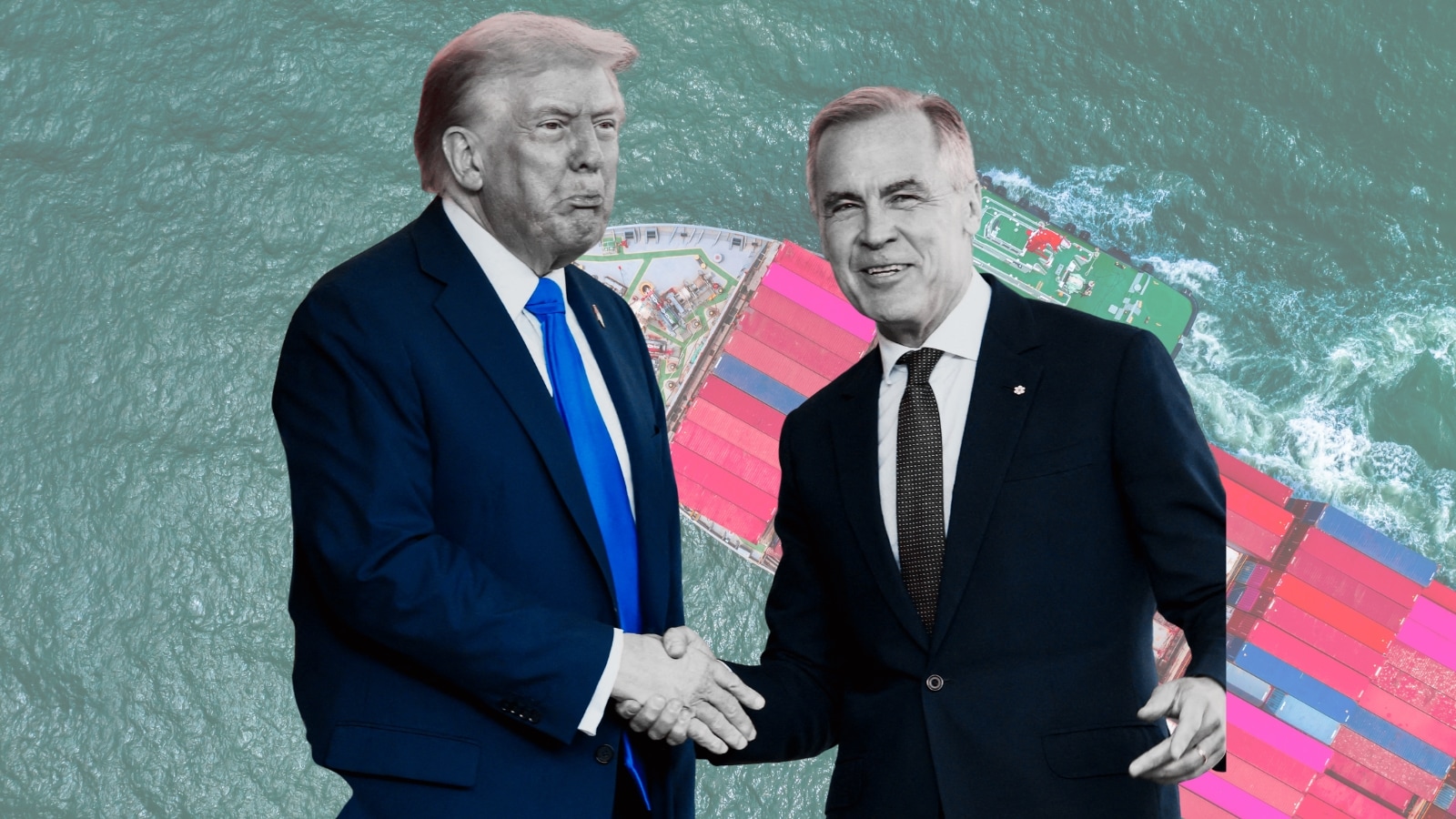
Canada cannot simply decouple its economy from the United States, no matter how politically satisfying that ambition sounds to Ottawa. When Prime Minister Mark Carney steps before a camera to insist that the country has everything required to pivot and prosper away from its southern neighbor, he is selling a comforting narrative to an anxious public. The reality etched into balance sheets, supply chains, and logistics terminals across North America is far more punishing. Decades of deep economic integration cannot be undone by executive speeches or retaliatory tariff schedules without inflicting structural damage on Canadian workers and businesses.
The friction began in earnest when Washington levied sweeping fifty percent tariffs on billions in Canadian exports, triggering a tit-for-tat response from Ottawa that matched the dollar value with its own targeted duties. Officials in Ottawa designed these counter-measures to land squarely in politically sensitive states like Michigan and Ohio ahead of upcoming electoral cycles, hoping to force a change of heart inside the Beltway. Yet this strategy assumes that economic pain will automatically translate into policy concessions. More often, a trade war between deeply integrated neighbors acts like a slow-moving administrative wreck, crushing small enterprises and independent operators who lack the capital to absorb sudden border costs.
The Anatomy of Structural Dependence
To understand why a rapid diversification away from the American market remains an uphill climb, one must examine the raw architecture of continental commerce. Nearly eighty percent of Canadian merchandise exports historically cross the border into the United States. Entire industrial corridors in Ontario and Quebec operate on just-in-time manufacturing schedules where an auto part or aluminum sheet crosses international boundaries multiple times before a finished vehicle rolls off an assembly line.
Attempting to reroute these established arteries across oceans or down through Latin America introduces massive transit overhead, logistical bottlenecks, and incompatible regulatory standards. For a hypothetical manufacturing firm in Windsor, shifting a supplier base from Ohio to Germany or South Korea is not a simple administrative pivot. It requires re-engineering supply chains, renegotiating long-term procurement contracts, and accepting longer lead times that erode profit margins.
Furthermore, domestic barriers within Canada itself continue to impede internal trade more than external borders sometimes do. Interprovincial trade restrictions on alcohol, transportation, and professional credentials create friction that hobbles national economic efficiency. If Ottawa wishes to build genuine internal resilience, dismantling these domestic walls must take precedence over signing distant trade agreements that remain years away from yielding tangible commercial volumes.
The Cost of the Transatlantic Leap
Advocates of the grand diversification strategy point toward Europe, Asia-Pacific partners under the Comprehensive and Progressive Agreement for Trans-Pacific Partnership, and emerging markets as natural shock absorbers. Non-U.S. exports have indeed shown pockets of growth over recent years, backed by existing pacts like the European Union trade agreement. However, volume is the ultimate arbiter of economic survival. No combination of secondary markets possesses the sheer absorption capacity of the American consumer base.
Consider the aerospace and energy sectors. When aerospace manufacturers face cross-border restrictions or threats to their U.S. footprint, the specialized nature of their components limits immediate alternative buyers. Similarly, energy grids, pipelines, and rail networks are physically oriented north-south. Reversing those flows requires multi-billion-dollar infrastructure investments that take decades to plan, approve, and construct. Capital markets are already growing wary of the regulatory uncertainty surrounding these projects.
The federal government has rolled out billions in temporary support packages to cushion affected industries, but subsidies are a temporary anesthetic, not a cure for structural isolation. When public treasuries borrow to sustain sectors cut off from their primary markets, the long-term bill lands squarely on taxpayers through higher debt servicing costs and reduced fiscal flexibility for healthcare and education.
Navigating the Crossroads
The path forward requires a delicate combination of tactical retaliation and quiet diplomatic re-engagement. Canada must maintain enough pressure to signal that its sovereignty and economic framework are non-negotiable, while preparing the ground for eventual negotiations once political winds shift in Washington. Pretending that the country can simply turn its back on the world's largest economy ignores the fundamental geographic reality that has defined Canadian history since Confederation. Prosperity will not be found by leaping blindly across oceans, but by hardening domestic infrastructure, streamlining internal trade, and protecting vital industrial capacities until rational commercial dialogue resumes.
The true test of leadership lies not in rhetorical flourishes about self-reliance, but in managing the messy, expensive reality of a half-broken partnership without letting the fallout sink the national economy.
Canada Tries to Find Alternative Trading Allies as Trade War With US Intensifies
This video provides additional context on Canada's ongoing efforts to secure alternative international trading alliances amid escalating economic frictions with the United States.