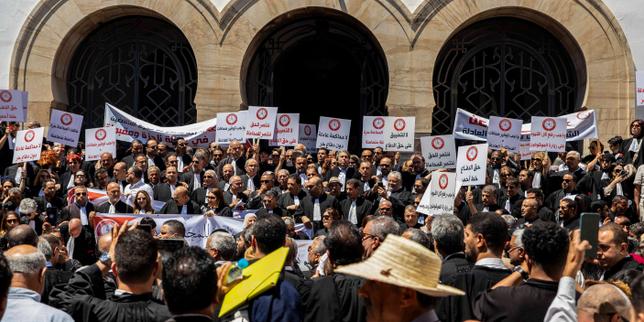
The international media is running its favorite script on Tunisia again. The narrative is comforting, familiar, and entirely wrong. They see a lawyers' strike, a corporate crackdown, and immediately scream about the total death of an independent judiciary. They paint a picture of a pristine, heroic legal profession fighting a lone battle against authoritarian overreach.
It is a beautiful story. It is also an absolute fantasy.
What the mainstream analysis ignores is a brutal truth: the system they are mourning was already broken. The "independence" being defended was often little more than a shield for institutional paralysis, corporate self-interest, and a complete lack of accountability to the public. Striking to preserve a failed status quo is not a defense of justice; it is the panic of a privileged guild realizing its monopoly is cracking.
The Illusion of the Golden Age
To understand why the current outrage is misplaced, we have to look at what Tunisian justice actually looked like before the recent crackdowns. The lazy consensus implies that until recently, the country possessed a functional, impartial legal apparatus.
Ask any ordinary Tunisian citizen who tried to navigate the courts between 2011 and 2021 if they felt served by an independent judiciary. They will tell you about decades-long property disputes, blatant corruption, and a system that operated as a closed shop for the well-connected.
Independence is not an end in itself. It is a mechanism to ensure fairness. When independence transforms into total insularity—where judges and lawyers answer only to their own syndicates—the system ceases to be a pillar of democracy. It becomes a state within a state. The Bar Association functioned less like a guardian of civil liberties and more like a powerful medieval guild, fiercely protecting its tax privileges and shielding its members from external scrutiny.
The Core Fallacy of Legal Guilds
The fundamental error in the current discourse is confusing the corporate interests of lawyers with the human rights of citizens. They are not the same thing.
When a professional order goes on strike, they halt the entire legal machinery. The people who suffer are not the political elites; it is the pre-trial detainees sitting in overcrowded cells waiting for a hearing that gets postponed yet again. It is the small business owner waiting for a contract dispute to be resolved so they can pay their workers.
Imagine a scenario where medical professionals shut down emergency rooms to protest a change in hospital management regulations. The public would be outraged. Yet, when the legal elite shuts down the courts, they expect applause for their heroism.
True judicial reform requires breaking monopolies, forcing transparency, and subjecting the legal apparatus to democratic accountability. The current confrontation is not a battle between dictatorship and democracy; it is a turf war between executive overreach and a defensive, corporate oligarchy.
Why the Current Approach Fails Citizens
If you want to build a resilient legal system, you do not achieve it by demanding a return to the post-2011 paralysis. The old Superior Council of the Judiciary was crippled by internal ideological battles and political horse-trading. It was independent from the presidency, yes, but it was utterly dependent on political factions and internal nepotism.
The contrarian reality is that a strong executive can sometimes be the only force capable of breaking up entrenched institutional fiefdoms. The danger, of course—and this is the risk we must honestly admit—is that without a clear, rule-bound framework to replace the old system, you simply substitute a corporate monopoly with a political one.
But pretending the old ways were viable is a form of intellectual blindness. The international community keeps asking the wrong question: "How do we protect the independence of the current actors?"
The real question should be: "How do we design a system that holds both the executive and the legal profession accountable to the populace?"
Stop romanticizing the strike. Stop treating the Bar Association as an unblemished vanguard of freedom. They are fighting for survival in a system that is shedding its old illusions. The old judicial order is dead, not because it was conquered, but because it failed to justify its existence to the people it was supposed to protect.


