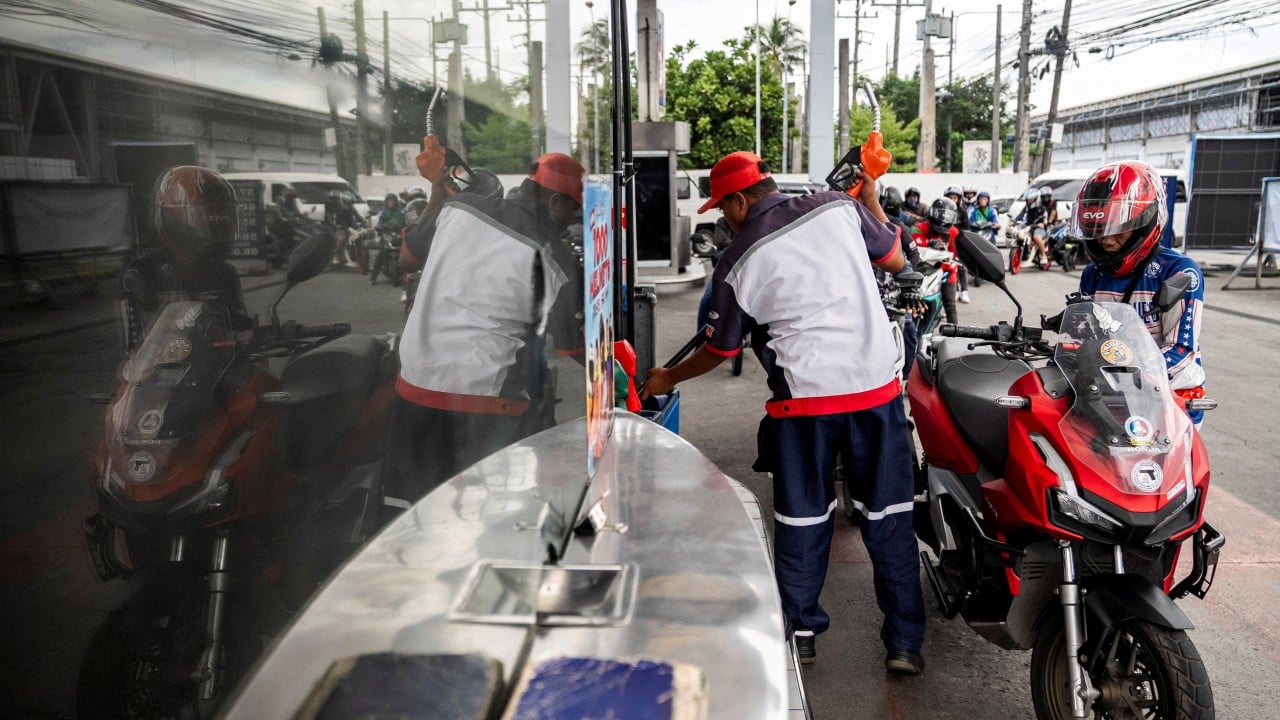
Financial markets operate on immediate narratives, yet physical supply chains are governed by structural friction. The 11.15% drop in benchmark Brent crude to $92.13 per barrel, triggered by diplomatic negotiations between the United States and Iran to lift the blockade on the Strait of Hormuz, misinterprets the operational realities of global energy distribution. While financial capital can instantly price in a diplomatic breakthrough, the physical energy infrastructure supplying Asian economies cannot.
The structural shock delivered to Asian energy importers over the past three months of the Iran war cannot be undone by a signature on a memorandum of understanding. The core vulnerability of major Asian consumers—specifically Japan, South Korea, China, and India—lies in a multi-layered backlog that persists long after a maritime chokepoint reopens.
The Three Pillars of Post-Blockade Friction
To understand why a diplomatic resolution will not immediately translate into economic relief for Asia, the recovery must be evaluated through three distinct structural bottlenecks: maritime operational friction, inventory depletion kinetics, and asset degradation.
+-----------------------------------------------------------------------+
|                       STRAIT OF HORMUZ REOPENING                      |
+-----------------------------------------------------------------------+
                                    |
                                    v
+-----------------------------------------------------------------------+
|                    THE THREE PILLARS OF FRICTION                     |
+-----------------------------------------------------------------------+
|                                                                       |
|  1. Maritime Operational Friction                                     |
|     - Tanker misallocation (vessels locked in alternative routes)     |
|     - 30-day structural lag for regional fleet repositioning         |
|     - War-risk insurance premiums remain elevated                     |
|                                                                       |
|  2. Inventory Depletion Kinetics                                      |
|     - Commercial/strategic stockpiles drawn to critical minimums     |
|     - Retained imports diverted to storage rather than end-consumers |
|                                                                       |
|  3. Infrastructure and Asset Degradation                              |
|     - Minor physical damage to regional port facilities              |
|     - Latent maintenance backlogs from three months of conflict       |
+-----------------------------------------------------------------------+
                                    |
                                    v
+-----------------------------------------------------------------------+
|                     PERSISTENT HIGH REFINERY COSTS                    |
+-----------------------------------------------------------------------+
1. Maritime Operational Friction
The assumption that oil flows immediately resume when a chokepoint opens ignores the mechanics of global shipping. The Strait of Hormuz handles roughly 20% of global petroleum and liquefied natural gas (LNG) liquids. During the three-month blockade, the global tanker fleet was radically misallocated. Very Large Crude Carriers (VLCCs) were rerouted, committed to longer voyages, or trapped in holding positions.
Repositioning this fleet back to Gulf loading terminals creates a structural lag. Tanker operators require time to re-charter vessels, clear the backlog of hulls waiting outside the chokepoint, and secure updated transit permits. Industry frameworks indicate a minimum of 30 days is required just to restore regular shipping schedules once a 60-day truce extension is formally implemented. Furthermore, maritime insurance providers do not drop war-risk premiums the moment a ceasefire is announced; insurers require sustained periods of stability before adjusting their risk-underwriting models, keeping freight costs artificially high.
2. Inventory Depletion Kinetics
The second bottleneck is found in the domestic storage balances of importing nations. Over ninety days of restricted flows, Asian refiners maintained utilization rates by drawing down commercial inventories and strategic petroleum reserves (SPR) to critical minimums.
When the strait reopens, the first wave of imported crude will not be delivered to end-consumers or processed into cheap industrial fuel. Instead, state-backed utilities and private refiners must aggressively buy barrels to reconstruct their safety stocks. This structural compulsion to restock acts as a counter-cyclical demand floor. Even if global oil prices drop on paper, the localized spot demand across Asian ports will remain highly competitive, preventing domestic consumer prices from falling in tandem with global benchmarks.
3. Infrastructure and Asset Degradation
Physical systems suffer under conflict conditions. While recent military strikes—including US defensive actions against Iranian radar sites and drone command facilities, alongside regional ballistic missile crossfire—have avoided catastrophic damage to extraction assets, regional infrastructure has still degraded.
Minor facility damage at loading berths, combined with deferred preventative maintenance schedules across regional ports during the height of the hostilities, means loading efficiency will be compromised. A port operating at 80% efficiency due to technical backlogs creates an artificial export ceiling, regardless of how much oil is sitting in underground storage tanks.
The Asymmetric Cost Function for Asian Importers
The economic pain across Asia is not uniform; it is governed by an asymmetric cost function based on structural reliance and fiscal exposure. The standard market thesis assumes all energy-dependent economies benefit equally from a drop in Brent crude. The data contradicts this.
| Economy | Primary Vulnerability Factor | Fiscal Mechanism Impact |
|---|---|---|
| Japan | Hyper-dependence on Spot LNG | Extreme currency depreciation complicates long-term contracting; high spot prices bypass crude relief. |
| South Korea | Refined Product Export Dependency | Squeezed refining margins due to high imported feedstock costs vs. weakening global demand. |
| China | Industrial Manufacturing Inelasticity | May factory activity contracture ($4,063.72$ Shanghai Composite drag) limits capacity to absorb sudden supply swings. |
| India | Fiscal Deficit and Subsidy Exposure | High domestic tax cushions prevent immediate retail price drops; state refiners absorb losses first. |
The relationship between the cost of crude feedstock and domestic economic output is mediated by industrial inelasticity. For instance, China's May manufacturing data showed a contraction in factory activity and softening export demand. This indicates that high energy costs have already integrated into the supply chain, raising producer price indexes. A sudden, volatile drop in oil prices to $93 per barrel does not instantly restore factory margins when the broader global demand environment has cooled due to prolonged inflationary pressures.
Geopolitical Micro-Escalations and Pricing Floors
The primary limitation of current market forecasting is the reliance on binary peace models. The market prices assets as if the outcome will be either absolute blockade or total resolution. The reality is a highly volatile state of gray-zone escalation.
Even as diplomatic channels in Doha debate draft amendments for a 60-day truce extension, regional realities create constant micro-escalations. The expansion of ground operations in southern Lebanon and retaliatory strikes near critical waterways serve as constant reminders that the security architecture of the Middle East remains fractured.
From an analytical standpoint, these events introduce a permanent geopolitical risk premium that cannot be fully removed from the price of oil. The mechanism works as follows:
$$\text{Total Oil Price} = \text{Fundamental Supply/Demand Balance} + \text{Geopolitical Risk Premium} + \text{Maritime Friction Surcharge}$$
While the fundamental supply/demand balance points toward a softer market due to rising US domestic production (holding at approximately 13.7 million barrels per day), the geopolitical risk premium and maritime friction surcharge remain elevated. Traders who aggressively shorted crude down to two-week lows were forced to cover positions as fresh military strikes occurred, demonstrating that the floor for Brent crude is structurally higher than it was prior to the outbreak of hostilities in late February.
Strategic Play for Energy Procurement
Given that a swift resolution to Asia’s energy deficits is structurally impossible, energy procurement executives and sovereign wealth funds must abandon short-term hedging strategies based on ceasefire headlines. The optimal strategy requires a pivot toward structural risk management.
First, refiners must actively diversify away from chokepoint-dependent crude. This requires expanding term-contracts for West African, US Gulf Coast, and Latin American grades, even if they trade at a premium to Middle Eastern benchmarks on a delivered-ex-ship basis. The elimination of single-point-of-failure transit risk justifies the structural premium.
Second, industrial consumers must structurally alter their inventory accounting. The historical just-in-time inventory model for crude and LNG procurement is obsolete in an era of gray-zone maritime warfare. Storage infrastructure must be expanded domestically, treating energy security as a capital expenditure rather than a variable operational cost.
Finally, sovereign buyers should capitalize on immediate, headline-driven price drops to lock in long-term paper hedges. When optimism over draft amendments artificially depresses Brent crude futures, these moments should be utilized to build out structural long positions for the second half of 2026. The physical bottlenecks guarantee that structural supply tightness will outlive the diplomatic optimism.