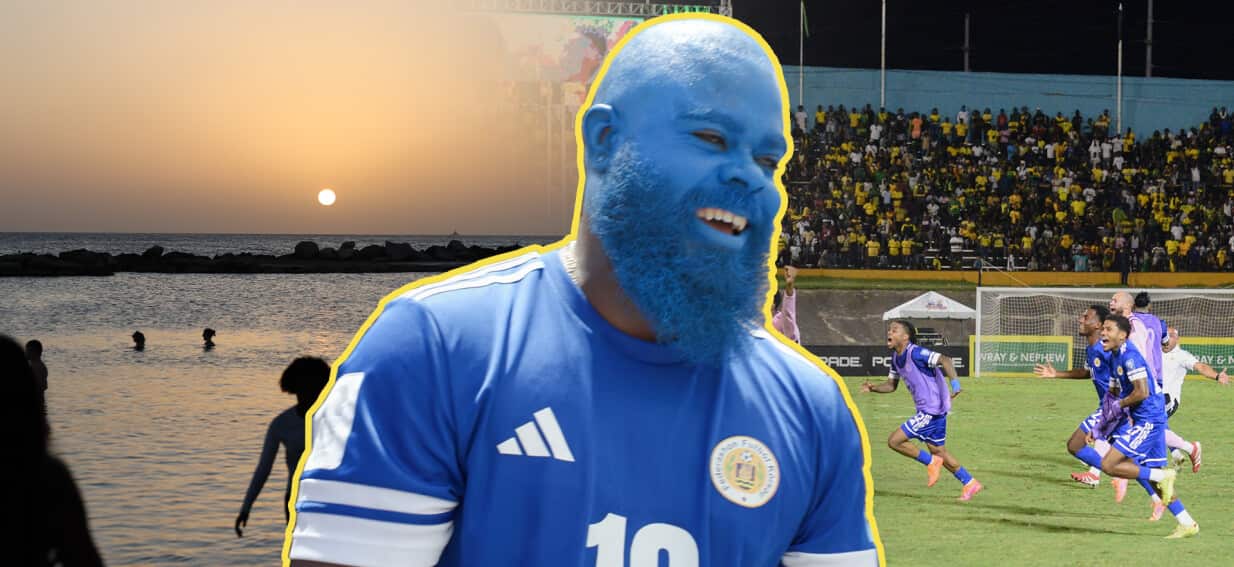
The football media is currently awash with a cozy, self-congratulatory narrative. Scotland has qualified for the 2026 World Cup, ending a 28-year drought, and the mainstream press is falling over itself to praise the "patient, precise, clinical" setup engineered by Steve Clarke. They look at a 4-2 victory over Denmark or a dramatic 98th-minute qualification clincher and see a team finally ready to shed its historical curse. They look at a group featuring Haiti and Morocco and see an easy runway to the knockout rounds.
They are completely wrong.
What the consensus calls "patience" is actually systemic caution. What they label "clinical" is a desperate reliance on individual moments of magic to paper over an offensive vacuum. I have spent decades analyzing tournament football, and I have seen exactly how this story ends. Teams that rely on emotional momentum, rigid low blocks, and structural survival do not "make a mark" at an expanded, multi-climate World Cup. They get exposed. Scotland is not building toward a historic breakthrough; they are marching straight into a tactical trap.
The Illusion of Group C and the Haiti Trap
The narrative insists that the expanded 48-team format and an opening match against 83rd-ranked Haiti represent Scotland’s best-ever chance to reach the Last 32. This is the first trap.
In tournament football, playing a lower-ranked team with an athletic advantage in the opening game is a nightmare for an uncreative, possession-shy side. Under Clarke, Scotland’s entire identity is reactive. They thrive when they can sit deep, condense space, and use John McGinn or Scott McTominay to trigger transitions.
Imagine a scenario where Haiti sits in a low block of their own, refuses to cede space, and challenges Scotland to break them down through sustained, intricate possession. Scotland cannot do it. They do not possess the dynamic isolation wingers or the elite positional play required to dismantle a packed defense. When forced to dictate the tempo, Clarke’s side quickly stagnates, passing sideways before launching hopeful crosses toward Lawrence Shankland.
If Scotland fails to take three points from Haiti in the oppressive Boston heat, the entire campaign collapses before it even reaches Morocco or Brazil. The media treats the opening fixture as a guaranteed bank of three points. In reality, it is a tactical mirror forcing Scotland to play the one style of football they despise: proactive possession.
The Midfield Papering Over the Cracks
The core of the pro-Scotland argument rests on their midfield star power. Yes, John McGinn is coming off an exceptional club campaign with Aston Villa. Yes, Scott McTominay has been a revelation in Serie A. But counting on your central midfielders to operate as your primary goalscoring threats is an unsustainable model at a World Cup.
McTominay’s spectacular qualification goals—including that famous overhead kick against Denmark—were elite individual moments. They were not the product of a repeatable, dominant attacking system. Relying on late box arrivals from midfielders works in short European qualifying groups against tired teams. At a World Cup, top-tier international managers scout those runs out of existence within twenty minutes.
Worse still, the engine room has been fundamentally compromised before the tournament even starts. The loss of Billy Gilmour to injury is catastrophic for this system. Gilmour was the single player capable of taking the ball under pressure, dictating tempo, and hiding Scotland's technical deficiencies. Replacing him in the squad with Tyler Fletcher—a 19-year-old with fewer than twenty minutes of senior club football for Manchester United—is an indictment of Scotland's depth.
Without Gilmour, Scotland’s midfield turns into a blunt instrument: high on industry, low on guile. McGinn will be forced to drop deeper to help progress the ball, robbing the team of his effectiveness in the final third.
The Personnel Crises Nobody Wants to Discuss
Let's look past the romanticism of the "band-of-brothers" mentality and look at the actual squad sheets. The structural vulnerability of this roster is staggering.
- The Goalkeeping Gamble: Craig Gordon is 43 years old. He has not played a single minute of competitive football since sustaining an injury in January. Starting a goalkeeper who relies on aging reflexes and has zero match sharpness is an unprecedented gamble. The alternatives? Angus Gunn and Liam Kelly, neither of whom could secure a regular first-choice spot at their respective clubs this season.
- The Full-Back Fiction: Aaron Hickey is in the squad but has managed a meager 92 minutes of club football since February. Nathan Patterson made just three Premier League starts for Everton all season. Anthony Ralston is a backup at Celtic. Scotland’s entire tactical system relies on hyper-energetic, elite wing-back play to provide width. Clarke is entering the biggest tournament on earth with an entire right flank made of players who are either unfit, unpicked, or out of form.
- The Kieran Tierney Conundrum: Tierney managed 29 starts for Celtic this season, which the media hailed as a triumph of fitness. But international tournament football is an entirely different physical beast. If Clarke reverts to his preferred back five to survive against Morocco and Brazil, an unfit Tierney will be asked to cover massive lateral spaces. We saw at Euro 2024 how quickly Tierney’s body breaks down under that specific strain.
Breaking the Premise of the Knockout Obsession
The public is constantly asking: "Can this Scottish team become the first to reach the knockout stage?"
The question itself is flawed. Reaching the Last 32 in a bloated 48-team tournament by scraping a win against Haiti and sneaking through as a best third-placed team isn't progress. It’s an administrative byproduct of FIFA’s expansion.
The real metric of a team’s readiness is their performance against elite tier-one opposition. Under Clarke, Scotland failed to win a single group game at Euro 2020. They failed to win a single group game at Euro 2024. The underlying data across those tournaments showed a team consistently dominated in expected goals (xG), field tilt, and box entries.
To suggest that a squad with an older core, an injured primary playmaker, and non-playing full-backs is suddenly going to reverse a lifetime of major tournament failure because they beat a transitioning Denmark team at Hampden is willful blindness.
The Uncomfortable Truth
The tactical blueprint Steve Clarke relies on is designed for survival, not progression. It is a style built to minimize damage, pinch goals from set-pieces, and rely on emotional intensity. That works when you have the feral energy of a Hampden Park crowd behind you. It completely dissolves when you are playing in foreign stadiums, in sweltering North American summer humidity, against technical sides that can retain the ball for 70% of the match.
If Scotland wants to truly evolve, they have to abandon the romanticism of the plucky underdog. They have to stop celebrating qualification as if it were a trophy. The current setup has reached its absolute ceiling. Clarke has maximized this group's defensive discipline, but he cannot coach them out of their technical limitations.
Expect the usual script in June. A grueling, nerve-wracking match against Haiti where the lack of creativity is glaring. A tactical dismantling by a technically superior Morocco side. And a final, desperate defensive rearguard against Brazil that ends in a honorable, tearful exit. The media will call it brave. They will talk about valuable experience and building for the future.
It won't be brave. It will just be predictable.