The grease on the griddle smells the same every morning in Scott County, Mississippi. It smells like bacon fat, charred corn tortillas, and the sharp sting of cheap dish soap. Elena scrubs the metal counter before the sun even clears the pine trees. Her hands are rough. They are the hands of a woman who has spent twelve years pulling chicken guts from conveyor belts in the damp, deafening roar of a poultry processing plant. She doesn't talk much. Most people in her neighborhood don't. They move through the humid southern air like shadows, essential but unnoticed.
Elena is a hypothetical composite, a mosaic built from the lived realities of thousands of undocumented workers currently living in the Magnolia State. But the fear vibrating through her kitchen this morning is entirely real. It is a thick, suffocating weight. Expanding on this idea, you can find more in: Inside the Strait of Hormuz Crisis Nobody is Talking About.
A piece of legislation moving through the statehouse aims to do something unprecedented. It wants to write down her name. It wants a list.
For decades, the unspoken deal between Mississippi and its undocumented workforce was simple, if brutal: work the jobs no one else wants, keep your head down, and we will pretend you are not here. This new legislative push shatters that quiet arrangement. The proposal mandates the creation of a centralized state registry tracking every individual living in Mississippi without legal status. Analysts at NPR have provided expertise on this trend.
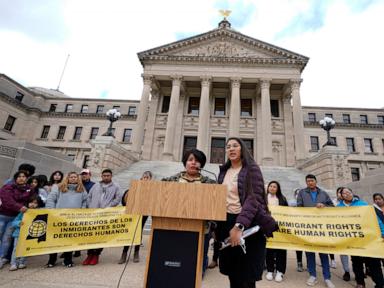
To the politicians backing the bill, it is presented as a straightforward measure of accountability and state security. They argue that a state cannot govern people it cannot count. But on the ground, in the trailers and small brick homes of towns like Canton and Morton, the registry looks like something else entirely.
It looks like a target.
The Mechanics of the Roll Call
Consider how a list like this actually works. It is not just a digital file sitting on a secure server in Jackson. It is a mechanism that transforms everyday interactions into checkpoints. Under the proposed framework, state agencies, local law enforcement, and potentially even public service entities would be required to log information. If a person interacts with the state—whether applying for a basic municipal service, encountering a local sheriff, or seeking certain forms of aid—their lack of legal status triggers an entry into the state database.
Advocates across the South are sounding alarms that can be heard well beyond the state lines. The immediate concern is not just deportation, though that is the ultimate shadow looming over the conversation. The immediate crisis is psychological warfare.
When a government begins compiling a ledger of a specific, marginalized group of people, history shows the social climate shifts instantly. Trust evaporates.
If this bill becomes law, Mississippi will become the first state to actively maintain a registry of this nature. Civil rights attorneys are already preparing for a massive legal battle, pointing out that immigration enforcement is strictly a federal prerogative. The state, they argue, is overstepping its constitutional boundaries. But legal theories offer cold comfort to a mother deciding whether to take her feverish child to a state-funded clinic when she knows her name might end up on a government roll call by noon.
The Cost of the Shadows
The argument for the registry often relies on fiscal math. Proponents claim that undocumented immigrants strain state resources, from public schools to emergency rooms, and that tracking them is the first step toward calculating the true economic impact.
But economic reality in Mississippi tells a completely different story.
The state’s agricultural backbone relies heavily on immigrant labor. The poultry plants, the sweet potato fields of Vardaman, the timber operations—these industries run on the physical endurance of workers who are paid minimal wages to perform exhausting, hazardous tasks.
What happens when an entire workforce goes into hiding?
We have seen glimpses of this script before. When Alabama passed its infamous HB 56 law in 2011—which criminalized many aspects of an undocumented immigrant's daily life—the economic backlash was swift and severe. Crops rotted in the fields. Farmers watched millions of dollars vanish because there was no one left to pick the produce. The state’s reputation took a massive hit, and major parts of the law were eventually struck down or gutted by federal courts.
Mississippi is already one of the poorest states in the nation. Its infrastructure is fragile. Its healthcare system is teetering on the edge, with rural hospitals closing at an alarming rate. Pursuing a policy that terrifies an essential segment of the labor force isn't just a humanitarian issue; it is an act of economic self-sabotage.
But the real problem lies elsewhere. The deepest damage won't be measured in GDP points or agricultural yield. It will be measured in the silence of communities turning inward.
The Anatomy of Fear
Walk into a local bodega in central Mississippi right now, and the conversation is hushed. People talk in fragments. They watch the door.
"They want to know where we sleep," a man named Jorge says through an interpreter. He has lived in Mississippi for fifteen years. His children were born here. They speak with thick, slow Southern drawls and love sweet tea. "If they have a list, they can come get us all in one morning. It doesn't matter if you have been a good neighbor. It only matters that you are on the paper."
This is the emotional core that sterile legislative debates ignore. A list is an instrument of compliance. By threatening to document every undocumented resident, the state is effectively telling them that their presence is monitored, quantified, and rejected.
The psychological toll cascades down to the children. Thousands of households in Mississippi are "mixed-status" families. This means the parents may be undocumented, but the children are American citizens, born on US soil. These kids go to Mississippi schools. They play Friday night football under the bright stadium lights. They sing the national anthem.
Now, they go to bed wondering if a state database will be the reason their parents aren't home when they get off the school bus tomorrow.
The state’s leadership insists the registry is merely about data collection and law enforcement efficiency. They disavow any intention of causing panic. Yet, panic is the natural, inevitable byproduct of the policy. You cannot build a wall of data around a community and expect them to feel safe inside it.
The View from the Capital
Inside the state capitol building, the air-conditioned corridors are miles away from the humidity of the chicken plants. Here, the language used to debate the bill is clinical. Lawmakers talk about "sovereignty," "resource allocation," and "the rule of law."
There is a deliberate detachment in their rhetoric. They speak of undocumented immigrants as abstract entities—numbers on a ledger that need to be categorized and managed.
This clinical detachment is dangerous. It obscures the human faces behind the statistics. It ignores the fact that these are people who pay sales taxes every time they buy groceries, who rent homes, who buy gas at the local Exxon, and who fill the pews of local churches on Sunday mornings.
The state argues that the federal government has failed to secure the border, leaving states to fend for themselves. There is truth to the frustration regarding federal immigration gridlock. The system is broken; anyone on either side of the political aisle can see that. But using a state-level registry as a blunt instrument to pressure Washington does nothing to fix the federal system. It only punishes the most vulnerable people within Mississippi’s own borders.
Consider what happens next if the ledger becomes reality. The bureaucratic machinery required to maintain it will cost millions. Money that could go toward repairing Jackson's failing water system or funding understaffed rural schools will instead be funneled into building a high-tech surveillance apparatus designed to track sub-minimum-wage workers.
A Community Retracting
Signs of the law's impending shadow are already visible.
Community organizers report a sudden drop in attendance at local health fairs. Families are hesitating to enroll their eligible children in federal nutrition programs like WIC, terrified that providing an address or a name will link back to the state's proposed database. Trust, which takes decades to build between immigrant communities and local institutions, is being dismantled in a matter of weeks.
The registry creates an environment where exploitation thrives. When workers are terrified of any contact with the state, they become perfect targets for unscrupulous employers, abusive landlords, and criminals. If an undocumented woman is assaulted, will she call the police if she knows the police are required to log her information into a state registry? If a worker is cheated out of his wages, will he seek justice?
No. He will suffer in silence. The law, under the guise of creating order, actually creates a lawless vacuum where the vulnerable cannot seek protection without risking exile.
The debate in Mississippi is not an isolated incident. It is a bellwether for how far states are willing to go to project an image of toughness on immigration, even at the expense of their own community fabric and economic health.
The afternoon sun beats down on the pavement outside the poultry plant. The shift change is happening. Workers walk out into the heavy, wet heat, their shoulders slouched from hours of repetitive motion. They carry lunchboxes and empty water bottles. They look like tired people anywhere, looking forward to sitting down, eating dinner, and watching their kids do homework.
The bill continues its march through the legislative process. If it passes, the state will get its ledger. The names will be typed into the database, one by one, neat and orderly. But a list of names can never capture the sweat poured into the soil, the quiet prayers whispered in small-town trailers, or the absolute terror of a community waiting for the knock on the door.
The state might see them as numbers, but the ledger will be written in the ink of human fear.