Popular baby name forecasts treat viral entertainment as a direct predictor of birth registry rankings, yet rank spikes from a single show or film rarely translate into lasting top-ten staples. A name with a clear cultural hook can jump thousands of spots off a tiny base while still accounting for a fraction of actual births.
To build a rigorous read on 2027 baby name trends, parents and analysts need to separate raw rank velocity from underlying adoption volume. BabyCenter's autumn 2026 forecast points to several converging currents—including Greek mythology tied to The Odyssey, Western aesthetics linked to Yellowstone, and hockey romance titles like Heated Rivalry and Off Campus—alongside structural shifts like longer names, heavy "E" and "J" initial concentrations, "X" spellings, and a drop in Taylor. Mapping how these signals work reveals which names carry real momentum and which ones are mostly noise. For a deeper dive into similar topics, we recommend: this related article.
Deconstructing the Pop-Culture Forecast Model
Typical trend roundups rely on a simple correlational assumption: a title trends on screens, viewers fall for a character, and birth certificates follow. That model confuses attention with commitment. Naming a child is a high-friction decision with multi-decade social weight, whereas watching a series or summer release requires almost zero cost.
Standard media-driven forecasts usually leave out three causal links: To get more details on this issue, detailed coverage can also be found at Glamour.
- Base-rate distortion: Moving up several thousand spots sounds massive, yet a climb from outside the top 8,000 into the low 2,000s or 3,000s often reflects dozens or a few hundred extra baby-name entries rather than a sweeping national shift.
- Lag between exposure and birth: Even when prospective parents pick a name during a show's run, pregnancy timelines, due-date shifts, and second thoughts create a natural delay between media spikes and registered births.
- Character-to-name transfer friction: A character can be beloved without their given name feeling natural in everyday life—especially when phonetics, cultural familiarity, or awkward nicknames get in the way.
Known Facts Versus Working Hypotheses
Separating confirmed data points from educated projections prevents over-interpreting early momentum. Known facts from BabyCenter's 2026 release and 2027 forecast include Noah and Olivia holding the No. 1 spots in 2026, Eliana rising to No. 2 and Evelyn returning to the top 10 for girls, Elias reaching No. 7 and Leo returning to the top 10 for boys, Stetson climbing 46 spots to No. 95 to enter the top 100 for the first time, Ilya rising more than 6,000 spots to No. 2,197 for boys, Odysseus rising 1,456 spots to No. 3,279 for boys, and Taylor dropping 24 spots for girls and 262 spots for boys.
Educated hypotheses—rather than guaranteed outcomes—include the expectation that The Odyssey and Heated Rivalry will push their associated names substantially higher in 2027, that upcoming season releases or documentaries will sustain viewership-driven bumps, and that "X" spellings or longer names will keep expanding their share. Platform data tracks user searches, name-list saves, and community activity on a specific parenting site; it indicates interest among that cohort rather than complete national vital statistics.
The Three Pillars of Media-Driven Name Momentum
Rather than treating every pop-culture tie-in as equal, it helps to evaluate names through three structural pillars: Narrative Longevity, Phonetic & Cultural Fit, and Category Tail winds.
Narrative Longevity
A single viral moment creates a spike; a durable franchise, seasonal ritual, or multi-year arc creates repeat exposure. Yellowstone has had years to normalize frontier and ranch-adjacent names in mainstream parenting circles, which helps explain why Western names like Stetson (No. 95), Walker (up 19 spots to No. 74), Callahan (up 88 to No. 271), Wilder (up 107 to No. 414), and Gunner (up 151 to No. 634) show broad depth across the chart.
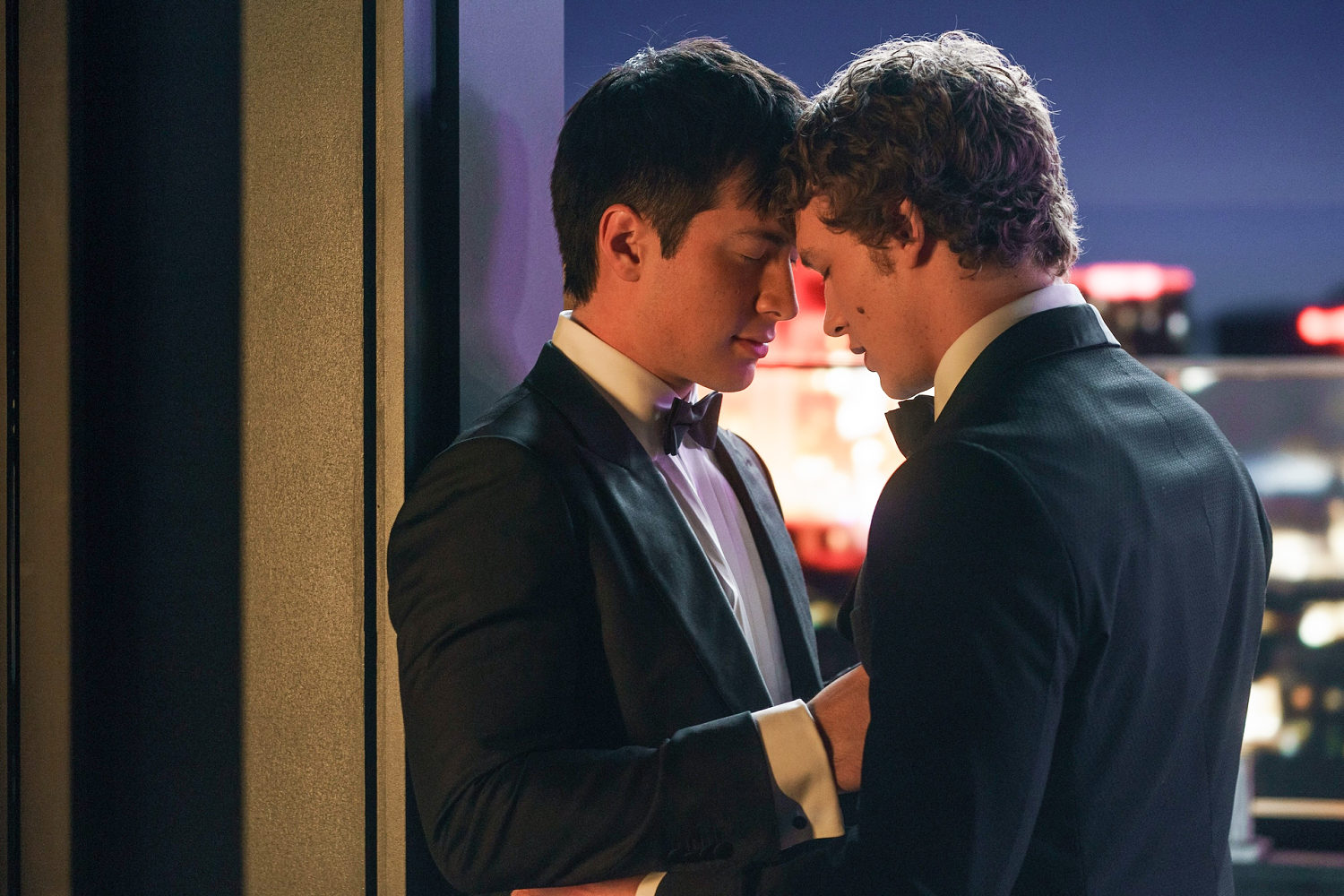
By contrast, The Odyssey draws on thousands of years of foundational myth alongside a major screen event. Mythological names such as Atlas (up 5 to No. 51), Iris (up 18 to No. 30), Lydia (up 38 to No. 86), Ares (up 32 to No. 248), Orion (up 9 to No. 251), Perseus (up 249 to No. 1,247), and Odysseus (up 1,456 to No. 3,279) sit on a spectrum between established classics and rarer hero picks. Meanwhile, hockey romance titles like Heated Rivalry and Off Campus benefit from passionate fandoms and returning-season anticipation, lifting names like Ilya, Garrett, Allie, Beau, and Jules—though niche streaming hits face a steeper climb into mainstream top-100 territory.
Phonetic and Cultural Fit
Even an unforgettable character runs into everyday pronunciation and spelling friction. In English-speaking markets, a name like Ilya (No. 2,197) or Odysseus (No. 3,279) carries distinct cultural weight and unfamiliar spelling or stress patterns for casual readers. That distinctiveness is precisely what makes it appealing to parents seeking an unmistakable reference, yet it also caps mass-market adoption compared with familiar-sounding names like Walker, Beau, or Allie.
Category Tailwinds
Names rarely move in isolation; they ride broader stylistic waves. Right now, several macro-level naming patterns reinforce or undercut individual pop-culture picks:
- Length expansion: Longer names are gaining ground, with 29% of top girl names and 31% of top boy names spanning seven or more letters (reaching 11 letters with Christopher).
- Initial clustering: First-initial concentration is heavily skewed toward "E" for girls (15% of the top 100) and "J" for boys (14% of the top 100).
- Consonant edge and spelling shifts: Adding or highlighting the letter "X"—seen in Jaxson (No. 93), Braxton (No. 121), Knox (No. 164), Daxton (No. 372), Ximena (No. 178), Xiomara (No. 400), and Bexley—signals a preference for sharp visual and phonetic contrast.
- Saturation fatigue: Names that reached peak ubiquity in earlier cohorts can experience a backlash as parents look for fresher territory, illustrated by Taylor sliding among both girls and boys.
How Pop-Culture Spikes Create Bottlenecks and Overshoot
When parents chase trending screen names, two predictable dynamics emerge. First, crowding inside micro-niches happens quickly: if a show popularizes one standout name, early adopters cluster around it while more cautious parents pick adjacent, softer variants that fit their family style. Second, over-indexing on recency causes writers and parents alike to mistake a loud online conversation for a permanent shift in the top ten.
Classic names and perennial leaders—such as Noah and Olivia at No. 1, or rising staples like Eliana at No. 2 and Elias at No. 7—persist because they balance familiarity with warmth. A screen-inspired pick can surge dramatically in rank without displacing those anchors.
Limitations of Trend Forecasting and Tactical Selection
No naming forecast is a silver bullet. Platform rankings reflect a specific sample of parents at a moment in time rather than a census of every birth, and entertainment schedules, cultural controversies, or sudden shifts in public sentiment can alter a name's trajectory before a baby even arrives. Furthermore, a name that feels fresh in 2027 may feel distinctly tied to a specific era by the time a child enters school or the workforce.
For parents evaluating names ahead of 2027, a practical four-step filter cuts through hype:
- Audit the origin: Decide whether you love the name on its own merits or primarily because of a current show, film, or public figure.
- Test everyday friction: Say the full name aloud with your last name, check likely nicknames, and picture how easily teachers, peers, and employers will spell and pronounce it.
- Compare rank against real scale: Treat steep jumps outside the top 500 or top 1,000 as niche momentum rather than proof that everyone will share the name.
- Check longevity across life stages: Ask how the name wears on a toddler, a teenager, and an adult decades after the media cycle moves on.
Strategic Play for 2027
Treat The Odyssey, Yellowstone, and Heated Rivalry name trends as idea generators rather than final verdicts. Use high-velocity risers like Ilya, Odysseus, or Stetson to spot sounds, eras, or moods you gravitate toward, then commit only to a name whose everyday sound, spelling, and long-term character hold up long after the credits roll.