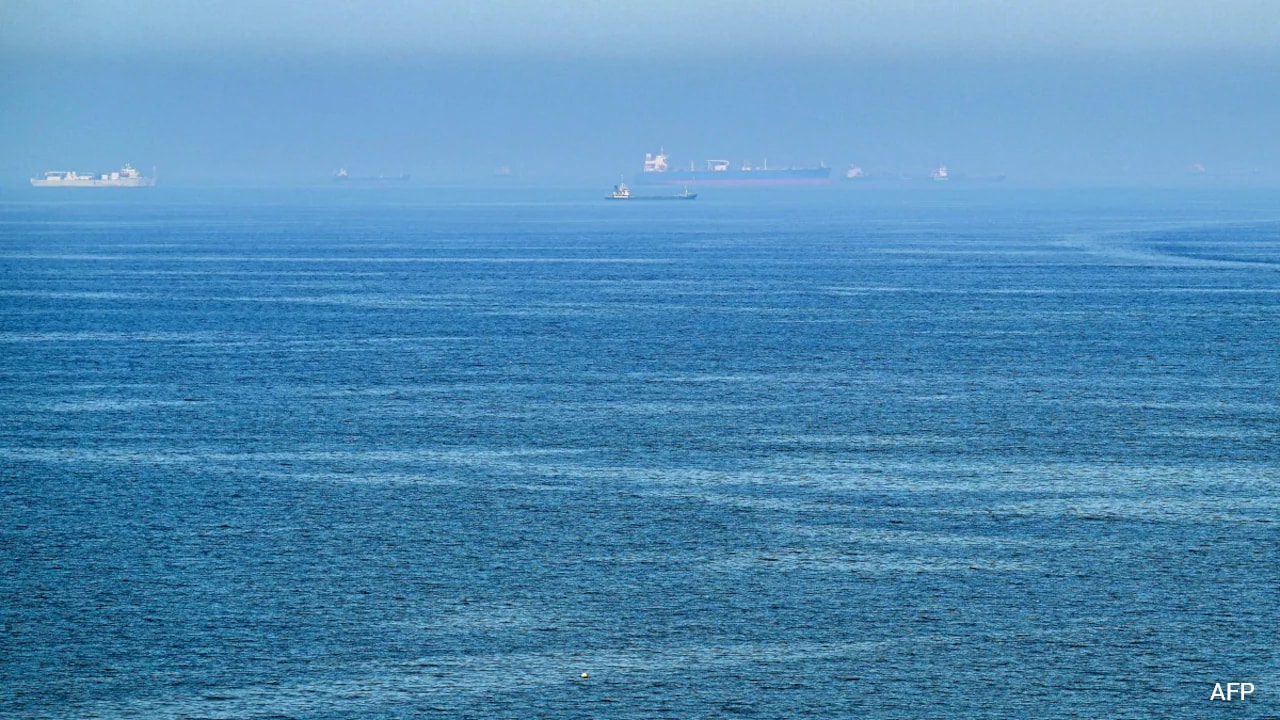
Oil smells like hot iron and old pennies when it sits too long in a steel hull under a Persian Gulf sun.
Ask anyone who has stood on the bridge of a supertanker watching the radar screen light up with blips that refuse to behave like ordinary traffic. The Strait of Hormuz is barely twenty-one miles wide at its narrowest point, with shipping lanes squeezed into two-mile corridors for vessels going in and two miles coming out. Yet through that tight slit passes a staggering share of the world's seaborne crude and liquefied natural gas. When diplomats trade proposals to reopen or stabilize the waterway, news feeds fill up with cold nouns: talks, leverage, guarantees, transit.
Cold. Clean. Distant.
Meanwhile, a diesel generator sputters to life in a clinic three thousand miles away because fuel shipments are delayed, or a family in Ohio stares at a pump price that jumped fifteen cents overnight while nobody on television can explain why a maritime dispute in the Gulf changed the cost of getting to work.
Diplomacy rarely feels urgent until you trace it backward to a kitchen table or a loading dock. When Tehran presses Washington to accept a proposal aimed at reopening or securing passage through the Strait of Hormuz, the headline sounds like a chess move between capitals. In reality, it is a tug-of-war over a physical choke point where geography refuses to negotiate. Water stays shallow where maps say it is shallow. Channels stay narrow where reefs and islands crowd the sea. No speech in a summit hall widens a shipping lane by a single yard.
What Happens When a Choke Point Tightens
I have watched supply chains stall before, though never quite on the scale of a Gulf crisis. Years ago, working near port logistics during a regional shipping snarled by weather and security alerts, I learned a quiet truth about global trade: we treat abundance as a law of nature until a single bottleneck reminds us it is an engineering achievement.
Ships do not stop on a dime. A Very Large Crude Carrier—what mariners call a VLCC—can stretch over a thousand feet long and carry two million barrels of crude. At full speed in open water, stopping one takes miles. Slowing down to anchor outside a contested strait burns time, ties up crews thousands of miles from home, and sends war-risk insurance premiums climbing by the hour.
Consider what happens next when uncertainty enters that narrow passage. Even before a single shot is fired or a mine is laid, traders price in fear. Refineries in Asia and Europe start hunting for alternative grades of oil—sour, sweet, heavy, light—because no two crude streams behave identically in a distillation tower. A refinery built to crack medium sour crude from the Gulf cannot simply swap in light sweet oil without losing efficiency or yield.
Hypothetical scenario: imagine a refinery manager in Rotterdam named Nadia. Her plant runs twenty-four hours a day, converting crude into diesel for freight trucks, jet fuel, and petrochemical feedstocks. Her job is math under pressure. If shipments from the Gulf slow down or face steep transit hurdles, Nadia has to buy cargoes from West Africa or the Americas at higher prices, paying extra freight rates because the voyages take longer. Every extra dollar per barrel ripples outward into freight contracts, plastics manufacturing, and heating bills.
Metaphorically speaking, the Strait of Hormuz is a windpipe. You do not think about breathing until someone puts a hand near your throat.
Why, then, does a diplomatic proposal to reopen or normalize passage carry so much friction between Iran and the United States? Because reopening a choke point is never just about moving boats. It is about trust between adversaries who have spent decades reading each other's worst motives into every patrol boat, drone flight, and diplomatic signal.
Proposals, Distrust, and the Price of Guarantees
To understand why a proposal to reopen the Strait of Hormuz stirs both hope and skepticism, look at what sits behind the offer. In diplomatic crises involving maritime chokepoints, a proposal rarely arrives as a pure act of goodwill. It arrives as a package of conditions, assurances, and counter-demands. One side wants maritime calm and economic relief; the other demands security guarantees, sanctions relief, regional restraint, or verified limits on disruptive activity.
Neither side wants to look naive. Both fear being tricked.
Think about how human negotiations fail in everyday life. Suppose two neighbors share a single narrow driveway, and one has blocked it during a bitter argument over tree branches. When one neighbor says, "Let's open the driveway again," the other immediately asks: On what terms? Will you block it again next month? Who enforces the agreement? Now multiply that distrust by sovereign states, naval fleets, ballistic missiles, and global energy markets.
I have sat in enough tense rooms to recognize the pattern when negotiators talk past each other. One party focuses on immediate de-escalation—getting tankers moving again, calming market panic, proving openness to talks. The other focuses on enforcement and precedent—worried that accepting a proposal without ironclad verification rewards pressure tactics or leaves vulnerabilities open later.
And here is the part that makes the whole situation feel unsettlingly fragile: markets react to rumors of agreement almost as fast as they react to disruption. A hint that Washington might weigh a proposal, or that Tehran is pushing a specific framework to restore transit, can shave dollars off crude futures in minutes. Yet if talks stall or either side doubts the other's sincerity, those prices snap right back.
Uncertainty is expensive. Nobody sends a bill labeled "Uncertainty" to consumers, yet everyone pays it.
The Invisible Stakes Far From the Gulf
It is easy for readers outside the Middle East to treat news about the Strait of Hormuz as background noise—another chapter in a long, exhausting geopolitical story. I used to feel that fatigue myself when reading cables from capitals thousands of miles away. Until you look at who actually absorbs the shock.
Start with the seafarers. A merchant mariner on a tanker approaching Hormuz is not making grand geopolitical history; they are checking charts, monitoring VHF radio channels, watching heat haze on the horizon, and wondering whether their company will order them to hold position or press ahead. Their families back home in the Philippines, India, Eastern Europe, or Latin America watch the same news ticker with a knot in their stomachs.
Move outward to importing economies. Countries across South and East Asia rely heavily on Gulf energy imports to power factories, grid electricity, and transport. When transit through the Strait is restricted, threatened, or bogged down in diplomatic standoff, power utilities and industrial buyers scramble for spot cargoes. Higher energy costs act like a tax on everything that moves or gets manufactured.
Even in energy-producing countries like the United States, isolation is an illusion. Domestic oil production cushions some shocks, yes, because global oil prices are set on an interconnected world market. If seaborne supply tightens or shipping routes lengthen, benchmark prices respond globally. A driver filling up a pickup truck in Texas or a commuter taking a bus in California still feels the ripple of a tight global market.
Let us be honest about what we do not know in moments like this. Diplomatic proposals floated in public or through intermediaries often contain moving parts that neither side discloses in full. Analysts can read statements, track vessel movements, and study historical precedents, yet nobody outside the negotiating rooms knows every concession on the table or whether a breakthrough will hold past next week.
Admitting that uncertainty is not weakness. It is the only honest starting point when tracking high-stakes diplomacy.
History Does Not Repeat, But It Charges Interest
Anyone studying the Strait of Hormuz runs into history quickly. For decades, tensions around the waterway have flared and cooled—from the "Tanker War" of the 1980s, when merchant vessels faced attacks during the Iran-Iraq conflict and foreign navies stepped in to escort shipping, to repeated standoffs over naval patrols, seized vessels, and sanctions pressure in later years.
History teaches two lessons that pull in opposite directions.
First, both sides usually understand the catastrophic cost of a total, prolonged closure. Cutting off the Strait completely would hurt global commerce severely, provoke massive military responses, and inflict heavy economic damage on regional actors too. Pure self-destruction is a hard sell even for hardened strategists.
Second, brinkmanship still happens. Nations probe limits. They test resolve. They use proposals and pressure in tandem, hoping to extract concessions without crossing the line into full-scale war. The danger lies not always in a master plan for disaster, but in miscalculation—a misunderstood radio call, an overeager patrol, a breakdown in communication at the exact moment tempers flare.
Consider what happens next if a proposal to reopen the Strait of Hormuz is rejected outright versus taken seriously. Outright rejection locks in standoff, keeps risk premiums elevated, and leaves commercial shipping exposed to ongoing friction. Taking a proposal seriously does not mean blind trust; it means testing whether real, verifiable terms exist to keep lanes open without surrendering core security interests.
Diplomacy at its best is not romance. It is hard-nosed risk management.
Why This Choice Belongs to Everyone
We often talk about foreign policy as if it belongs exclusively to presidents, prime ministers, diplomats, and admirals. Yet every choice made around a choke point like the Strait of Hormuz travels along wires, pipelines, shipping lanes, and balance sheets until it lands on ordinary lives.
A farmer drying grain. A logistics coordinator routing freight. A parent budgeting groceries and fuel. A young worker trying to save a little money at the end of the month.
When Iran urges the United States to accept a proposal to reopen the Strait of Hormuz, the real test is not just whether two governments can draft a statement or trade diplomatic jabs. The real test is whether the world can keep vital lifelines open without living perpetually on the edge of a shock that punishes millions of people who never had a seat at the table.
Watch the ships. Watch the insurance rates. Watch the quiet details behind the rhetoric.
Because in a world bound together by narrow waters and long supply chains, there is no such thing as a purely distant crisis—only a delay before the wave reaches your shore.


