Twenty-one miles.
That is the entire distance separating the jagged, sun-bleached cliffs of Oman from the rocky southern coast of Iran at the narrowest point of the Strait of Hormuz. You can stand on a cargo ship's bridge at dawn, squint through the salt haze, and see both shorelines at once. It feels intimate, almost claustrophobic, like steering an eighteen-wheeler down a cobblestone alley while people watch from second-story windows.
When a defense official in Washington steps up to a podium and announces that the United States has conducted "defensive strikes on Iranian targets in the Strait of Hormuz," the words land in our living rooms with the dull, sanitized thud of bureaucratic jargon. We hear defensive. We hear targets. We change the channel, pour another cup of coffee, and check the weather app.
We miss the sound of the hull plates groaning. We miss the taste of diesel exhaust hanging thick in dead-calm air. Most of all, we miss the invisible thread connecting that twenty-one-mile pinch of turquoise water to the price of the milk sitting in your refrigerator right now.
To understand why a burst of ordnance in the Persian Gulf isn't just another distant skirmish, you have to step off the briefing room carpet and onto the steel deck of a vessel caught in the crosshairs.
The Anatomy of a Chokepoint
Let us build a hypothetical crew to walk this water, because maritime logistics only make sense when you look at the people sweating inside the engine rooms.
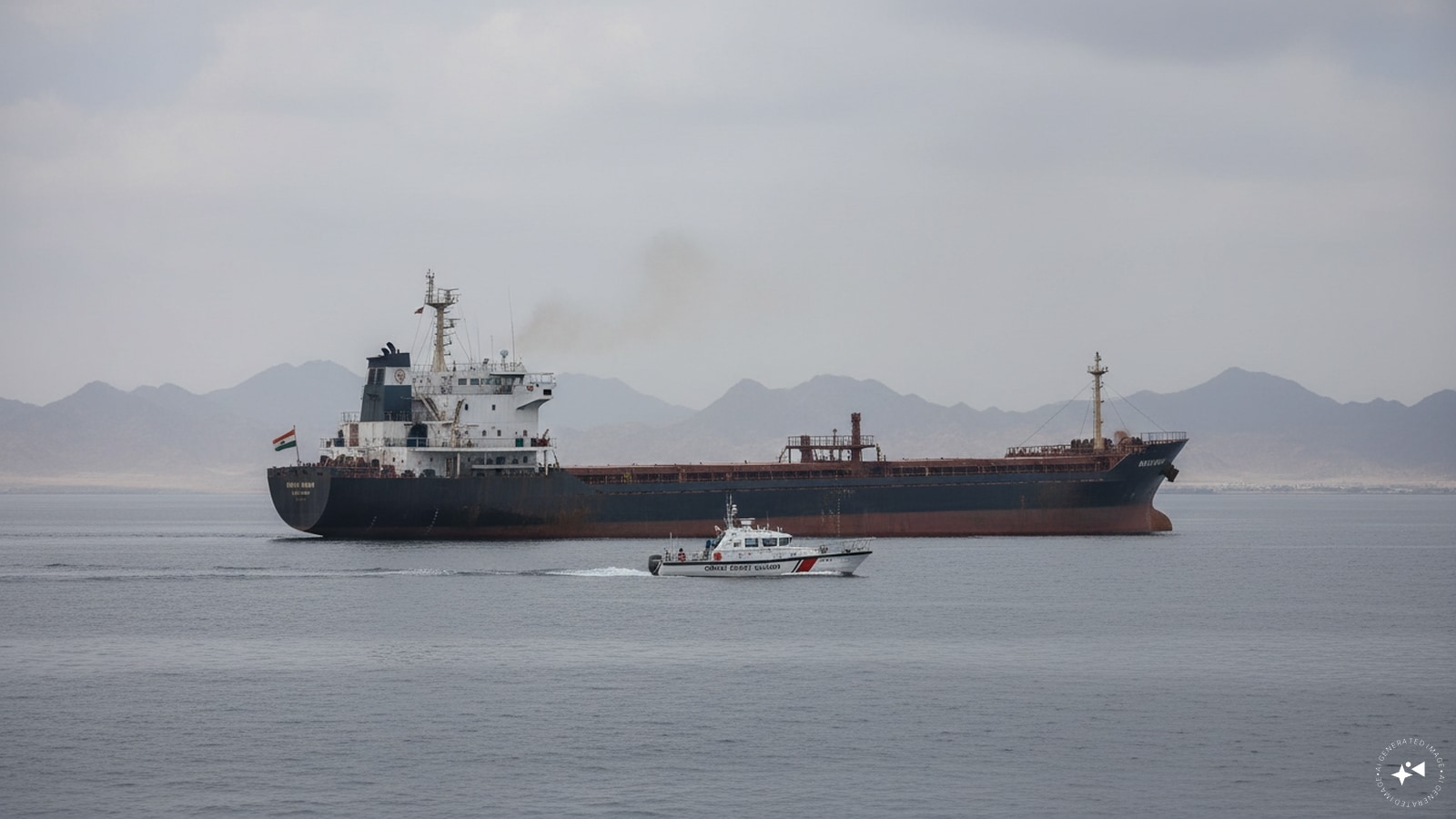
Meet Mateo. He is a forty-two-year-old chief engineer from Manila, three months into a nine-month contract aboard a Very Large Crude Carrier—a floating steel behemoth longer than three football fields, carrying two million barrels of heavy sour crude. Beneath Mateo’s boots, twin diesel engines thrum at a steady, hypnotic rhythm that vibrates right up through his molars. Above him, the bridge crew watches the radar screen glow green in the dark.
In the shipping world, the Strait of Hormuz is not merely a waterway; it is the jugular vein of the global economy. Roughly one-fifth of the world’s total petroleum consumption—around twenty million barrels every single day—passes through these dual two-mile-wide shipping lanes. Add to that nearly a quarter of the planet's liquefied natural gas. There are pipelines across Saudi Arabia and the United Arab Emirates designed to bypass this bottleneck, sure, but they can only absorb a fraction of the volume. If Hormuz closes, the global energy market doesn't just catch a cold. It suffers cardiac arrest.
Mateo doesn't think in macroeconomic percentages. He thinks in knots, fuel burn, and the calendar taped above his bunk showing the days until he sees his daughter's graduation. Yet when his ship enters the Traffic Separation Scheme—the maritime equivalent of painted lines on a highway—the air on the bridge changes.
The radio crackles on Channel 16. Small, fast-moving radar blips appear near the Iranian coastline, darting out from behind the islands of Qeshm and Hormuz. Fast-attack craft. Coastal missile batteries tucked into concrete bunkers carved into the Zagros mountains. Sea mines waiting silently in the dark beneath the keel.
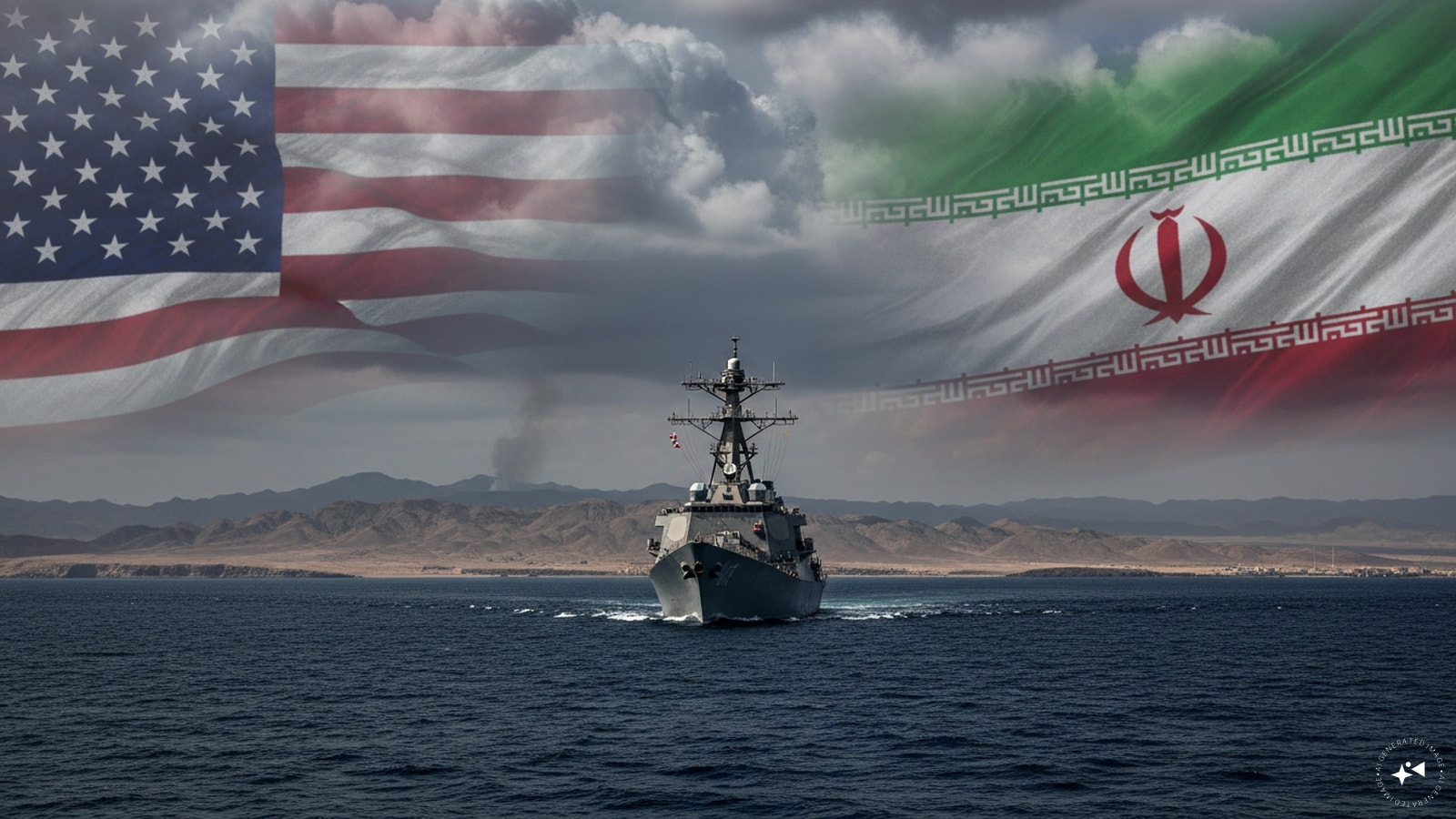
When the Pentagon confirms "defensive strikes," it is almost always responding to a specific, escalating choreography: harassment of commercial tankers, seizures of foreign-flagged vessels, radar locks from shore-based anti-ship missiles, or swarm tactics by Islamic Revolutionary Guard Corps naval units. A defensive strike means a U.S. destroyer or carrier-based aircraft has just dismantled a radar array, neutralized a missile launcher, or sunk fast-attack boats moments before they could cripple a civilian ship like Mateo's.
It is surgery performed with high explosives in a room full of dynamite.
The Echo of the Tanker War
I have spent years studying maritime security and speaking with merchant mariners who sailed these waters during the late 1980s, and the veterans all describe the exact same sensation: the agonizing helplessness of being an unarmed giant. A supertanker cannot dodge. It takes miles to turn and twenty minutes to come to a dead stop. You are a slow-moving, highly flammable island floating past cliffs bristling with weapons.
History refuses to stay buried in these waters. Between 1984 and 1988, during the height of the Iran-Iraq conflict, the world witnessed the "Tanker War." Over four hundred commercial vessels were attacked. Sailors burned to death in slicks of ignited crude. In April 1988, the guided-missile frigate USS Samuel B. Roberts struck an Iranian mine, nearly snapping her keel in two. Four days later, the United States launched Operation Praying Mantis, sinking Iranian frigates, gunboats, and armed oil platforms in the largest American surface naval battle since World War II.
The pattern is burned into the institutional memory of both Washington and Tehran. Iran understands asymmetric warfare—using inexpensive drones, mines, and fast boats to threaten multi-billion-dollar naval assets and global trade. The United States understands deterrence—using overwhelming precision firepower to keep international sea lanes open under the principle of freedom of navigation.
Wait. Let us be honest about something that gets lost in chest-thumping press conferences.
It is terrifying. Even when you understand the strategic doctrine, even when you know the radar systems aboard an Arleigh Burke-class destroyer can track a baseball flying at supersonic speed, the margin for error in the Strait of Hormuz is razor-thin. A misread radar signature, an overzealous local commander, a stray shell hitting a neutral tanker—any single spark can turn a localized defensive strike into a regional inferno. Anyone claiming to know with absolute certainty where the escalation ladder stops is either selling something or lying to themselves.
How a Missile in Oman Reaches Your Grocery Aisle
Consider what happens next, thousands of miles away from the salt spray and the smoke.
Suppose you live in Ohio, or Portugal, or Japan. You don't own oil futures. You drive a modest hatchback and buy groceries on Sunday afternoons. Why should a defensive military strike in the Middle East keep you awake?
Think of the global oil market not as a giant storage tank, but as a high-pressure hydraulic system. Every pipe is connected. When pressure spikes in one valve, gauges jump across the entire network instantaneously.
The moment news breaks of kinetic strikes in the Strait of Hormuz, algorithms in London, New York, and Singapore execute millions of trades in milliseconds. Crude oil prices jump—not necessarily because supply has vanished yet, but because traders price in the risk that it might vanish tomorrow.
Then come the maritime insurers in London. Within hours of military action, Lloyd’s of London places the Persian Gulf on its "Listed Areas" roster. War-risk insurance premiums for a single voyage through the Strait can skyrocket from tens of thousands of dollars to hundreds of thousands—or even millions—overnight.
Shipping companies pass those costs down the chain. Refining companies pay more for crude and pass that cost to fuel distributors. Diesel prices tick upward at highway truck stops.
Now follow that diesel fuel.
Diesel powers the combine harvesters cutting wheat in the Midwest. It powers the refrigerated trucks hauling lettuce from California and milk from Wisconsin. It powers the container ships bringing sneakers from Vietnam and microchips from Taiwan. It powers the plastics factories turning petrochemical feedstocks into the packaging wrapped around your chicken breasts and the dashboard of your car.
Within three to six weeks of a sustained flare-up in the Strait of Hormuz, that distant explosion translates into an extra eight dollars at the gas pump, a four percent bump on your weekly grocery bill, and higher shipping fees on every package dropped on your porch. Inflation doesn't arrive wearing a military uniform; it arrives disguised as a routine receipt.
The Invisible Shield
Return for a moment to Mateo, our hypothetical chief engineer down in the belly of the tanker.
When U.S. naval forces execute defensive strikes to neutralize immediate threats in the Strait, the headlines focus on geopolitical brinkmanship—Washington versus Tehran, sanctions, nuclear negotiations, proxy militias. Those political realities are real and heavy.
Yet down at waterline level, the immediate consequence is starkly practical: the shipping lane stays open. The buoy markers keep blinking. The twin engines keep turning at eighty revolutions per minute.
Without a credible naval presence willing to absorb the political heat of defensive strikes, commercial shipping through Hormuz would grind to a halt within forty-eight hours. No captain will sail an uninsured ship into an active minefield, and no insurer will underwrite a vessel targeted by shore batteries. If those twenty million barrels a day stop flowing, global strategic petroleum reserves would buy the world a few weeks of breathing room before rationing, rolling blackouts, and severe industrial contractions hit Asia, Europe, and North America alike.
That is the quiet bargain underpinning modern daily life. Our ability to flip a light switch, order goods across oceans, and commute to work relies entirely on a handful of narrow geographic chokepoints—Hormuz, Bab el-Mandeb, Malacca, Suez—remaining boring.
Boring is expensive. Boring requires destroyers patrolling endlessly in hundred-twenty-degree heat, sailors missing birthdays, diplomats working backchannels through Oman and Switzerland, and occasional, violent interventions when deterrence frays at the edges.
Dawn on the Water
By morning, the smoke from a precision strike dissipates quickly over open water, swallowed by the dry desert wind blowing off the Arabian Peninsula.
The radar screens on the bridge clear. The fast-attack craft retreat back behind the rocky coves of the Iranian coast. Down in the engine room, Mateo wipes grease from his forehead with a blue shop rag, checks the pressure gauges on the main bearings, and logs the numbers neatly in his ledger.
Outside, the supertanker glides smoothly past the Musandam Peninsula, easing out of the twenty-one-mile bottleneck into the wider, deeper waters of the Gulf of Oman, bound for refineries half a world away. Ahead of the bow stretches open ocean; behind the stern, the cliffs narrow once more, silent and waiting in the heat.