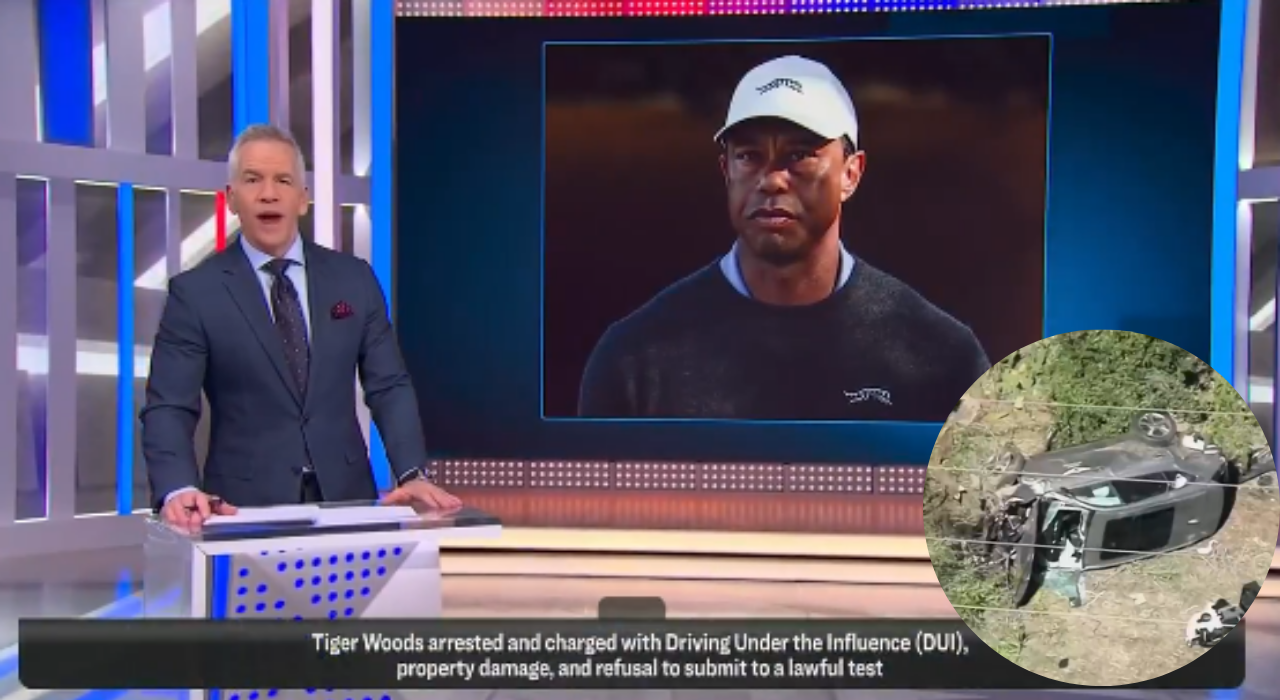
Live television is a tightrope walk without a net. You’ve got seconds to make decisions that millions of people will judge instantly. When NBC Sports fumbled their coverage by airing the wrong footage of a Tiger Woods car crash, they didn’t just make a technical error. They broke the cardinal rule of sports broadcasting. They lost the narrative.
During a high-stakes broadcast of the Genesis Invitational, the network flashed clips of a mangled SUV. The problem? It wasn’t the 2021 wreck that nearly cost Tiger his leg. It was footage from a completely different incident years prior. Fans noticed. Twitter exploded. The mistake felt lazy, and in the world of premium sports journalism, "lazy" is a death sentence for credibility.
The Moment NBC Lost the Script
It happened fast. One moment, the commentary team is discussing Tiger's legendary resilience and his grueling path back to the PGA Tour. The next, viewers are staring at a crime scene that didn't match the timeline. The 2021 crash in Southern California involved a Genesis GV80. The footage shown by NBC featured a different vehicle from a different era of Tiger’s complicated history with cars.
Mistakes like this happen because of "file footage fatigue." In a busy production truck, a producer shouts for "Tiger crash video." An editor grabs the first high-res clip in the digital archive. They hit play. Nobody double-checks the license plate or the car model because they’re racing against a commercial break. It’s a systemic failure.
Dan Hicks had to address it head-on. The apology was brief, a standard "we regret the error" moment. But the damage was done. When you’re covering an icon like Woods, every frame is scrutinized. You aren't just filling airtime. You're documenting history. Showing a 2017 arrest clip or an older fender bender while discussing a life-altering 2021 trauma is more than a slip-up. It’s a lack of respect for the gravity of the story.
Why Accuracy Matters More Than Speed
We live in an era where being first usually beats being right. Networks are terrified of a "dead air" moment. They’d rather have the wrong video playing than a blank screen. That’s a mistake. In 2026, the audience is too smart. Every person watching has a supercomputer in their pocket. They can fact-check a broadcaster in four seconds.
NBC’s blunder highlights a growing gap in sports media. As newsrooms shrink and budgets get squeezed, the "vibe" of a broadcast often replaces the rigor of reporting. Producers rely on AI-tagged archives that might mislabel footage. If the tag says "Tiger Woods Crash," the system doesn't always distinguish between a rollover in Rolling Hills Estates and a DUI stop in Jupiter, Florida.
The fallout isn't just a mean hashtag. It affects the relationship between the athlete and the media. Tiger Woods is notoriously private. He grants access sparingly. When a major partner like NBC—the home of the PGA Tour for decades—messes up the details of his most traumatic physical hurdle, it creates friction. Why would an athlete trust a crew that can't tell his life's major milestones apart?
How to Fix the Live Sports Echo Chamber
This isn't just about NBC. It’s about how we consume sports. We want the drama. We want the highlights. But we should demand the truth. If you’re a producer or a content creator, this is your wake-up call.
Stop relying on automated archives without a human "sanity check." Every piece of "B-roll" needs a second pair of eyes. If you’re showing a crash, someone on the desk needs to know the make and model of the car involved. It sounds tedious. It is. But that’s the difference between a professional broadcast and a YouTube fan channel.
Check the metadata. Every clip in a professional library has a timestamp and a source. If your production team isn't looking at those dates before pushing the "Live" button, they're failing the audience. It’s better to have the commentators talk over a static photo of the course than to mislead the public with unrelated tragedy porn.
The Reality of Covering a Living Legend
Tiger Woods isn't just a golfer. He’s a brand, a miracle of modern medicine, and a lightning rod for ratings. When he plays, ratings spike by 30% or more. Networks are desperate to squeeze every drop of emotion out of his "comeback" narrative. This desperation leads to shortcuts.
NBC apologized because they had to. The golf community is tight-knit and incredibly protective of Tiger. But an apology doesn't fix the underlying issue. The rush to dramatize sports often leads to the dehumanization of the athletes. That crash footage represented a man nearly losing his life and a father nearly losing his ability to walk with his kids. Using the "wrong" footage treats that trauma as a generic visual asset rather than a specific, painful event.
If you’re watching sports today, stay skeptical. Don't assume the "historical footage" you see is accurate. Broadcasters are under immense pressure to keep you engaged, and sometimes they prioritize the "look" of a story over the facts.
Demand better from your sports networks. If they mess up, call it out. The only way to ensure the quality of live sports stays high is to hold the gatekeepers accountable for the images they beam into our living rooms. NBC survived the blunder, but their reputation took a hit. Next time, they might not be so lucky. Pay attention to the details. They're usually where the real story hides.
Identify the source of the footage yourself. Use tools like reverse image search if a clip looks "off" during a big event. Broadcasters rely on the fact that most people won't notice. Prove them wrong. Accuracy isn't an optional extra. It's the whole point.