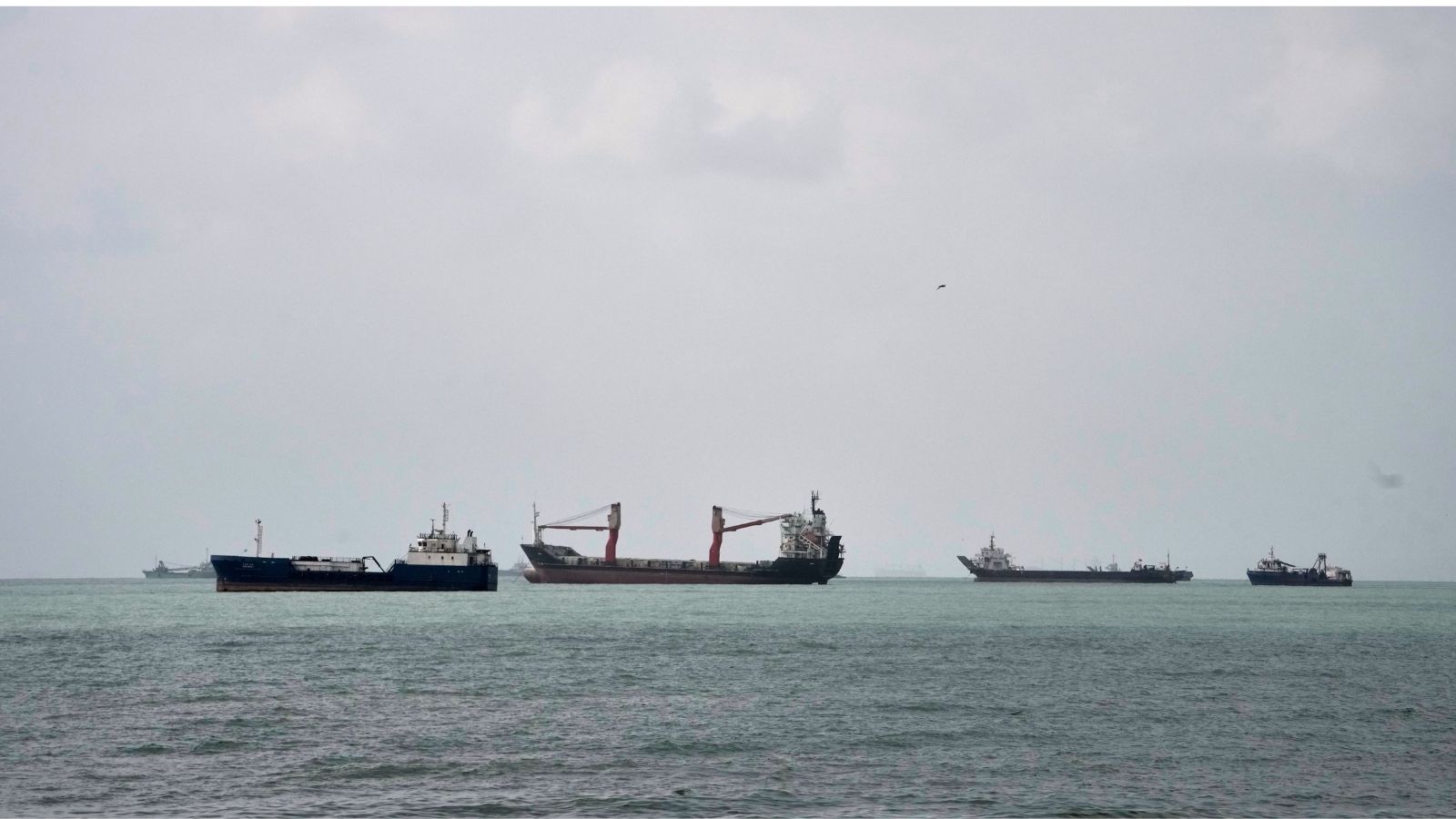
The sea does not care about supply chains. It does not look up at the soaring price of crude oil, nor does it register the anxious hum of trading desks in London or Singapore. To the water, a supertanker carrying two million barrels of oil is just another floating shadow, riding the heavy swells of a narrow channel where the Persian Gulf narrows into the Gulf of Oman.
That channel is the Strait of Hormuz. Twenty percent of the world’s petroleum passes through this liquid bottleneck every single day. If the strait closes, global markets convulse within hours. Factories idle. Heating oil spikes. The invisible engine of modern life stutters to a halt. You might also find this connected article insightful: Inside the German Political Earthquake Reshaping Europe.
Yet, the true vulnerability of this passage is not measured in barrels or percentages. It is measured in inches of salt-rusted steel resting silently on the seabed.
Consider a hypothetical master chief sonar technician named Malik, standing watch in the damp, humming operations room of a mine countermeasures vessel. Malik has spent twenty-four years listening to the ocean. He knows the difference between the rhythmic chop of a wooden dhow, the deep-throated roar of a container ship, and the high-pitched whine of a dolphin pod. He can hear the ocean breathing. But on mornings when the water is thick with summer humidity and thermal layers distort his acoustics, Malik knows the ocean can lie. As discussed in recent articles by Reuters, the implications are worth noting.
Below him, resting in the murky twilight fifty meters down, are weapons designed in the middle of the twentieth century with the singular intent of outlasting their makers.
To understand the mission of de-mining the strait, one must first understand the absolute malice of a naval mine. Unlike a missile that demands a target, or a torpedo that hunts its prey, a marine mine is patient. It does not need electricity while it waits. It can sit in the silt for decades, impervious to barnacles, barnacle blight, and pressure, waiting for the precise acoustic signature, the distinct magnetic disturbance, or the shadow of a passing hull to complete an electrical circuit.
It is a terrible kind of permanence. Wars end, treaties are signed, diplomats shake hands under the glare of camera flashes, but a bottom-influence mine remembers the war long after the living have forgotten the grievance.
De-mining this choke point is not an exercise in high-tech heroics. It is an exercise in agonizing, centimeter-by-centimeter caution.
When international coalitions deploy sweepers and hunters to the strait, they are stepping onto a macroscopic minefield where a single error erases a crew. Imagine walking across a dark room strewn with broken glass, blindfolded, while someone occasionally taps a bass drum near your ear. That is what mechanical sweeping feels like. Vessels tow heavy acoustic hammers and magnetic tails behind them, screaming artificial signatures across the water to trick hidden sensors into detonating early.
If the trick works, a column of white water erupts a thousand yards astern, and the crew absorbs a concussive thump that rattles their teeth. If the trick fails, the ship absorbs the blast.
And then there are the mechanical hunters. Remotely operated vehicles, tethered by miles of fiber-optic cable, crawl along the seabed like deep-sea crabs. Operators miles away watch grainy sonar imagery on flat screens, squinting at anomalies in the sediment. Is that a discarded anchor from an oil tanker, or is it an acoustic-magnetic contact waiting for a frigate?
The margin for error is zero.
History hangs heavy over these operations. During the Tanker War of the 1980s, the strait became a deadly labyrinth of unanchored explosives. Merchant vessels burned against the horizon, their distress calls crackling over the airwaves while crews abandoned ship into burning slicks of crude. The global economy held its breath then, just as it does now whenever geopolitical rhetoric sharpens around the Persian Gulf. The ships that clear these waters carry the weight of an interconnected planet on their hulls.
The public rarely thinks about these sailors until something breaks. We notice the price at the pump. We read the frantic updates when insurance rates for maritime shipping skyrocket. We wonder why fleets do not simply avoid the area, forgetting that geography is an unyielding tyrant. There is no alternative route for the supertankers of the world. They must thread the needle, or the global economy starves.
So the sweepers keep going out. At dawn, when the water turns the color of hammered tin, the small white hulls detach from their moorings. Sonar screens flicker. Divers suit up in heavy rubber and check their breathing apparatuses, stepping off diving platforms into a void that swallowed empires.
They do it because the alternative is unthinkable. They do it because civilization depends entirely on the fragile presumption that the waters through which our commerce flows have been swept clean of yesterday's ghosts.
Out on the horizon, a fully laden tanker catches the morning sun, a mountain of steel gliding effortlessly toward the open ocean. Below it, the water is quiet. For now.