The wind off the Southern Ocean does not merely blow; it strips the heat from your bones with surgical precision. Standing on the jagged granite of Phillip Island, wrapped in three layers of wool and a windproof shell, your eyes water before you can even focus through the salt spray.
Then you see them.
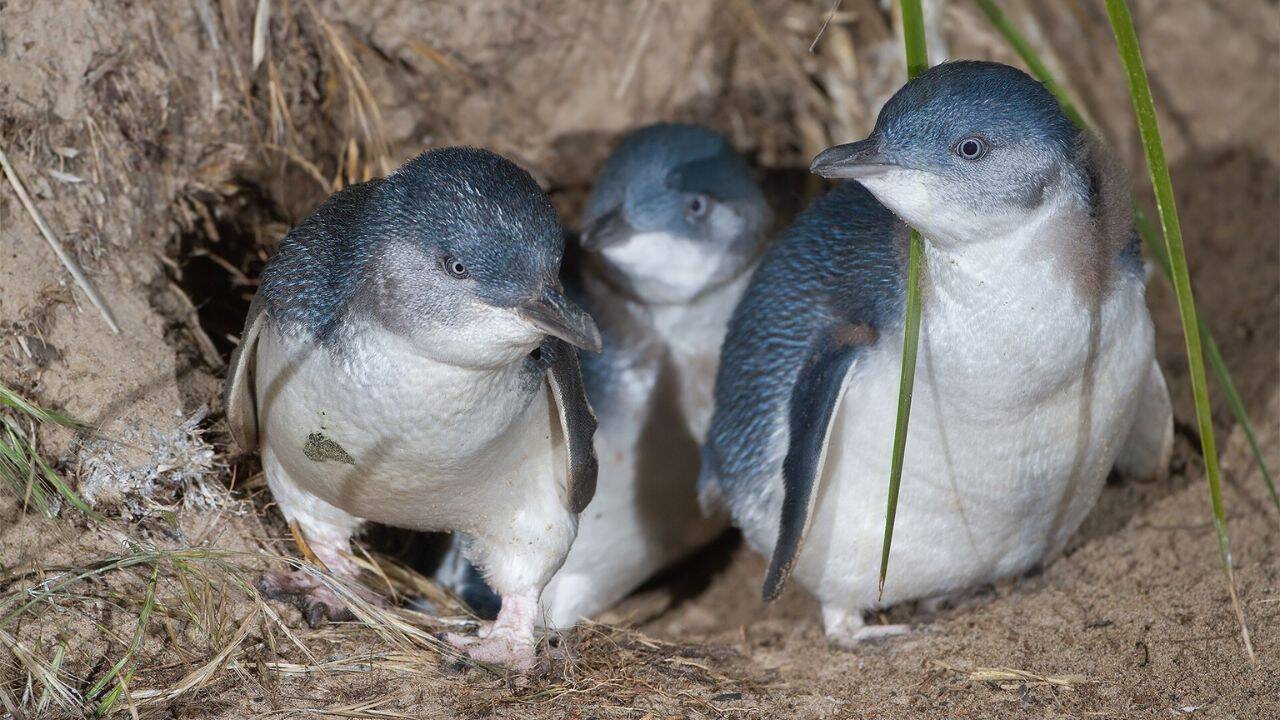
Small. Incongruous. Waddling with an absurd, upright dignity that defies the gale. Little penguins. Barely a foot tall, coat-check sleek in black and white, cutting through the roaring surf as if they owned the chaotic Pacific. They tumble onto the sand, shake themselves with a shuddering rattle, and begin the long, steep climb home to their burrows.
For decades, this was a simple rhythm. Ocean, fish, burrow, chicks. The eternal loop of survival at the edge of the world.
Today, that rhythm is haunted.
Somewhere out on the gray horizon, an invisible shadow is moving. It is not a predator with teeth or a storm with a name. It is a virus. Highly pathogenic avian influenza, strain H5N1, has spent the last few years rewriting the ecology of the planet. It has swept across continents, silent and lethal, turning skies that once hummed with migratory birds into quiet theaters of loss. It has bled into marine mammal populations, washing seals onto remote shores with a terrifying regularity.
And now, it has reached the doorstep of the southern sanctuary.
Australia has remained an island fortress against the worst of this global wave for an extraordinary, agonizingly fragile length of time. Geography was our shield. The vast oceanic moors kept the migratory flyways isolated. But nature cares little for borders drawn on maps. Infected birds cross invisible lines every single day on the wind.
The stakes are staggering. Five thousand. That is the number. Five thousand wild little penguins designated to receive a hand-delivered, needle-pricked defense against a pathogen that could wipe out colonies before anyone has time to mourn them.
Consider what that actually means on the ground.
You cannot herd wild seabirds into a chute. You cannot set up a drive-thru clinic on a windswept beach. Every single one of those five thousand lives must be intercepted by human hands.
Picture a researcher on a freezing Tuesday before dawn. Let us call her Dr. Aris Thorne, though her real-life equivalents wear many names across the coastal stations. Her fingers are stiff inside neoprene gloves. Her headlamp cuts a yellow cone through the mist, catching the frantic, indigo glint of an incoming penguin’s eye.
She waits. She times her breath. A lungful of salt air, a slow exhale, and then a swift, practiced lunge.
To the penguin, this is a terrifying betrayal. For generations, humans on these shores meant boardwalks, distant clicking cameras, and quiet admiration from behind wooden ropes. Now, humans mean capture. They mean a heavy blanket thrown gently over dark feathers. They mean being lifted into the cold air, heart hammering against tiny ribs at three hundred beats a minute.
Aris feels that frantic pulse against her palm. It is an intimate, fragile violence. You have to hurt them a little to save them. A precise, minuscule dose of vaccine delivered beneath the skin, a colored band clipped to a flipper to mark the vaccinated, and then—release.
The penguin hits the sand, blinks in confusion, and flees into the safety of the dunes.
Multiply that scene five thousand times. Over weeks. Across salt flats, rocky outcrops, and nesting colonies where the smell of guano and damp earth hangs heavy in the salt air. It is exhausting, relentless, heartbreaking labor. It is conservation stripped of its romantic Instagram filters and reduced to calloused fingers, aching backs, and quiet prayers whispered into the wind.
Why go to such extraordinary lengths? Why chase penguins with syringes across the edges of the earth?
The answer lies in what happens when we stop paying attention.
We live in an era that treats ecology as something distant, something managed in spreadsheets by people in air-conditioned offices. We talk about biodiversity loss as if it were a line item in a quarterly report. But nature is a web so tightly woven that pulling a single thread down in the Southern Ocean sends tremors all the way up to the rafters of human existence.
If H5N1 takes hold in these dense colonies, the mortality rate is not a statistic. It is a vacuum. Entire generations of seabirds vanish in weeks. The food web fractures. Fisheries feel the strain. The ecological architecture of the southern coastline begins to buckle under the weight of an unresisted plague.
Vaccinating five thousand penguins is not a cure-all. It is a desperate, brilliant firewall. It is humanity stepping between an ancient species and a modern catastrophe, armed not with weapons, but with biotechnology and stubborn, bloody-minded care.
The vaccine itself is a marvel of modern science, engineered to trigger an immune response without causing disease, trained to recognize the ghost of an invader before it crosses the threshold. But science in a lab is just potential energy. It requires flesh, bone, and human sweat to become reality. It requires someone standing in the dark at four in the morning, listening to the roar of the surf, waiting for a flash of black and white in the foam.
We often look at the planetary scale of modern crises and feel a paralyzing vertigo. Climate change, zoonotic spillover, habitat destruction—they loom like mountain ranges blocking out the sun. We are told that our individual choices do not matter, that the machine is too big to stop.
Then you see a veterinarian on a cold Australian beach, carefully drawing three tenths of a milliliter of liquid into a syringe, preparing to chase a seabird through the sand.
The scale of the crisis does not dictate the value of the action. The action creates its own gravity.
As the sun finally burns through the gray blanket over Phillip Island, the ocean turns from ink to brilliant, shattering silver. A line of penguins emerges from the surf once more, unbothered by the history they are carrying, unaware of the cold steel that recently touched their skin. They shake their feathers, lift their heads, and walk up the bank toward home.
The wind keeps blowing. The virus is still out there, circling the globe in the bellies of migratory birds, waiting for a weakness. But for today, on this jagged strip of Australian coast, the line holds.