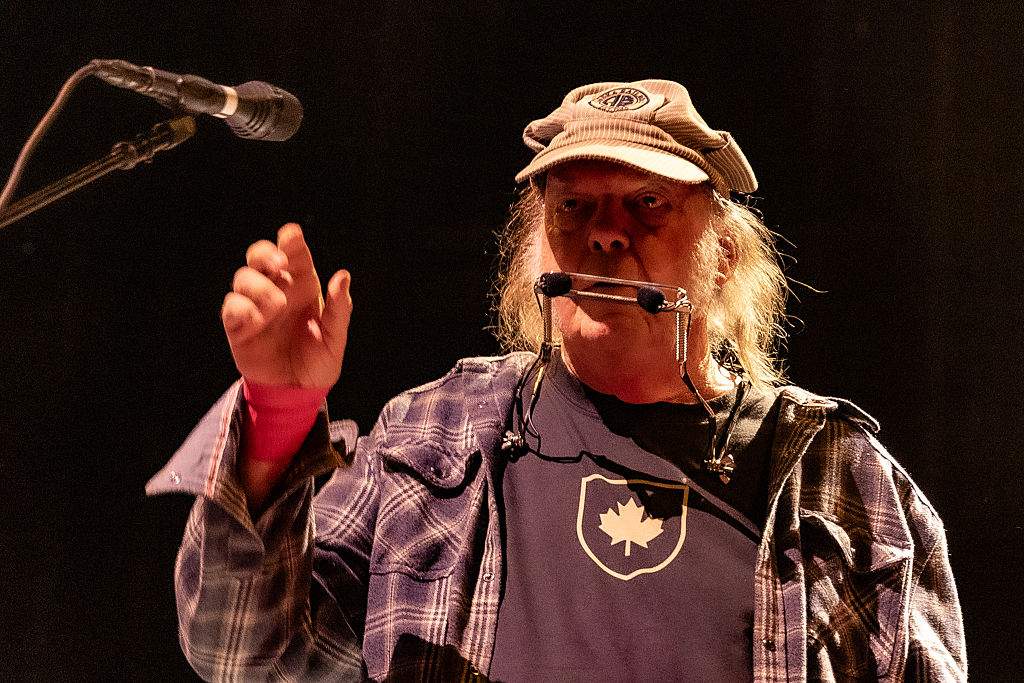
Neil Young has once again taken legal action against Donald Trump over the unauthorized use of his music at political rallies, marking the second federal copyright infringement lawsuit the folk-rock legend has filed against the former president. In August 2020, Young initially sued the Trump campaign for playing "Rockin' in the Free World" and "Devil's Sidewalk" without permission, voluntarily dismissing that case four months later without prejudice—a legal maneuver that preserved his right to refile. This renewed litigation centers on the repeated, uncompensated public performance of Young’s catalog at campaign events, bypassing standard political licensing agreements and challenging the limits of blanket venue licenses.
The dispute is about more than political animosity. It exposes a massive, decades-old fracture in how American copyright law collides with modern political campaigning. Every four years, the same theater plays out across arenas and fairgrounds. A candidate blasts an iconic anthem to energize a crowd, the artist issues a furious cease-and-desist on social media, and the public assumes the law is settled. It is not. Behind the headlines lies a tangled web of performance rights organizations, venue contracts, and untested legal theories that leave both musicians and campaigns operating in a perpetual gray zone.
The Mechanics of Political Music Licensing
To understand why Neil Young had to go back to federal court, you have to understand how public performance rights actually work in the United States. Most people assume that if a campaign wants to play a song at a rally, a staffer simply calls the artist’s manager and asks for permission. That almost never happens.
Instead, the music industry relies on Performance Rights Organizations (PROs)—primarily ASCAP and BMI. These entities manage the public performance rights for millions of songs on behalf of songwriters and publishers. When a bar, a stadium, or a political campaign wants to play recorded music, they do not negotiate individual deals with every artist. They purchase a blanket license.
For a campaign, there are two ways to obtain this coverage:
- The Venue License: Large arenas and convention centers typically hold blanket licenses with ASCAP and BMI that cover events hosted inside their walls. However, standard venue licenses almost always contain a specific carve-out excluding political campaigns, conventions, and rallies.
- The Political Entities License: Because venues exclude political events, campaigns are required to purchase their own specialized blanket license directly from ASCAP and BMI.
Here is the catch that sparks almost every high-profile feud. Even when a campaign buys a Political Entities License, that license is not absolute. Under the terms of both ASCAP and BMI political agreements, an artist has the right to exclude their specific songs from a campaign's license. Once a songwriter notifies their PRO that they object to a specific candidate using their work, the PRO removes those tracks from the campaign's blanket coverage.
From that moment forward, playing the song is no longer a mere breach of contract. It becomes direct copyright infringement under Title 17 of the United States Code, carrying statutory damages of up to $150,000 per willful infringement.
Inside the History of Young Versus Trump
The friction between Neil Young and Donald Trump stretches back nearly a decade, long before the first formal complaint hit the docket in the Southern District of New York. In June 2015, Trump descended the golden escalator at Trump Tower to announce his presidential candidacy while "Rockin' in the Free World" blared over the sound system. Young’s management immediately issued a statement clarifying that the use was unauthorized and that the Canadian-born songwriter supported Bernie Sanders.
At the time, the Trump campaign claimed it had secured the proper licenses through ASCAP. Young did not sue in 2015, largely because the legal terrain for a one-off event was murky and expensive to litigate.
By 2020, the situation had escalated. Despite years of public objections, the Trump campaign continued to use "Rockin' in the Free World" and "Devil's Sidewalk" at major rallies, including a high-profile event in Tulsa, Oklahoma, and a Fourth of July appearance at Mount Rushmore. In August 2020, Young filed a formal copyright infringement lawsuit. The complaint alleged that the campaign willfully ignored his explicit revocation of licensing rights and continued to broadcast his music to millions via live television and online streams.
Then came December 2020. Young’s legal team filed a voluntary dismissal of the lawsuit. Critics of the musician framed the move as a retreat, assuming the case lacked merit. Veteran entertainment litigators saw something entirely different. The dismissal was filed without prejudice.
In federal civil procedure, a dismissal without prejudice is a strategic pause, not a surrender. With the 2020 election cycle over and Trump leaving office, the immediate threat of ongoing rally infringement had temporarily evaporated. Litigating a federal copyright case through discovery and summary judgment costs hundreds of thousands of dollars. By dismissing without prejudice, Young stopped the legal meter from running while retaining the unilateral right to refile the exact same claims if the behavior resumed in a future campaign cycle.
Why Copyright Law Alone Rarely Stops a Campaign
When a campaign plays a song after an artist has pulled it from their PRO blanket license, the legal violation on paper looks straightforward. Yet campaigns routinely push the boundaries anyway. Why? Because copyright law only covers the public performance of the underlying musical composition, and campaigns have multiple ways to muddy the legal waters.
Consider what happens when a rally is broadcast on cable news or streamed on YouTube. The campaign can argue that the venue—not the campaign—controlled the house sound system, shifting blame onto local event contractors. Alternatively, campaigns sometimes rely on fair use defenses, arguing that playing a snippet of a politically charged song during a campaign speech constitutes political commentary or news reporting, though courts have historically viewed commercial-style campaign promotion skeptically under fair use doctrine.
Even more complicated is the distinction between the musical composition (the lyrics and melody, owned by the songwriter and publisher) and the sound recording (the specific master track, usually owned by a record label). ASCAP and BMI only license the composition. Playing a pre-recorded track over loudspeakers at a live event generally does not require a separate master use license from the label, unlike using a song in a television commercial or a campaign video posted to social media, which requires a synchronization (sync) license.
When a campaign films a rally and posts the video online with the music audible in the background, they cross into sync license territory. That is where campaigns are most vulnerable. You cannot get a sync license through a blanket PRO agreement; you must negotiate directly with the rights holder, who can flatly refuse.
The Hidden Legal Weapons Artists Are Now Using
Because standard copyright claims over live rally performances often bog down in technical arguments about venue contracts and PRO opt-out dates, entertainment lawyers have started deploying alternative legal theories that are much harder for campaigns to dodge.
The Lanham Act and False Endorsement
Under Section 43(a) of the federal Lanham Act, an artist can sue if the use of their work creates a false impression that they endorse, sponsor, or are affiliated with a product, service, or political candidate. For a musician whose entire brand is built on fierce independence and anti-establishment politics, having their signature anthem played as a walk-out song for a politician they publicly oppose strikes directly at their commercial identity.
False endorsement claims do not depend on whether the venue paid an ASCAP fee. Even if a campaign holds a valid blanket license, using a song in a way that misleads voters into believing the artist supports the candidate violates federal trademark law.
State Right of Publicity Laws
Alongside federal claims, artists increasingly invoke state Right of Publicity statutes, particularly in jurisdictions like California and New York. These laws protect an individual's name, image, likeness, and—crucially—their distinctive voice from unauthorized commercial or promotional exploitation.
If a rally uses a master recording featuring an unmistakable vocal performance, such as Neil Young’s high tenor or Bruce Springsteen’s rasp, the artist can argue that the campaign is misappropriating their persona to generate political goodwill and fundraising momentum. Unlike copyright claims, which are exclusively federal, right of publicity claims open the door to state-level remedies and punitive damages.
What This Means for Future Campaigns and the Music Industry
The repeated clashes between Neil Young and Donald Trump highlight a structural failure in how political speech and intellectual property coexist. For decades, the music industry tolerated political use of songs because rallies were local events heard by a few thousand people in an auditorium. Today, every rally is a global broadcast event designed to generate viral clips for social media and digital fundraising appeals.
A single two-minute clip of a candidate walking onto a stage to a famous rock song can generate millions of views, effectively turning an artist's life's work into a free political advertisement. Artists are no longer willing to absorb that reputational hit quietly, especially when their fan bases demand immediate public disavowals.
For political campaigns, the era of asking for forgiveness rather than permission is closing fast. Record labels, publishers, and PROs have tightened their monitoring systems, using automated audio-fingerprinting technology to flag unauthorized uses in real time during live streams. When an artist pulls their catalog from a Political Entities License, the paper trail is now instantaneous and indisputable.
Yet the fundamental tension remains unresolved. As long as political campaigns view iconic songs as essential emotional shorthand for connecting with voters, and as long as federal courts take years to adjudicate copyright and Lanham Act disputes, the courtroom battles will continue long after the rallies end. Every election cycle tests the exact same boundary: where a candidate's freedom to stage a political event ends, and an artist's right to control the meaning of their own voice begins.