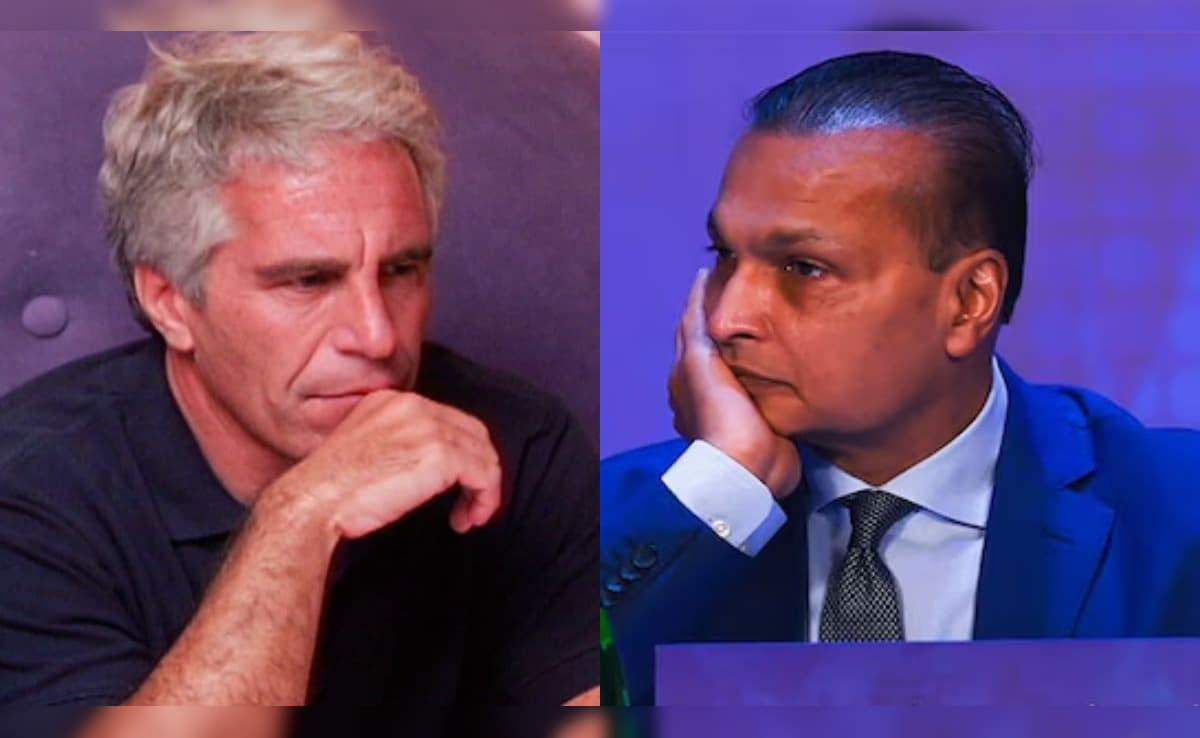
The convergence of global capital and political influence often leaves a trail of high-level associations that, when scrutinized through the lens of forensic networking, reveal deep structural vulnerabilities in the global elite ecosystem. The reported interactions between Anil Ambani, chairman of the Reliance ADA Group, and the late financier Jeffrey Epstein represent more than a social footnote. They serve as a case study in Access-Based Diplomacy, where the primary currency is not necessarily direct investment, but the brokering of geopolitical and industrial connectivity.
The Taxonomy of the Association
To analyze the reported meetings between Ambani and Epstein, one must categorize the nature of the engagement. Reporting indicates at least two distinct points of contact: a 2011 meeting in New York and a subsequent interaction in 2012. Analyzing these events requires moving past the tabloid narrative to map the Incentive Alignment of both parties during that specific period of the Indian macroeconomic cycle.
The relationship can be decomposed into three primary drivers:
- Global Capital Access Structures: In 2011-2012, the Reliance ADA Group faced significant debt-servicing requirements across its power and infrastructure verticals. Epstein positioned himself as a gateway to "high-conviction" capital pools, including sovereign wealth funds and ultra-high-net-worth individuals who operated outside traditional banking constraints.
- Information Arbitrage: High-level financiers like Epstein functioned as nodes in a dark-pool information network. For an Indian industrialist looking to expand or stabilize international operations, such nodes offer non-public insights into regulatory shifts or competitive positioning in the West.
- The Proximity Premium: The value of the interaction for Epstein was the expansion of his "Indian Portfolio." By documenting proximity to a prominent Indian billionaire, Epstein bolstered his credibility with Western political figures, suggesting he held the keys to the world’s fastest-growing major economy.
The Geopolitical Context of 2011-2012
The timing of these meetings is a critical variable. During this window, the Indian corporate sector was navigating the fallout of the 2G spectrum controversy and a tightening regulatory environment. Anil Ambani's business empire was under intense pressure.
The mechanism at play here is Strategic Diversification of Influence. When domestic corridors of power become volatile, industrialists often seek international "anchors." Epstein’s network—comprising former heads of state, scientists, and titans of industry—offered a perceived safety net of global legitimacy. The reported presence of other figures, such as former Israeli Prime Minister Ehud Barak, during these interactions suggests that the discussions were likely centered on a "Global Security and Technology" axis rather than simple personal finance.
The Architecture of Shadow Networking
Shadow networking operates on a principle of Nested Confidentiality. Unlike formal board meetings or diplomatic summits, these interactions are designed to leave minimal paper trails while maximizing the exchange of "Social Collateral."
The reporting suggests that the meetings occurred at Epstein’s Manhattan residence. In the world of high-stakes consulting, the venue is a tool for power dynamics. By hosting, Epstein established himself as the "Primary Node," forcing visitors into a curated environment where he controlled the flow of information and the roster of other attendees.
Structural Risks of Unregulated Networking
The Ambani-Epstein connection highlights the Non-Financial Risk (NFR) inherent in high-level business development. For a public-facing entity like the Reliance ADA Group, the cost function of these meetings is not found in the immediate exchange of funds, but in the long-tail reputational decay that occurs when a networking node is retroactively compromised.
- Due Diligence Failure: The primary bottleneck in elite networking is the "Halo Effect." Because Epstein was associated with figures of immense public stature, subsequent entrants into his circle likely truncated their own background checks, assuming that the presence of others validated his legitimacy.
- The Associative Trap: In the current era of data transparency and forensic journalism, the proximity to a "Toxic Node" (like Epstein) creates a permanent record that can be weaponized during litigation or competitive corporate maneuvers years later.
Quantifying the Value Exchange
While the specific contents of the "Report" are based on flight logs and calendar entries, the logical inference suggests a focus on Strategic Corridor Development.
If we apply a Resource-Based View (RBV) to this association, we can hypothesize the intended outputs:
- Lobbying Efficiencies: Streamlining the regulatory path for Indian investments into the United States.
- Technology Transfer: Facilitating introductions to private aerospace or defense contractors within Epstein’s orbit.
- Crisis Management: Utilizing Epstein’s media and political connections to soften international scrutiny of Indian corporate challenges.
This creates a Dependency Ratio where the industrialist provides the "Hard Assets" (infrastructure, energy, capital) and the financier provides the "Soft Infrastructure" (access, narrative control, political insulation).
The Mechanics of the "Blue Box" Meeting
Reports detail a meeting involving Ambani, Epstein, and Bill Gates. This trio represents a convergence of three distinct power types: Traditional Industrial Capital (Ambani), Disruptive Tech Philanthropy (Gates), and The Intermediary (Epstein).
The logic of this gathering was likely the "Project Finance Model." In this model, Epstein acts as the catalyst, bringing together the person with the problem (the industrialist seeking growth/stability) and the person with the solution (the tech/philanthropic leader) while extracting a "Management Fee" in the form of increased social standing and future favors.
Deconstructing the Reporting Discrepancies
It is vital to distinguish between Verified Connectivity and Assumed Complicity. The presence of a name on a flight log or a calendar entry proves physical proximity but does not define the nature of the transaction. The reported statements from Ambani’s camp—largely maintaining that the meetings were brief or social—align with standard corporate risk-mitigation protocols.
The "Black Box" of these interactions is the lack of recorded outcomes. There is no evidence of a direct joint venture or a formal contract resulting from the New York meetings. This suggests one of two outcomes:
- The Transaction Friction was too high; the parties could not agree on the valuation of the "access" being traded.
- The meetings were purely Exploratory Scoping, intended to map out potential future synergies that were eventually derailed by Epstein’s legal descent.
The Long-Tail Impact on Indian Corporate Governance
The exposure of these interactions years after the fact forces a recalibration of how Indian conglomerates approach Global Relationship Management (GRM). The "Jeffrey Epstein Report" serves as a catalyst for shifting from "Charismatic Networking" to "Institutionalized Diplomacy."
The second-order effect of this scrutiny is the implementation of more rigorous "Know Your Influencer" (KYI) protocols. For modern C-suite executives, the risk of a single photograph or a calendar entry now carries a multi-million dollar "Reputation Tax."
Strategic Framework for High-Stakes Networking
For entities operating at the intersection of business and geopolitics, the Epstein case study dictates a move toward Defensive Networking. This involves:
- Node Validation: Rigorous vetting of intermediaries, regardless of their existing high-profile client list.
- Formalization of Dialogue: Moving sensitive discussions from private residences to neutral, recorded, or professional environments to ensure a clear "Audit Trail of Intent."
- Decoupling Personal and Corporate Brand: Ensuring that the personal interactions of a chairman do not create structural liabilities for the underlying enterprise.
The Reliance ADA Group’s historical trajectory since 2012 suggests that whatever "Global Access" was sought through these channels did not provide the intended insulation against domestic market forces and debt cycles. This reinforces the principle that External Connectivity cannot compensate for Internal Structural Fragility.
The final strategic takeaway is the recognition that in the modern global economy, there are no "private" meetings. Every interaction is a data point in a broader forensic map. For the global elite, the cost of access is no longer a fee; it is the permanent attachment of their brand to the ethics and outcomes of their facilitators. Organizations must now treat their "Social Network" as a core component of their Risk Management Framework, applying the same level of scrutiny to their associates as they do to their balance sheets. The shift from "Who you know" to "How who you know is perceived" is now the defining metric of corporate longevity.



:no_upscale()/cdn.vox-cdn.com/uploads/chorus_asset/file/2528348/prices_1207.0.png)