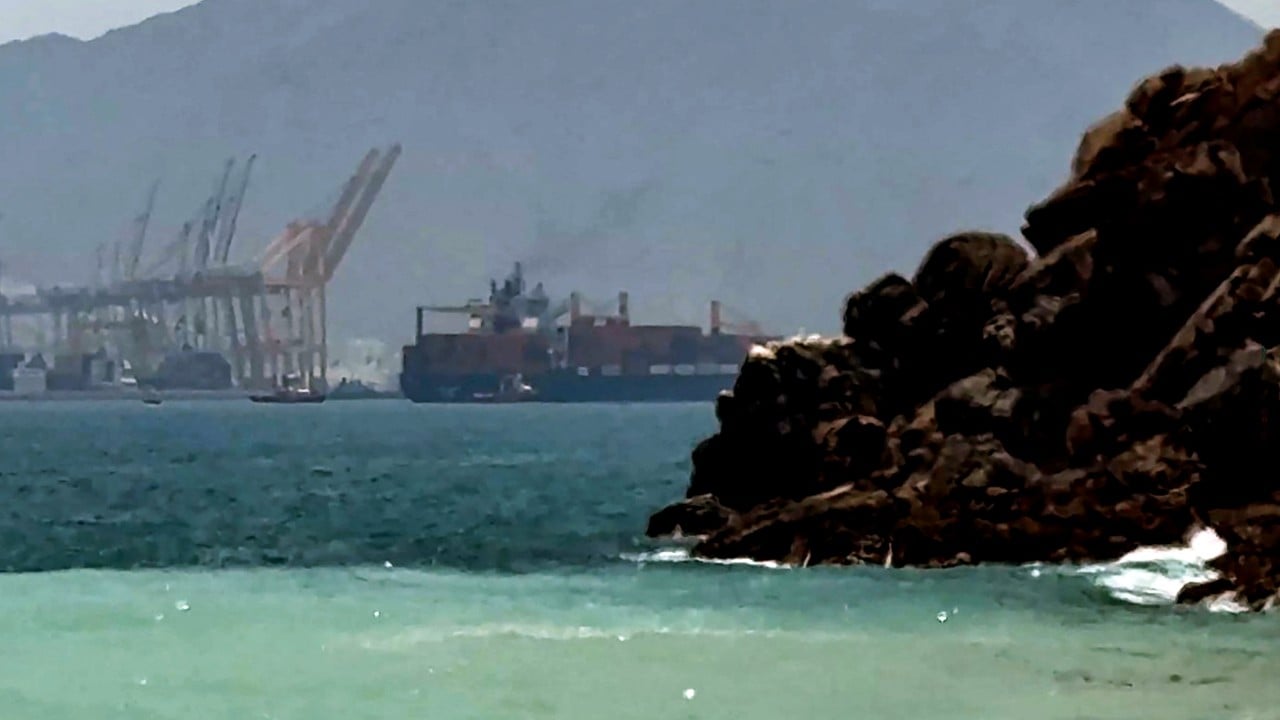
Merchant sailors don't sign up to be collateral damage in a regional proxy war. Yet, that's exactly what is happening right now in the waters of the Middle East. New Delhi just took a sharp, highly visible diplomatic stand by summoning Iran's Deputy Chief of Mission, Mohammad Javad Hosseini, to the Ministry of External Affairs. The move comes immediately after an Iranian cruise missile strike targeted two United Arab Emirates-flagged tankers, the Mombasa and the Al Bahiyah, killing an Indian crew member and injuring several others.
This wasn't a standard, quiet diplomatic meeting behind closed doors. Indian officials ensured television cameras captured the Iranian diplomat's arrival in full public view. The theater was intentional. India is furious, and it needs the world—and Tehran—to see it.
The attacks occurred in the southern shipping lane of the Strait of Hormuz, specifically within Omani territorial waters. For India, the stakes are incredibly high. Its global maritime workforce is facing unprecedented danger in one of the most volatile choke points on the planet.
The Human Cost on the High Seas
Let's look at the numbers because they reveal the terrifying reality for civilian crews. The two commercial tankers carried a combined crew of 46 people, and 30 of them were Indian seafarers.
- MT Al Bahiyah: Carried 12 Indian nationals. One was killed, and another was injured.
- MT Mombasa: Carried 18 Indian nationals. Nine sustained injuries, with two currently in serious condition.
Across both ships, the missile strikes triggered massive fires, leaving four sailors in critical condition. The total casualties include six Indian nationals and two Ukrainian nationals.
This isn't an isolated incident. Just days prior to this strike, an attack on the Cyprus-flagged container ship GFS Galaxy off the coast of Oman left another Indian crew member missing. Since the broader conflict flared up earlier this year following US and Israeli strikes on Iran, 14 Indian citizens have lost their lives in the region. Merchant sailors are increasingly finding themselves in the direct line of fire.
The Collapsing Ceasefire and the Battle for Hormuz
Why is this happening now? The fragile ceasefire agreement between the United States and Iran has completely broken down. Following the collapse of the memorandum of understanding, the Strait of Hormuz has turned into a contested military zone.
Iran’s Islamic Revolutionary Guard Corps claimed responsibility for disabling the tankers. Their justification? They argue the vessels ignored repeated warnings, turned off their tracking systems, and sailed through an illegal, mined passage directed by Washington.
The underlying issue is a massive clash over who actually controls these waters. The United States claims it has assumed control of the strait to guarantee freedom of navigation. US President Donald Trump even proposed charging commercial vessels a 20% transit fee to offset American military costs, acting as a self-appointed guardian angel of the waterway.
Iran rejected the proposal outright, maintaining that the strait is their territory and under their absolute jurisdiction.
Under international maritime law, neither nation has a legitimate claim to ownership. The Strait of Hormuz is a natural, international waterway. It is a global highway that handles roughly 20% of the world's petroleum and liquefied natural gas shipments.
India's Diplomatic Tightrope
India finds itself in a highly precarious strategic position. Anand Prakash, the joint secretary leading the Ministry of External Affairs' division covering Pakistan, Afghanistan, and Iran, lodged a fierce protest with the Iranian delegation. New Delhi's official statements strongly condemned the violence against seafarers and demanded an immediate cessation of hostilities.
But words only go so far. India relies heavily on the Middle East for energy security, and any prolonged disruption to the shipping lanes directly impacts domestic oil, gas, and fertilizer supply lines.
Furthermore, India has spent years building strong bilateral ties with Iran, particularly through strategic investments like the Chabahar Port. New Delhi cannot simply cut ties with Tehran. Yet, it cannot sit idly by while its citizens are killed on commercial vessels.
The United Arab Emirates has already stated it reserves the full right to respond to the violation of Omani and regional sovereignty. If Abu Dhabi or Washington escalates further, India's economic and human costs will mount rapidly.
Shipping companies employing Indian crews must immediately re-evaluate their transit protocols through the southern passage of the strait. Ship operators should ensure AIS tracking systems remain transparent and fully functional to avoid giving the IRGC a pretext for kinetic engagement. Meanwhile, India must leverage its unique diplomatic equity with both Washington and Tehran to push for localized maritime corridors. If New Delhi fails to secure explicit safety guarantees for its seafarers, the engine room of global shipping will refuse to sail into the Gulf.