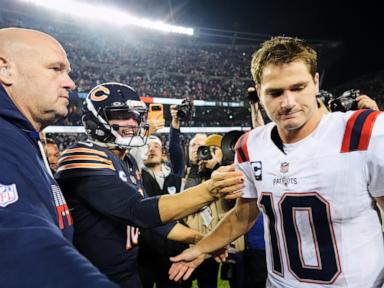
Losing streaks hurt. Seeing a hard-fought three-game winning streak evaporate against the Chicago Bears stings even more, especially when a team is trying to prove its recent turnaround isn't just a fluke.
Yet if you listen to the locker room in Foxborough right now, you won't hear panic. You'll hear a group of players and coaches pointing to tangible progress, and honestly, they have a point. When a rebuilding roster starts stringing together wins, the first loss afterward usually reveals whether the foundation is actually solid or if the whole thing was held together by duct tape and luck. Against Chicago, the New England Patriots showed enough grit and structural improvement to justify their optimism, even if the final scoreboard didn't go their way.
What Actually Happened When the Streak Ended
Three straight victories in the NFL don't happen by accident. You don't stumble into a month of winning football without executing on third downs, winning the turnover battle, and getting timely stops from your defense. Heading into the matchup with the Bears, New England had built genuine momentum by playing disciplined, complementary football.
Chicago broke that rhythm. The Bears capitalized on New England's mistakes, stalled out promising drives in the red zone, and forced the Patriots out of their comfort zone early. When you fall behind against a team that thrives on controlling the clock and disrupting passing lanes, the margin for error vanishes instantly.
Still, there is a massive difference between getting blown out because your roster lacks talent and losing a winnable game because of a few correctable execution errors. New England didn't fold when things went sideways. They kept fighting in the trenches, adjusted their coverage shells after halftime, and gave themselves a realistic shot to stay competitive deep into the fourth quarter. That kind of resilience matters when you're trying to establish a new culture.
Why Moral Victories Actually Matter for This Roster
Fans hate hearing about moral victories. I get it. In the NFL, you are what your record says you are, and nobody hangs banners for "keeping it close" or "showing heart" in a loss to Chicago.
If you're evaluating a veteran Super Bowl contender, moral victories are garbage. When an established powerhouse loses a game they should win, it's a red flag.
New England isn't in that window right now. They are actively developing young core pieces, installing new offensive concepts, and figuring out which players belong in their long-term plans. For a team in this specific phase of growth, how you lose is just as instructive as how you win. During the three-game winning streak, the Patriots learned how to close out tight games. Against the Bears, they learned how quickly sloppy penalties and missed assignments will get you beat against disciplined competition.
Look at the areas where New England held its ground despite the setback:
- Defensive physicality at the point of attack. Even when Chicago managed to sustain drives, the Patriots' front seven rarely got pushed around effortlessly. Linebackers filled gaps aggressively, and the secondary tackled well in space rather than letting short gains turn into back-breaking touchdowns.
- Poise under pressure. Young teams often unravel when the script flips. Instead of pointing fingers on the sideline or forcing reckless throws into double coverage, New England's offense stuck to its progressions and took what the defense gave them between the twenties.
- Special teams discipline. Field position kept the Patriots alive longer than their offensive efficiency deserved. Coverage units stayed in their lanes, and the punting game consistently forced Chicago to drive the length of the field.
Those aren't imaginary positives. Those are repeatable traits that translate to wins over a seventeen-game season.
The Thin Line Between a Three-Game Streak and a Collapse
Anyone who has watched enough NFL tape knows that the gap between a winning streak and a losing skid is razor-thin. During their three-game run, the Patriots caught a few breaks. Balls bounced their way, opponents missed key kicks, and New England converted high-leverage plays when it mattered most.
Against the Bears, the pendulum swung back. A dropped pass killed a promising drive. A missed blocking assignment blew up a screen play before it could develop. In a league designed for parity, regression to the mean hits everyone eventually.
The real test for New England's coaching staff isn't explaining away the loss to Chicago. It's ensuring that one bad afternoon doesn't snowball into three. Bad teams let a single loss linger into the next week's practice habits. Good teams isolate the film, fix the mechanical breakdowns, and move on by Wednesday morning.
Fixing the Red Zone Stagnation
If there is one glaring issue New England can't afford to ignore while celebrating their silver linings, it's red zone efficiency. Moving the ball between the 20-yard lines looks great on a stat sheet, but settling for field goals against an opponent like Chicago is a slow way to lose a football game.
When the field shrinks, timing and spacing have to be exact. Against the Bears, New England's offensive spacing looked cramped in tight quarters, allowing Chicago's defenders to pass off routes without breaking a sweat. Play-callers have to get more creative with motion, rub routes, and misdirection inside the ten-yard line so their skill players aren't forced to win every single rep in isolation.
Protecting the Football Under Duress
During the three-game winning streak, New England treated the football like gold. Against Chicago, sloppy ball security and rushed decisions crept back into the picture. You simply cannot give away extra possessions and expect your defense to bail you out for sixty minutes.
Quarterbacks and ball carriers have to understand situational awareness. Taking a sack on third down to preserve a field goal attempt is infinitely better than forcing a blind throw into traffic or fighting for an extra half-yard while exposing the ball to a punch-out.
How to Evaluate the Patriots Moving Forward
If you're trying to figure out whether this New England squad is actually turning a corner or just regressing back to its old habits, stop obsessing over the final score for a second and watch the tape on three specific fronts over the next month.
First, track their third-down conversion rate on both sides of the ball. Winning streaks are built on extending your own drives while getting off the field defensively. If New England keeps forcing opponents into third-and-long situations, the wins will come back quickly.
Second, watch how the offensive line holds up against exotic blitz packages. Chicago threw a lot of different looks at New England's protection schemes, and other defensive coordinators around the league will copy that blueprint immediately. How quickly the Patriots adjust their pre-snap communication will tell you everything about their coaching.
Third, pay attention to the locker room's body language during adversity. Right now, players are saying all the right things about staying positive after snapping their three-game streak. Words are cheap in November. Keep your eyes on how hard they play in the fourth quarter of their next game—that's where you'll find the real answer.