The European Union is celebrating a phantom victory. Bureaucrats in Brussels are popping champagne over the official rollout of the New Pact on Migration and Asylum, framing it as a historic, unified response to a decade of systemic failure. The mainstream media is dutifully repeating the talking points: tougher border screening, faster deportations for low-chance applicants, and a mandatory solidarity mechanism to redistribute the burden.
It is a comforting narrative for a continent desperate for order. It is also entirely detached from reality.
This updated framework does not fix a broken system. It formalizes a dysfunctional one. By doubling down on the illusion that administrative speed and financial penalties can override geopolitical realities, the EU has created a bureaucratic nightmare that will exacerbate the exact crises it claims to solve.
The consensus says Europe has finally found its backbone. The reality is that Europe has just built a more expensive, legally precarious waiting room.
The Illusion of Fast-Track Borders
The centerpiece of the new rules is the accelerated border procedure. The logic seems straightforward: individuals from countries with low asylum approval rates (under 20 percent globally across the EU) will be held in specialized border facilities. Their applications will be processed within 12 weeks. If rejected, they are to be deported immediately.
This sounds efficient on paper. In practice, it ignores the basic mechanics of international law and logistics.
I have spent years analyzing regional border operations and compliance frameworks. You cannot expedite identity verification, security checks, and judicial appeals in 12 weeks without cutting massive constitutional corners. More importantly, a fast-track rejection does not equal a fast-track deportation.
An administrative decree means nothing if the country of origin refuses to take the individual back.
- The Consular Bottleneck: Countries like Morocco, Algeria, and Pakistan do not automatically accept returnees just because Brussels passed a regulation. Securing consular travel documents takes months, sometimes years.
- The Detention Crisis: To prevent absconding during these 12 weeks, the EU is effectively mandating mass detention at the outer frontiers.
- The Legal Backlog: Stripping down initial assessment timelines simply pushes the pressure further down the pipeline. It guarantees a tidal wave of emergency appeals that will paralyze national administrative courts in Italy, Greece, and Spain.
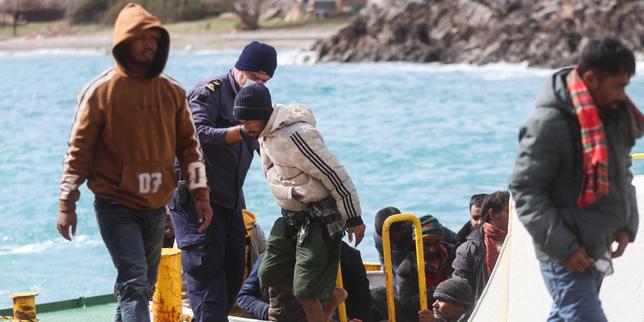
Imagine a scenario where thousands of migrants are held in mandatory border facilities under legal fiction—technically not having entered EU territory—while their countries of origin ignore repatriation requests. You do not get a streamlined system. You get permanent, state-sanctioned camp cities on the Mediterranean coast, operating under immense legal ambiguity.
Mandatory Solidarity is a Financial Illusion
The second structural flaw is the highly publicized "solidarity mechanism." For years, frontline states complained they were left alone to manage arrivals due to the Dublin Regulation, which dictates that the country of first entry is responsible for the asylum application.
The new pact purports to solve this by forcing inland member states to choose: either accept a quota of relocated asylum seekers or pay a financial contribution of €20,000 per rejected person into a joint EU fund.
This is not solidarity. It is a market localization scheme for human displacement. And the pricing is completely wrong.
The Real Cost of Asylum Infrastructure
The €20,000 figure is a political compromise pulled from thin air, completely disconnected from the actual macroeconomic realities of long-term integration or state care. Consider what a state actually spends over a multi-year period on a single applicant:
| Expense Category | Annual Cost Per Capita (Estimate) | Real-World Components |
|---|---|---|
| Immediate Reception | €8,000 - €12,000 | Housing, food, medical screenings, emergency staff. |
| Legal & Administrative | €3,000 - €5,000 | Translators, caseworkers, legal aid, court appeals. |
| Long-term Integration | €10,000 - €15,000 | Language courses, job training, social welfare integration. |
Paying €20,000 to opt out is an absolute bargain for wealthy Western and Northern European nations. It allows countries like Hungary or Poland to maintain their domestic political stances against immigration by simply cutting a check, while frontline states like Italy and Greece are left with cash but insufficient infrastructure, land, or administrative capacity to handle the physical volume of people.
Money cannot buy more land mass. It cannot magically build functioning municipal integration departments overnight. By monetizing non-compliance, the EU has structurally ensured that the geographical asymmetry of migration will remain exactly the same. Frontline states will remain the continent's shield, now funded by a continental subscription model.
The Fatal Flaw: The Safe Third Country Loophole
To achieve the promised high-speed deportations, the new pact relies heavily on the expansion of the "safe third country" concept. The goal is to allow member states to reject asylum claims as inadmissible if the migrant passed through a nation deemed safe enough to offer protection.
This is where the entire legal architecture of the pact collapses under the weight of its own hypocrisy.
Defining what makes a country "safe" has been degraded from an objective legal standard to a tool of diplomatic convenience. We are already seeing the consequences of this pragmatism. The EU’s migration deals with Tunisia, Egypt, and Libya are built on a foundational lie: that externalizing border enforcement to authoritarian regimes yields stable, humane outcomes.
When you outsource border management to transit states with terrible human rights records, you do not stop migration. You merely distort the market. You create a geopolitical extortion lever.
Every time Tunisia’s economy stumbles or Turkey wants leverage in customs union negotiations, the valve is adjusted. The new pact institutionalizes this vulnerability. By making externalized processing the default strategy, Europe is voluntarily handing its foreign policy keys to its neighbors.
Dismantling the Consensus: What the Public Asks
The debate surrounding this pact is riddled with flawed premises. Let us correct the baseline assumptions driving public concern.
Does this pact stop illegal immigration?
No. It changes the legal classification of individuals after they arrive. The economic drivers of migration—demographic deficits in Europe, systemic instability in sub-Saharan Africa, and the lack of legal labor pathways—remain completely untouched. A migrant fleeing economic collapse or climate degradation does not read the Official Journal of the European Union to check if their processing time will be 12 weeks instead of 12 months before stepping onto a boat.
Will it relieve the pressure on local municipalities?
Only in countries that choose to pay the opt-out fee to avoid taking relocations. For municipalities in southern Italy, the Canary Islands, or the Greek islands, the pressure will intensify. The mandate to conduct strict, enclosed border procedures means local resources will be monopolized by massive processing centers, turning local economies into security-dependent border zones.
Is this a victory for European unity?
It is a victory for cosmetic consensus. The pact passed by razor-thin margins, with intense opposition from both sides of the spectrum. Some states argue it violates basic human rights; others claim it does not go far enough in sealing borders. A policy built on forcing sovereign nations to either take people they do not want or pay fines they resent is a recipe for permanent internal friction.
The Uncomfortable Solution Nobody Wants to Implement
If the goal is genuine order, safety, and economic stability, the current pact is a regression. True disruption requires abandoning the myth that you can manage a 21st-century global migration crisis using updated 20th-century asylum laws designed for Cold War defectors.
Instead of building processing cages at the frontier, Europe needs to split the problem into two distinct, uncompromising frameworks: economic migration and humanitarian asylum.
First, dismantle the asylum backdoor for economic migrants by offering massive, accessible, off-shore work visa quotas directly in origin countries. If someone wants to work in Europe's labor-starved agricultural, care, or construction sectors, they should apply from a processing hub in Rabat or Cairo, secure a contract, and fly via commercial airline. This completely guts the business model of human smugglers.
Second, for true humanitarian asylum, processing must be moved entirely outside EU territory. Applications should be evaluated in secure, EU-administered regional hubs abroad. If an individual qualifies under a strict, uncompromised definition of political or religious persecution, they are flown directly to a destination state that has already agreed to accept them. If they arrive irregularly at a sea border without using these channels, the legal framework must allow for immediate transfer to these external hubs for processing.
This approach satisfies nobody looking for easy political points. It requires immense foreign investment, aggressive diplomatic renegotiation, and the courage to admit that current international asylum conventions are obsolete.
The New Pact on Migration and Asylum avoids these hard choices. It chooses instead to build a monument to paperwork, legal fictions, and financial buy-outs. The centers will fill up. The appeals will pile up. The external regimes will demand more money. And within 24 months, the EU will find itself right back where it started, wondering why a plan that looked so perfect on a Brussels whiteboard failed so catastrophically on the beaches of Lampedusa.