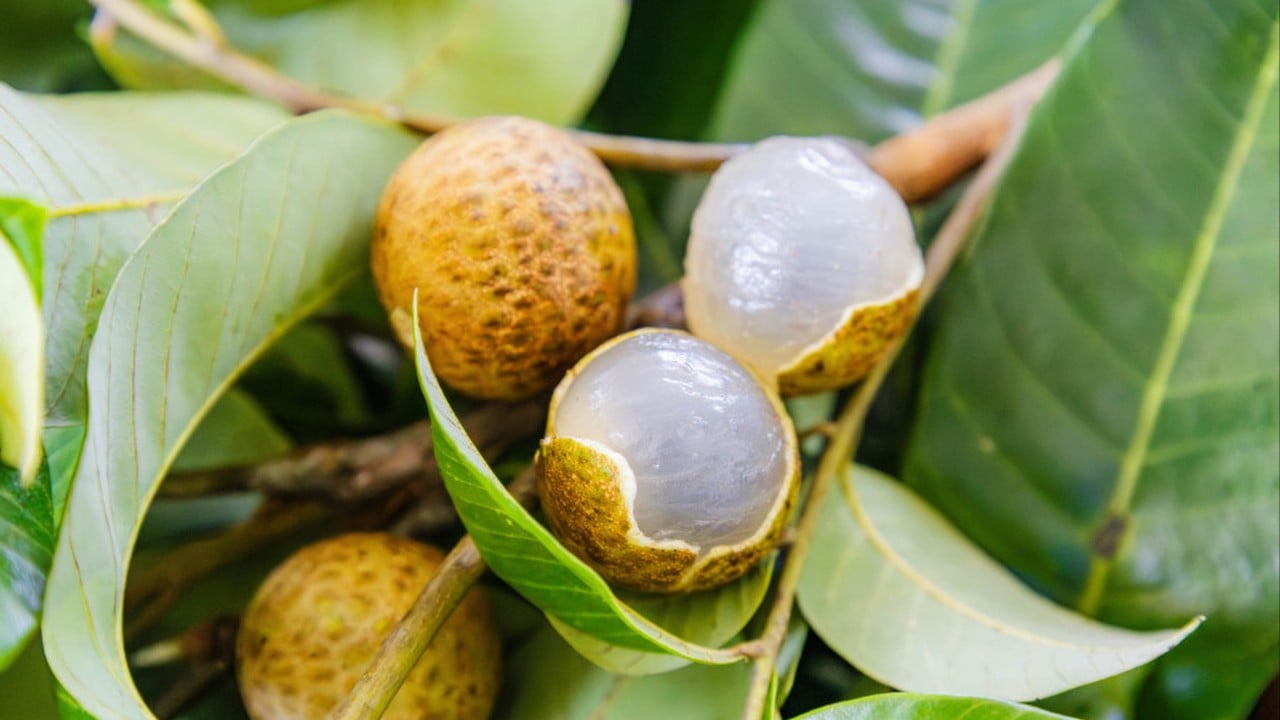
Botanical barriers usually keep closely related plants apart, but Chinese researchers just shattered a major rule of nature by successfully crossbreeding a lychee and a longan. Grown at the Field Genebank for Litchi in Guangzhou, this unusual hybrid tree represents a milestone in agricultural science. For years, experts thought an intergeneric cross between these two subtropical heavyweights was impossible because they belong to different genera with strict reproductive isolation.
The research team at the Guangdong Academy of Agricultural Sciences proved everyone wrong. Starting back in 2015, they used a clever pollination trick. By mixing inactivated lychee pollen with live longan pollen, they tricked the lychee pistil into accepting the foreign genetic material, allowing the longan pollen to fertilize a viable seed. The resulting tree, temporarily called "Huaishi," recently bore its first successful crop.
How the Hybrid Breaks Industry Rules
You might wonder why crossing a lychee and a longan matters outside a laboratory. Standard early-season fruit often disappoints buyers because it tends to taste sour and lacks adequate sugar content. Both parent varieties chosen for this project—the "Huaizhi" lychee mother and the "Shixia" longan father—are traditionally late-ripening plants.
Logic dictated that their offspring would also mature late. Instead, the hybrid shocked scientists by ripening as early as mid-May. Even better, it bypassed the typical tartness of early season harvests. The flesh turned out crisp, sweet, and packed with a distinct aromatic profile. This unexpected trait fills a massive seasonal gap in local markets for premium early fruit.
Other agricultural institutions in the region are making similar waves. Teams at South China Agricultural University developed another cross variant named "Crispy Honey," slated for trial sales. These achievements show that distant hybridization is moving from theoretical biology into practical crop development.
The Breeding Timeline Reality Check
Commercial growers cannot plant orchards of these hybrid trees tomorrow. Plant breeding takes patience, and the regulatory road is long. Researchers note that comprehensive varietal trials take time to monitor disease resistance, yield stability, and climate adaptability.
You are looking at a waiting period of five to six years before commercial fruit hits supermarket shelves. Modern gene-sequencing tools help accelerate the early phases. By analyzing seedling leaves, technicians can predict sweetness parameters and seed size early on, shrinking initial screening cycles from a decade down to just three years. Still, field testing cannot be rushed.
What This Means for Global Fruit Markets
China produces roughly seventy percent of the world's lychees, translating into a multi-billion-dollar domestic industry. Innovations like this change global trade dynamics. When growers can harvest superior fruit earlier in the season, export windows expand and profit margins improve.
Import markets in Europe and North America demand high compliance with pesticide limits and strict quality benchmarks. Developing naturally resilient cultivars means farmers can rely less on chemical interventions.
Keep an eye on regional agricultural updates out of Guangdong. While you won't find hybrid fruits at your local grocery store this season, the methods being perfected today will reshape orchard management and tropical fruit aisles within the decade. Watch for pilot harvest announcements as these experimental trees transition to scaled field trials.