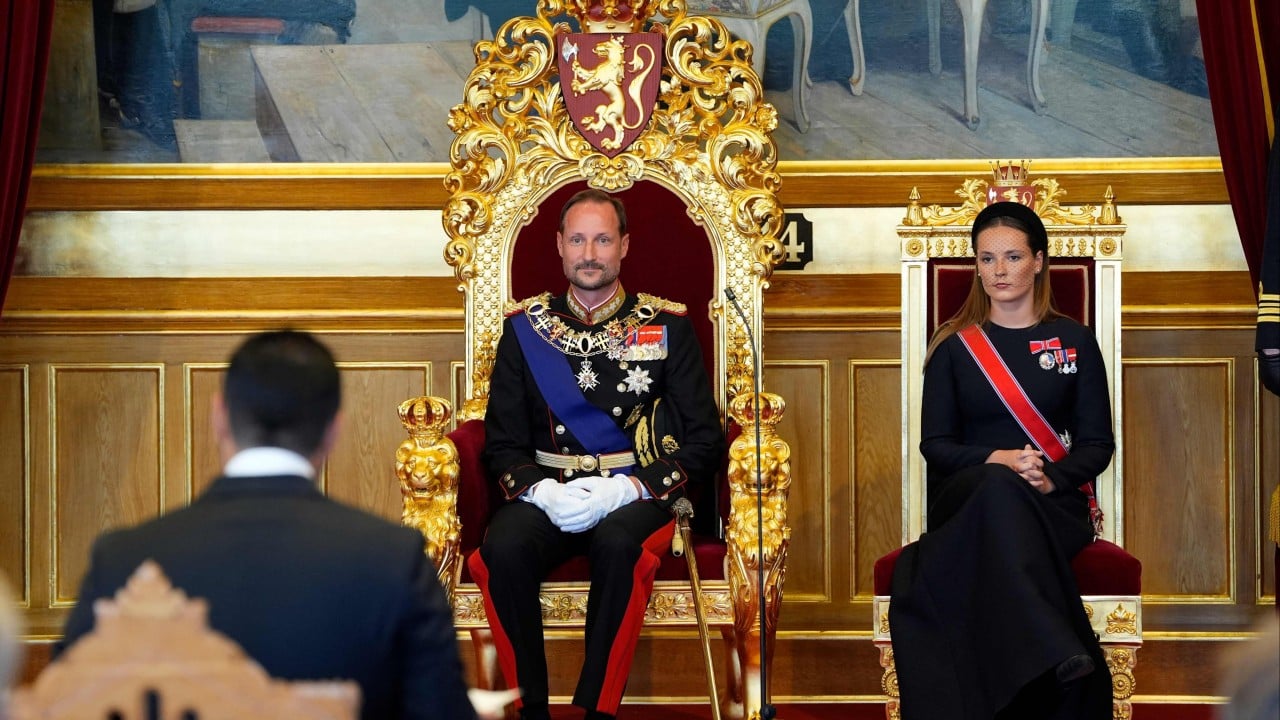
History unfolded in Oslo today as King Haakon VIII stood before the Storting and formally pledged his oath to the Norwegian constitution.
Transitions of power in constitutional monarchies look smooth from the outside. Television broadcasts show open cars, solemn parliamentarians, and precise parliamentary protocols. Behind the cameras, however, institutions face a delicate balancing act. When King Harald V passed away at 89, ending a 35-year reign, Norway didn't just lose a beloved figurehead. It triggered an immediate constitutional pivot that tests how ancient crowns survive in modern democracies. Read more on a connected issue: this related article.
The Storting Ceremony and What It Actually Means
The core of the transition happened inside the chamber of the Storting. Speaker Masud Gharahkhani read the official succession announcement, clearing the path for the new monarch. King Haakon VIII stepped forward and delivered the mandated constitutional vow: "I promise and swear that I will govern the Kingdom of Norway in accordance with its Constitution and Laws; so help me God, the Almighty and Omniscient."
This isn't empty theater. Norway's monarchy operates under strict constitutional limits established after the country dissolved its union with Sweden in 1905. The King holds no political executive power. Real governance rests entirely with the elected parliament and government ministers. Yet, the sovereign remains the vital constitutional glue of the state, serving as Commander-in-Chief of the armed forces and signing off on state laws. Further journalism by Associated Press highlights similar perspectives on the subject.
Polling shows roughly 72 percent of Norwegians still support retaining the crown. That backing isn't an accident. It stems from decades of carefully managed neutrality, emotional solidarity during national crises, and the deliberate accessibility of the royal family.
Behind Closed Doors and Absent Faces
The ceremony carried a distinct undertone of human vulnerability. Queen Mette-Marit missed the parliamentary proceedings entirely. Having recently undergone a lung transplant due to pulmonary fibrosis, she experienced recurring post-transplant complications that kept her under medical observation at Oslo's University Hospital.
Her absence disrupted the traditional imagery of a new king standing side-by-side with his queen consort. Just a day prior, Mette-Marit had managed to join the solemn coffin procession to the royal chapel, walking hand-in-hand with Queen Sonja. That appearance marked her first official duty since assuming her new title, highlighting the physical toll she has endured. Medical updates from her pulmonologist underscored that transplant complications are unpredictable, forcing the palace to prioritize her health over pageantry.
With the Queen sidelined for the day, the spotlight shifted instantly down the line of succession.
The Historic Rise of Crown Princess Ingrid Alexandra
The transition highlights a massive structural shift in how Norway's royal line operates. Crown Princess Ingrid Alexandra watched the proceedings closely, stepping into a prominent institutional role as the country's next-in-line.
Unlike previous generations who inherited titles under older, male-preference rules, Ingrid Alexandra benefits entirely from the 1990 constitutional reform introducing absolute primogeniture. This change ensures the eldest child takes the throne regardless of gender. When she eventually ascends, she will become Norway's first reigning queen in over six centuries, echoing the historic reign of Queen Margaret from 1388 to 1412.
At 22 years old, she represents a new wave of European heirs. Alongside peers like Princess Elisabeth of Belgium and Princess Catharina-Amalia of the Netherlands, she navigates a public life heavily scrutinized by digital media and shifting public attitudes toward hereditary privilege.
What Comes Next for the House of Glücksburg
Mourning continues across the nation as King Harald's coffin rests in the royal palace chapel ahead of the state funeral scheduled for September 9. Thousands of citizens are expected to pass through to pay respects without cameras or flowers, respecting the strict protocol laid down by the palace.
King Haakon VIII has chosen the motto "All for Norway," echoing his great-grandfather. It's a conservative, grounding choice designed to signal continuity during a turbulent personal and national loss. The real test for Haakon VIII won't be managing political crises—the constitution prevents him from doing so—but keeping an ancient institution relevant to a generation that questions traditional structures.
Check local Norwegian broadcasting schedules on NRK to follow the upcoming state funeral coverage, or visit the official Storting media archives for verified photographic records of the transition.