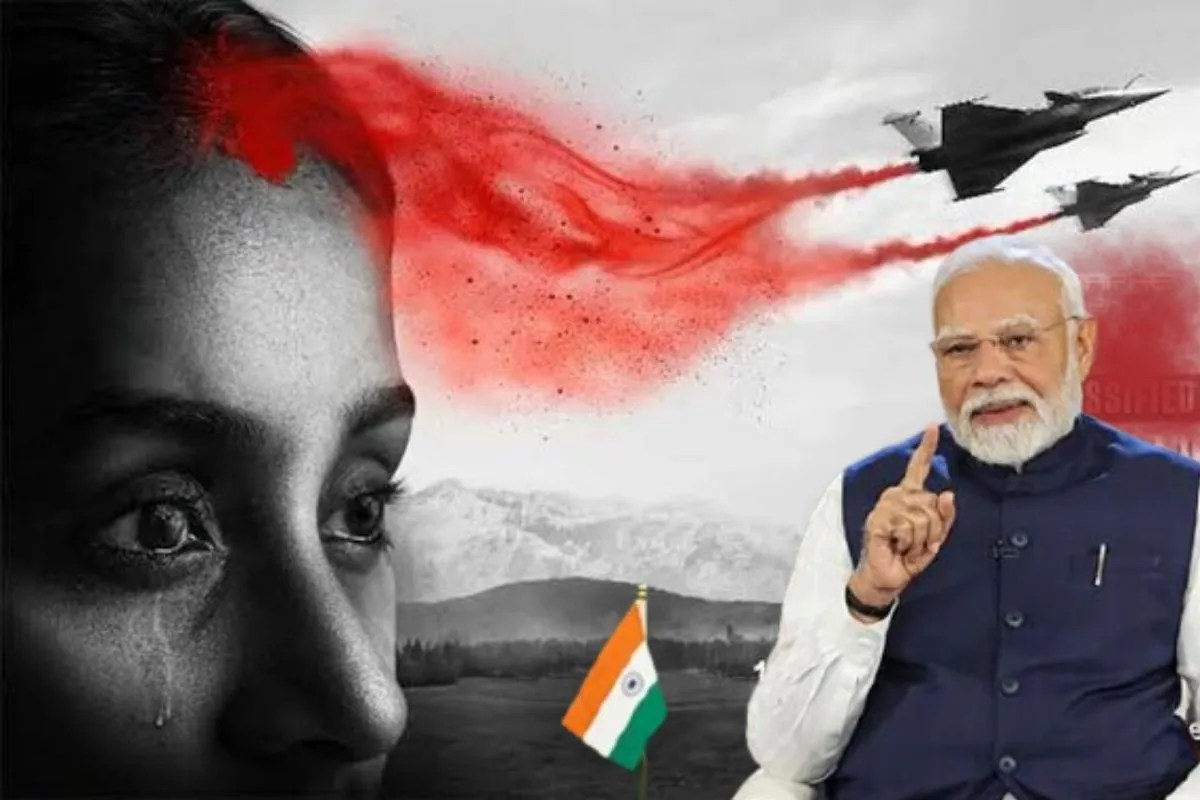
Truth hurts. That is basically the only reason why any government loses its temper over a piece of media. When a documentary about ऑपरेशन सिंदूर drops and manages to rattle the entire establishment in Islamabad, you know it hit a raw nerve. Pakistan is losing its collective mind right now. They are screaming from every official podium that the project is pure fiction. They claim it is a propaganda piece built entirely on one-sided narratives.
But let's be real for a second. Why are they panicking?
When a state apparatus spends decades curating a very specific, sanitized version of history for its domestic audience, any crack in that facade causes an emergency. The documentary exposes uncomfortable realities that defense analysts have whispered about for years. Instead of brushing off the noise, let us look at why this specific media project triggered such a massive meltdown across the border and what it actually reveals about the changing nature of cross-border information warfare.
The Anatomy of a Meltdown
If you watch the reaction coming out of Islamabad, the playbook is entirely predictable. Whenever uncomfortable facts surface, the first line of defense is always the same. Label it a drama. Dismiss it as amateur propaganda. Claim that everything shown was heavily doctored.
Pakistan's Ministry of Information and various defense spokespersons rushed to condemn the project within hours of its release. They argued that the documentary fails to present the ground reality. They insisted that viewers are being fed a distorted timeline of events.
Here is the flaw in their argument. If a project is truly a baseless drama with zero connection to reality, governments usually ignore it. Total silence is the standard diplomatic response to low-value fiction. When a foreign office fires off emergency press releases and prime-time talk shows dedicate entire segments to screaming about a streaming release, they are not ignoring a threat. They are managing panic.
The documentary touches upon strategic vulnerabilities that military planners in Rawalpindi prefer to keep locked away in classified vaults. It details tactical decisions, command structures, and operational outcomes that disrupt the official narrative fed to the Pakistani public. That is why they are sweating.
Breaking Down the Narrative War
Information is ammunition. Modern conflicts are no longer fought solely with artillery and jets; they are won and lost in the narrative space.
For years, regional information campaigns followed a rigid, predictable template. One side would report an incident, the other side would flatly deny it, and the international media would declare a stalemate due to a lack of verifiable imagery. ऑपरेशन सिंदूर changes that calculus by compiling open-source intelligence, satellite data, tactical radio intercepts, and eyewitness accounts into a coherent timeline.
You cannot simply wave away hard data by calling it a drama. Modern audiences are too smart for lazy denials. When a documentary shows high-resolution evidence of strategic positioning, it forces the opposing side into a defensive corner. They can no longer control the narrative simply by issuing a press note. They have to engage with the specifics, which they are utterly incapable of doing without exposing internal contradictions.
- Official denials rely on emotional rhetoric rather than counter-evidence.
- Independent visual verification dismantles decades-old propaganda myths in minutes.
- Public panic among political elites proves that transparency remains their biggest fear.
Why This Matters Right Now
We live in an era where digital archives do not forget. Every press conference, every contradictory statement, and every panicked denial gets logged, analyzed, and weaponized by global analysts.
When Islamabad calls the documentary a one-sided presentation, they are inadvertently admitting that they have no credible counter-narrative to offer. If they had alternate proof, they would have released it in 4K resolution on every global platform by now. Instead, they rely on tired clichés about media bias and psychological operations.
Look closely at the language coming from their defense analysts on television. They look rattled because the project bypasses traditional diplomatic channels and speaks directly to the global intelligence community. It exposes the gap between what the military leadership tells its citizens and what actually happened on the ground.
Cutting Through the Noise
You have to filter out the political posturing to understand the core issue. Governments hate losing control of their population's worldview. When a well-researched documentary shatters the illusion of absolute deterrence, the political cost is massive.
Citizens in Pakistan are beginning to ask uncomfortable questions. Why did the military establishment fail to anticipate this exposure? Why are the official rebuttals so weak and defensive? These are questions that local censors cannot suppress forever no matter how many digital blocks they implement.
The hysteria over ऑपरेशन सिंदूर will fade from the news cycle eventually, but the precedent it sets is permanent. State-sponsored narratives are losing their monopoly on truth. Every time a government overreacts to a documentary with sheer panic, they hand that documentary free publicity and confirm its core arguments to the rest of the world.
Stop buying into knee-jerk denials from defensive states. Look at the evidence, examine the primary sources, and judge the facts for yourself the next time a regional controversy blows up your timeline.