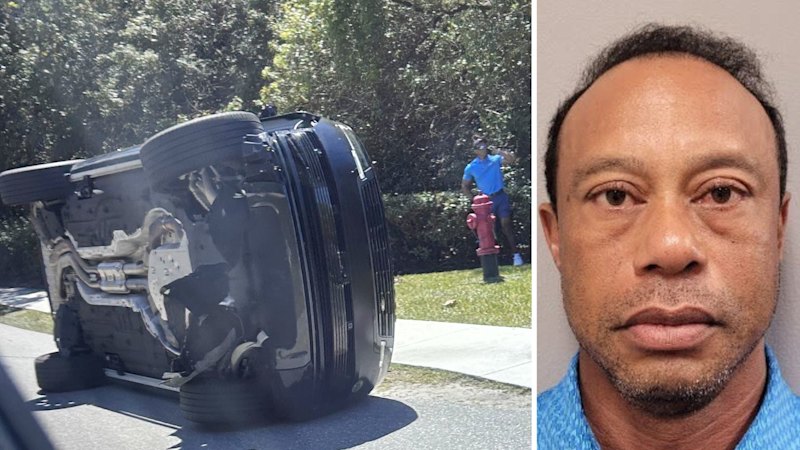
The mystery of Tiger Woods’ 2021 car crash in Southern California just got a lot more complicated. For months, the public narrative focused on a heavy foot and a dangerous stretch of road. But newly released police documents from the Los Angeles County Sheriff’s Department have shifted the focus from the gas pedal to the legendary golfer’s pockets. When deputies arrived at the mangled wreckage of his Genesis GV80, they didn't just find a trapped, bloodied athlete. They found an empty plastic pill bottle in the front console and a handful of loose pills inside a wooden container in his pocket.
This isn't just about celebrity gossip. It's about how the legal system treats high-profile accidents and what happens when the evidence doesn't quite match the official "no charges" outcome. We're looking at a situation where the driver was reportedly unconscious, the car was totaled, and medication was present, yet no blood draw was ever performed.
The Evidence Left in the Wreckage
Let's look at the facts. According to the supplemental reports, a deputy searched the vehicle and Woods’ personal belongings after the crash. They discovered a "small wooden container" in his pocket that held several pills. What were they? The report doesn't name them. It also doesn't explain why a "clear plastic baggie" was found in the vehicle's storage compartment.
The presence of medication in a car crash isn't an automatic crime. Plenty of people drive with prescriptions. But when you combine pills with a driver who was reportedly "somewhat combative" and "confused" when first reached by witnesses, red flags go up. These details were largely glossed over in the initial press conferences held by Sheriff Alex Villanueva. Back then, the department was quick to label the incident a "pure accident." Now, with these specifics leaking out, that early dismissal looks more like a rush to judgment than a thorough investigation.
Why No Toxicology Report
This is the part that drives legal experts crazy. If a regular person flips their SUV, ends up unconscious, and has loose pills in their pocket, they’re getting a blood draw. Period. In the Woods case, the Sheriff’s Department insisted there was no "probable cause" to suspect impairment. They claimed he didn't smell of alcohol and showed no signs of being under the influence.
But here’s the reality. Certain medications, especially opioids or muscle relaxants, don’t leave a scent. If a driver is in shock or has a traumatic brain injury, their behavior might mimic impairment. You can't know for sure without a lab test. By the time the lead investigator, Deputy Johann Schloegl, sought a search warrant for the vehicle’s "black box" data, he specifically avoided asking for a blood sample.
This gap in the investigation creates a massive "what if" that will haunt the legacy of this crash. Without that toxicology report, we're left with a gaping hole in the story. Was he just tired? Was he distracted? Or was there something in his system that contributed to him hitting the curb at 80 miles per hour? We'll never have a definitive answer because the authorities decided not to ask the question.
The Gap Between Speed and Substance
The data from the SUV's black box showed that Tiger never hit the brakes. In fact, he actually accelerated right before the impact. To a crash investigator, that usually suggests one of two things: a medical emergency or extreme impairment. You don't accidentally floor it when you're headed for a tree unless your brain isn't processing the environment correctly.
The Sheriff’s Department stuck to the speed narrative. They said he was driving 84 to 87 mph in a 45 mph zone. They called it "unsafe speed for the road conditions." It’s a clean explanation. It’s easy to digest. But it doesn't account for the pills. It doesn't account for why a man who has mastered the most mentally demanding sport in the world would lose all spatial awareness on a road he’d driven before.
Comparing This to 2017
We can't talk about this crash without mentioning Jupiter, Florida. In 2017, police found Tiger asleep at the wheel of his running car. He had a cocktail of Vicodin, Derailed, Xanax, and Ambien in his system. He didn't realize where he was. That incident led to a DUI diversion program and a public admission that he was seeking professional help for medication management.
Because of that history, the 2021 crash deserved a much higher level of scrutiny. When you have a history of struggling with prescription painkillers following multiple back surgeries, and then you're found with pills in your pocket after a near-fatal wreck, the benefit of the doubt should probably be thinner. The Los Angeles authorities gave him the VIP treatment. They focused on the "how" (the speed) but completely ignored the "why" (the mental state).
What This Means for Public Trust
When the law is applied differently to a billionaire athlete than it is to a guy in a used Honda, trust in the system erodes. The Sheriff’s Department faced immediate criticism for how they handled the scene. They didn't even check his cell phone records to see if he was texting. They just wanted the story to go away.
They successfully protected a legend from a potential DUI charge, but they did him a disservice in the long run. Now, instead of a cleared name backed by a clean blood test, Tiger has to live with the "pills in the pocket" headline. It keeps the suspicion alive. It makes the "accident" look like a cover-up.
The Reality of Recovery and Pressure
It’s easy to judge from the outside. Tiger Woods was recovering from yet another back procedure at the time. He was under immense pressure to return to the game. Chronic pain is a monster. It changes how people think and how they function. If he was using medication to manage that pain, it’s a human struggle. But it’s a struggle that has no business happening behind the wheel of a two-ton vehicle.
The car he was driving was a loaner from the Genesis Invitational tournament. It was a tank. That car likely saved his life. But the safety features of a modern SUV can’t protect a driver from their own poor choices or the negligence of an investigation that refuses to look at the evidence.
What Happens Now
The case is officially closed. No charges were filed, and Tiger has since made a miraculous, albeit limited, return to competitive golf. But the release of these documents serves as a reminder that the official story is rarely the whole story.
If you're following this, don't just look at the speed stats. Look at the procedural failures. The next time you hear a law enforcement official say there was "no evidence of impairment," ask yourself if they actually looked for it. In this case, they saw the pills, put them in a report, and then looked the other way.
Keep an eye on future court filings if any civil litigation arises from the crash. While Tiger didn't hit another car, the details of his condition could still surface in insurance disputes or manufacturer lawsuits. The paper trail is there, even if the handcuffs weren't. Focus on the facts found in the supplemental reports, not just the scripted lines from the initial press conferences.