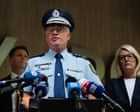
Transparency sounds great in theory until you are the one standing under the microscope. That is basically what happened when the New South Wales Police Commissioner made a last-minute attempt to slam the doors shut on public hearings regarding the chaotic Sydney anti-Herzog protest.
When police accountability meets high-stakes politics, things get messy fast. Operation Makalu, the Law Enforcement Conduct Commission (LECC) inquiry investigating the police response to the demonstration against Israeli President Isaac Herzog's visit, faced an unexpected speed bump when the commissioner moved to keep crucial examinations behind closed doors.
Let us break down what actually happened, why the timing raised eyebrows, and why trying to keep a lid on public scrutiny rarely works out the way authorities hope.
The Timing That Ruled the Room
Nobody likes surprises, especially public watchdogs. The police watchdog didn't mince words, calling the commissioner's eleventh-hour intervention "regrettable" because it dragged out proceedings and stalled transparency.
Instead of welcoming an open review into how officers handled the heated demonstrations outside Sydney Town Hall, leadership tried to pivot. The push aimed to sequester examinations of fact into private sessions, leaving public hearings only for broad systemic issues down the track—and only after the closed-door rounds wrapped up.
Critics pointed out an obvious flaw in this setup. It shields individual operational decisions from immediate public scrutiny while shifting the focus away from frontline chaos.
What Happened on the Streets of Sydney
To understand why a closed-door hearing was so contentious, you have to look back at the night itself. Viral video footage from the protest showed officers using heavy-handed tactics, including pepper spraying, shoving people into street furniture, and wrestling individuals to the ground. Some footage even captured officers boasting about physical altercations or punching protesters.
On one side, authorities argued they faced an unprecedented situation involving intense crowd control challenges and aggressive verbal abuse. On the other side, civil liberties groups, legal observers, and injured civilians pointed to overwhelming video evidence showing disproportionate force against largely peaceful demonstrators, including the elderly and people praying.
When a police force faces accusations of brutality on this scale, hiding the investigation behind closed doors destroys public trust instantly. People want to see accountability in real-time, not filtered through bureaucratic delays.
The Pushback Against Institutional Secrecy
Public inquiries exist because internal reviews rarely satisfy a skeptical community. If the police watchdog caves to pressure from the top cop, the whole exercise risks looking like an institutional whitewash.
While the commissioner argued that certain factual matters needed private handling to ensure fairness, the watchdog ultimately rejected a blanket block on openness. Public examinations went ahead, allowing the community and those subjected to police violence to hear accounts directly, rather than relying on sanitized summaries.
This friction highlights a wider cultural problem within modern policing. Accountability is often treated as a public relations hazard rather than an essential tool for institutional health.
Where Accountability Goes From Here
The fallout from the Sydney protest inquiry extends far beyond a single courtroom or watchdog hearing. With ongoing legal battles, civil actions from injured protesters, and mounting political pressure on state leaders like Premier Chris Minns, the desire to sweep controversial policing tactics under the rug is facing a brick wall.
Transparency isn't optional when public safety mechanisms break down. Trying to restrict public access to inquiries only amplifies suspicion, ensuring that every move law enforcement makes remains under intense public glare.