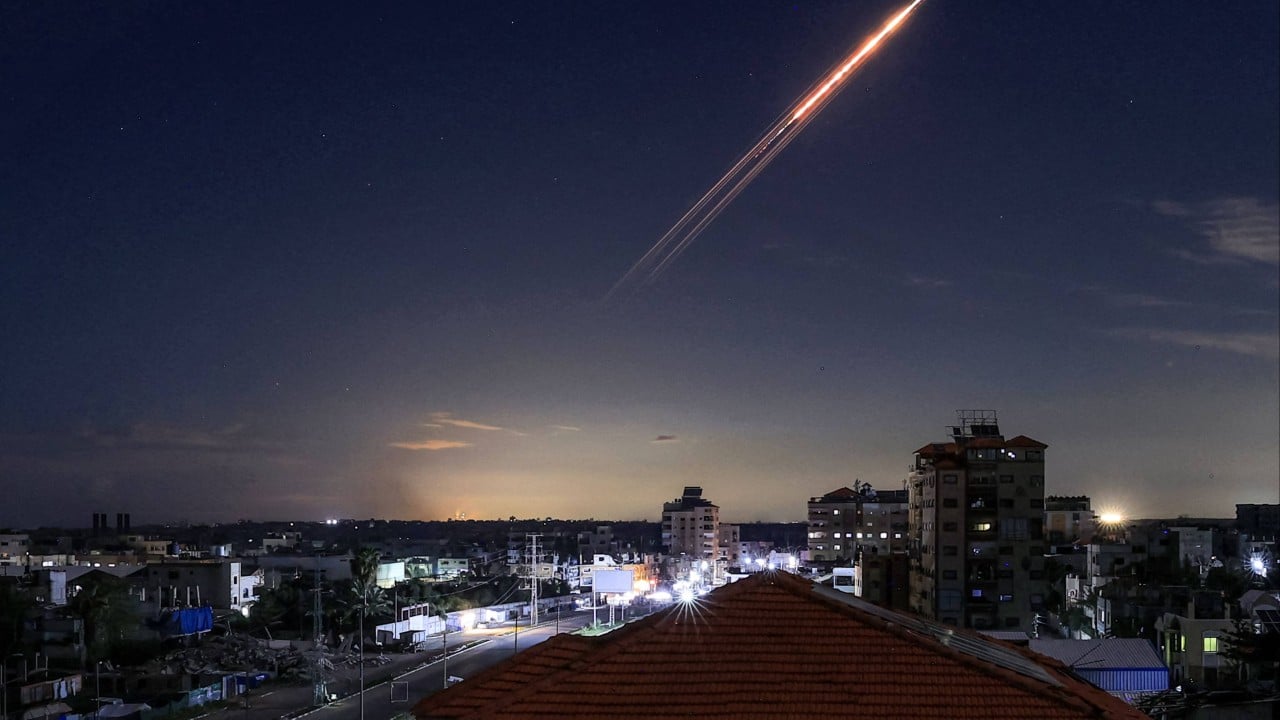
The air at Prince Sultan Air Base usually tastes like dust and jet fuel. It is a dry, suffocating heat that clings to the back of your throat, a constant reminder that you are a long way from home. For the men and women stationed there, the sound of the desert is a rhythmic hum—the low throb of generators, the occasional roar of an F-15 taking flight, and the whistling wind. On that particular Tuesday, the hum broke.
War is often discussed in the abstract, measured in geopolitical shifts and calculated risks on a map in a temperature-controlled room in D.C. But at 2:14 AM, war is not a concept. It is a scream of tearing metal. It is the smell of ozone and burning rubber. It is the terrifying realization that the sky is falling.
When the Iranian-launched projectiles tore through the darkness, they weren't just hitting a "strategic asset." They were slamming into a workplace. They were interrupting a phone call home to a spouse in Ohio. They were shredding the quiet of a midnight shift for mechanics who thought they were safe behind layers of high-tech defense.
The Myth of the Invisible Shield
We have been conditioned to believe in the perfection of our technology. We talk about missile defense systems as if they are magic wands, invisible domes that make the messy reality of ballistics disappear. But physics is indifferent to our confidence.
Imagine a goalie trying to block a puck that is traveling at five times the speed of sound. Now imagine that puck is the size of a sedan and filled with high explosives. That is the reality of modern interceptor logic. When a kinetic kill vehicle hits a ballistic missile, the debris doesn't just vanish into the ether. It has to go somewhere.
On this night, the "somewhere" was the tarmac and the barracks. Fragments the size of dinner plates, heated to glowing temperatures, rained down on the base. Some of the wounds sustained by the troops weren't from direct hits by the missiles themselves, but from the secondary effects—the concussive pressure that turns the air into a physical hammer, and the shrapnel that turns everyday objects into lethal projectiles.
Brain injuries are the silent scars of these encounters. A soldier might look fine. They might have all their limbs. But the blast wave ripples through the skull, bruising the very seat of their personality. We call it "traumatic brain injury," a clinical term that hides the reality of the headaches, the sudden flashes of anger, and the memory gaps that will haunt these men and women long after the smoke clears in the Saudi desert.
The Trillion-Dollar Junkyard
The financial cost of these strikes is staggering, but it’s the symbolic cost that truly stings. To the casual observer, a damaged plane on a runway is a repair bill. To a pilot or a crew chief, it is a crippled bird.
One of the aircraft caught in the crossfire was an advanced electronic warfare platform. These aren't just planes; they are flying supercomputers. They are the eyes and ears of the fleet. Seeing a multi-million dollar piece of engineering—something that took thousands of hours to calibrate—reduced to a charred skeleton of carbon fiber and aluminum is a visceral gut punch. It exposes a vulnerability we aren't supposed to acknowledge: that a relatively cheap drone or a mass-produced missile can degrade the most expensive military force in history.
The asymmetry is the real story here. Iran isn't trying to win a conventional dogfight. They are playing a game of attrition. They are betting that they can manufacture missiles faster and cheaper than we can manufacture the interceptors to stop them. It is a grim math. If an interceptor costs $3 million and the incoming threat costs $50,000, who wins the long game?
The Human Cost of the Red Line
Let's look at a hypothetical sergeant—we'll call him Elias. Elias is 24. He joined the Air Force to see the world and maybe get a degree in engineering. He spent his evening cleaning a hangar, thinking about the pizza he’d eat when he finally got back to the States.
When the sirens wailed, Elias didn't have time to process the "strategic implications" of Iran’s regional posturing. He had seconds to dive under a heavy workbench. He felt the ground heave. He heard the sound of a thousand glass bottles shattering at once. When he crawled out, the world was orange. The hangar door was gone. His friend, standing twenty feet away, was clutching his ears, blood trickling through his fingers as he screamed a sound Elias couldn't actually hear because his own eardrums had been blown inward.
This is the "wounded" part of the headline. It isn't a statistic. It’s Elias struggling to find his footing in a world that literally moved under his feet. It’s the medic who has to triage friends under the flickering light of a burning fuel line.
The strike wasn't just an act of war; it was a message written in fire. The message wasn't for the generals. It was for the people on the ground. It was meant to say: You are not untouchable. Distance does not grant you safety.
The Calculus of Restraint
The most frustrating part for those on the receiving end is the silence that follows. There is a political dance that happens after the dust settles. Diplomats weigh the "proportionality" of a response. They talk about "escalation ladders" and "red lines."
But for the person scrubbing soot off a fuselage or sitting in a darkened room waiting for their vision to stop blurring, these phrases are empty. There is a profound sense of isolation that comes from being a pawn in a game where the rules are set by people who will never hear a missile whistle overhead.
We are living in an era where the front lines are everywhere and nowhere. A base in the middle of a desert, protected by the most advanced sensors on the planet, can be turned into a chaotic scene of carnage in the time it takes to brew a pot of coffee. The technology that was supposed to make war clean and distant has instead made it pervasive and unpredictable.
The planes will be replaced. The tarmac will be patched. The headlines will move on to the next crisis, the next political scandal, or the next celebrity meltdown. But for the troops who were there, the desert will never be quiet again. Every time the wind whistles through the hangar or a heavy truck backfires, they will be back in that moment—the moment the air turned to lead and the sky turned to fire.
They carry the weight of a conflict that has no clear end, fought with weapons that don't care about their names. We look at the map and see a strike. They look at the scars and see a life forever changed.
The sand eventually covers everything. It fills the cracks in the pavement and hides the scorch marks on the earth. But the memory of that heat, that specific, terrifying roar of a world being torn apart, stays. It stays in the way a hand shakes when reaching for a cup. It stays in the silence of a room where a soldier sits, staring at a wall, wondering when the hum of the desert will break again.