There is a particular kind of silence that arrives when a city loses its pulse. It is not the quiet of a country midnight or the gentle hush of a snowfall. It is sudden, metallic, and heavy. It is the sound of ten thousand refrigerators simultaneously exhaling their last mechanical breaths, of traffic lights winking out in unison, leaving intersections to the chaotic law of headlights and raw instinct.
Outside, the wind had stopped whispering hours ago. Now, it roared with the authority of an apex predator, stripping aluminum siding from suburban roofs and bending old oaks until their trunks screamed under the strain.
For months, the forecast had been nothing more than a strip of text scrolling across the bottom of a morning screen, a distant rumbling of low-pressure systems colliding over the midsection of the country. People checked their apps, adjusted their umbrella choices, and went about the choreography of ordinary Tuesday mornings. Coffee was poured. Emails were answered. Children were buckled into car seats with coats that would prove too bulky by afternoon.
Nobody anticipated the exact vector where physics would intersect with human fragility.
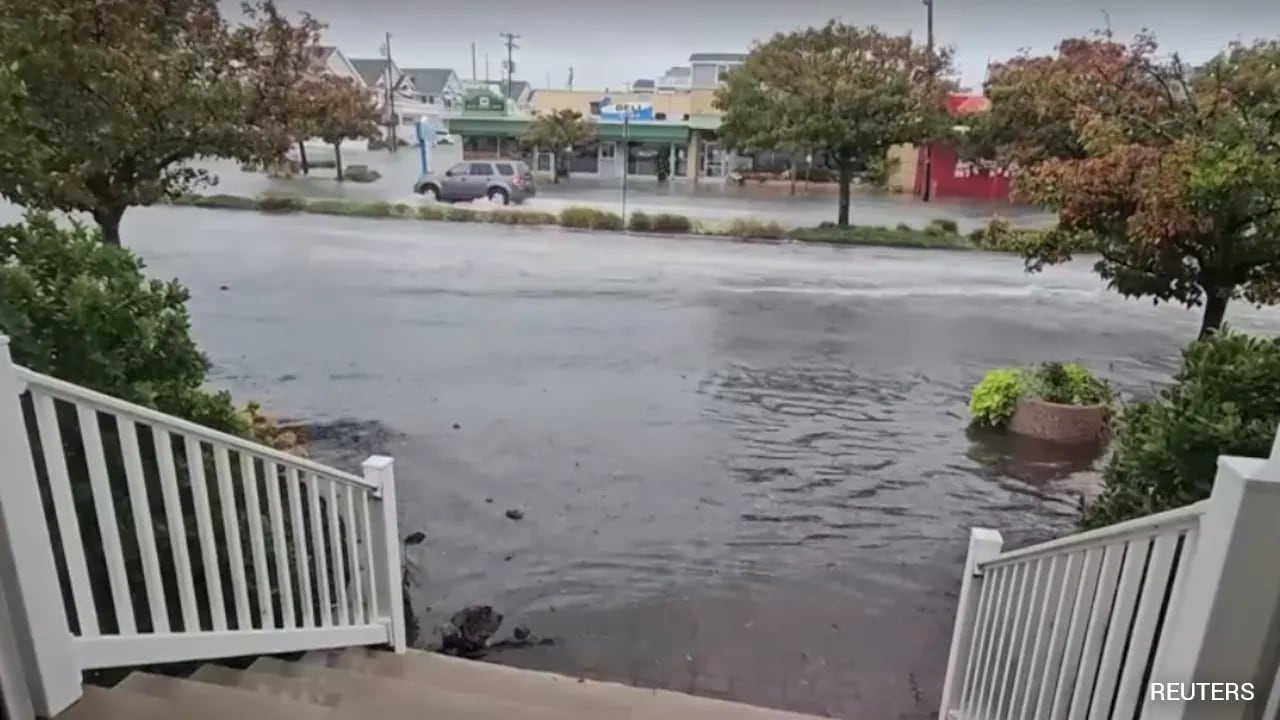
When the front finally tore across the Eastern Seaboard and the Midwest, it brought more than rain. It brought a rearrangement of reality. In towns where the electrical grid had hummed quietly for decades, feeding lights, hospital monitors, heating coils, and subway lines, the lines simply snapped. They did not break gracefully. They whipped through the freezing air like broken cables of steel, spitting blue-white arcs of energy against the blackening sky before going dark forever.
Consider what happens when the lights go out in a modern metropolis.
At twenty-eight thousand feet, a pilot feels the shudder first. It is not the violent jolt of turbulence that passengers brace for with white knuckles, but a subtle, sickening drop in the stomach as wind shear claws at the wings. Across hundreds of regional airports and major hubs, the automated dispatch systems flickered and died. Hundreds of flights—bound for homecomings, business negotiations, and quiet weekends—were instantly frozen on tarmac strips that stretched like black ice into the fog.
Inside cabin sixteen-delta of a grounded Boeing 737, a man named Arthur stared at a frozen seatback screen. His flight to Chicago had been delayed three times before the gate agent’s voice dissolved into static over the public address system. Around him, the air grew stale within twenty minutes. The rhythmic hum of the ventilation system died, replaced by the collective exhaling of one hundred and eighty strangers packed into aluminum tubes, watching their phones battery indicators tick downward toward the red zone.
Arthur was not thinking about weather patterns or jet streams. He was thinking about his mother, eighty miles away, whose oxygen concentrator plugged directly into the wall.
That is the invisible stake of any modern storm. We treat infrastructure as an abstraction, a silent partner in our daily survival that we only notice when the bill arrives or the switch fails. We forget that civilization is a thin lacquer sprayed over a very old, very indifferent wilderness.
On a cracked stretch of interstate two hours south, that lacquer cracked completely.
A falling pine branch, heavy with sleet, struck a moving sedan with the force of a falling anvil. The driver, a thirty-four-year-old nurse returning from a grueling thirty-six-hour shift at a county hospital, never saw it coming. Her car veered off the asphalt, cutting through a guardrail like paper before coming to rest in a freezing drainage ditch. By the time emergency responders reached the scene—navigating roads choked by downed lines and debris—the temperature had plummeted past freezing, and the world had grown profoundly quiet.
She became the single official casualty of the evening's immediate ledger, a name that would later be reduced to a bullet point on a morning news broadcast: One dead following severe weather.
Statistically, a single fatality in a storm system affecting millions sounds like an acceptable margin of error. It sounds like a statistic you read while sipping coffee, feeling a momentary pang of sympathy before scrolling down to the sports scores or the financial markets. But statistics are just human lives stripped of their friction, their warmth, and their unfinished business. Behind that single line item was a kitchen table with half-drunk tea, a locker room at a hospital with an empty shift log, and a family whose universe had just folded inward on itself without warning.
Meanwhile, across a dozen states, the darkness expanded.
Over one hundred thousand homes and businesses found themselves marooned in the cold. In neighborhoods from the rolling hills of Pennsylvania down through the river valleys of Ohio, people retreated to the centers of their houses. They dragged heavy wool blankets from closets, lit red emergency candles that smelled faintly of wax and old basements, and watched the battery percentages on their mobile devices dwindle into single digits.
The internet, that great illusion of permanent, weightless omnipresence, began to stutter and fail as cell towers lost their backup generators one by one. People who had not spoken to their next-door neighbors in five years found themselves opening front doors into the freezing sleet just to ask if anyone had a spare flashlight or a battery-operated radio.
This is the strange, paradoxical gift of catastrophe. It strips away the ambient noise of digital existence and forces us back into the physical proximity of our immediate surroundings.
By midnight, the storm had begun its slow, exhausted trudge eastward toward the Atlantic, leaving behind a landscape glazed in thick, treacherous sheets of ice. Utility workers—men and women in high-visibility orange coats smothered in salt and sleet—climbed into bucket trucks while the wind still howled at gale force. They did not wait for daylight. They worked by the amber glare of hazard lights and halogen floods, stripping away shattered limbs of trees that had outlived empires, splicing copper wires with frozen fingers, and chasing ghosts through a broken grid.
To watch a lineman work in the dead of night during a freeze is to witness a quiet, stubborn defiance of entropy. They do not talk much. They communicate in grunts, hand signals, and the occasional sharp crack of a ratchet wrench against frozen bolts. They are the shock absorbers of our technological society, absorbing the violence of nature so the rest of us can wake up to a functioning espresso machine and a warm shower.
By dawn, the sky did not clear so much as it yielded.
A pale, bruised light crept over the horizon, revealing a world transformed into glass. Every branch, every power line, every blade of grass was encased in a quarter-inch shell of frozen rain. The air smelled intensely of ozone, damp earth, and burnt electrical transformers.
In the airports, the first de-icing trucks rolled out with a roar that sounded like jet engines spooling up in a cave. Passengers, bleary-eyed and stiff from sleeping on plastic terminal chairs, lined up at ticket counters that smelled of stale coffee and anxiety. The flights would eventually resume. The planes would climb back into the upper atmosphere, navigating lanes of air that bore no memory of last night's terror.
Back in the suburbs, the power would flicker once, twice, and then hold. The digital clocks on kitchen microwaves would begin their frantic blinking, flashing arrays of uniform red zeros waiting for someone to press the reset button.
Arthur would finally make it home to find his mother wrapped in three blankets, breathing steadily from a battery backup that had held out with twenty minutes to spare. The nurse’s colleagues would return to their shifts, hanging a quiet memorial notice on the breakroom bulletin board before pulling on their scrubs and stepping back onto the floor.
We clear the branches. We reset the clocks. We tell ourselves that we are safe again.
Yet, if you stand outside on a quiet night, just after the hum of the transformer returns to the alley, you can still hear the wind pressing against the glass. You can feel how thin the separation is between the modern miracle of a warm, lit room and the ancient, unyielding dark that waits just beyond the porch light.