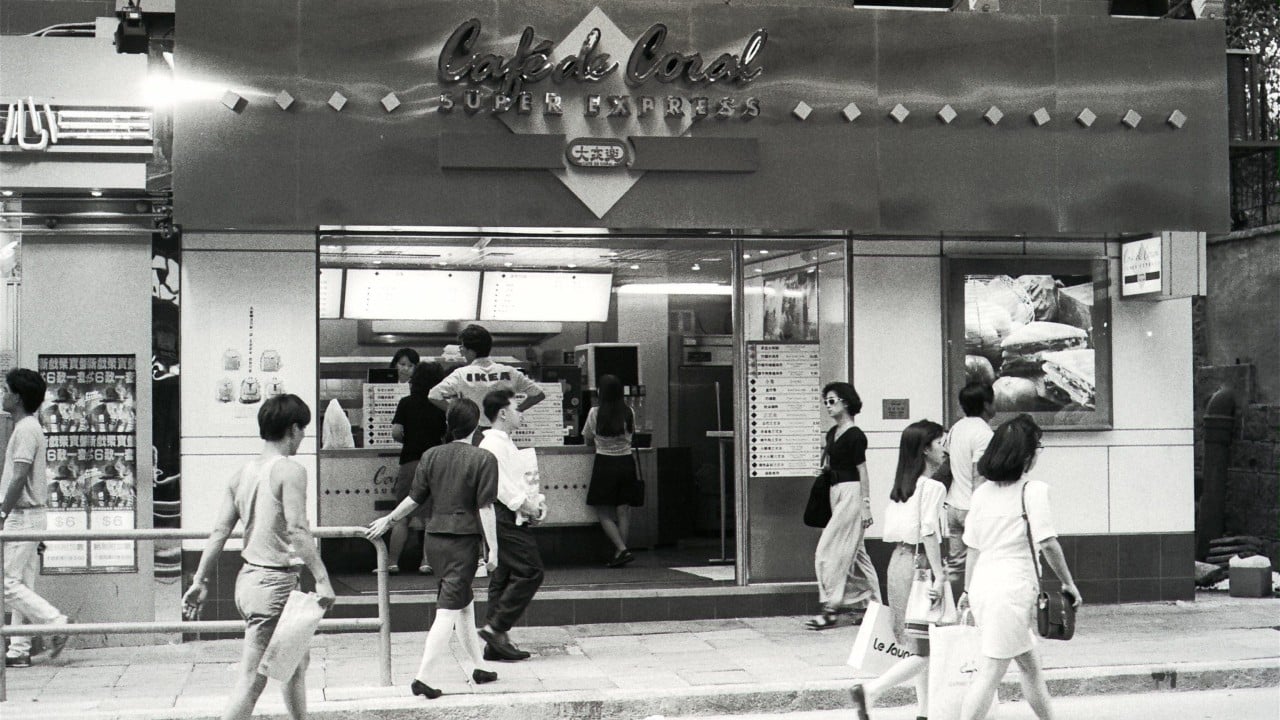
The scent of charred scallions and sizzling pork belly used to belong exclusively to the street corners. In the early 1970s, if you wanted to eat in Hong Kong, you looked for the rising steam of a dai pai dong—an open-air food stall where the chef wielded a seasoned iron wok like a weapon against hunger. You ate sitting on a wooden stool, elbows bumped by passersby, the humidity thick against your neck. It was cheap. It was fast. It was chaotic.
Then came 1986. Expanding on this theme, you can also read: The British Steel Nationalisation Myth Why Saving Failing Blast Furnaces Is a Betrayal of the Future.
That was the year a fast-food chain did something that felt, to the traditionalists of the culinary world, like a betrayal of the soul. Cafe de Coral went public on the Hong Kong Stock Exchange. It was a watershed moment, the very first time a local restaurant group traded the volatile artistry of the kitchen for the cold, calculated predictability of ticker tape.
To understand why this mattered, you have to understand the sheer anxiety of Hong Kong in the mid-1980s. The Sino-British Joint Declaration had just been signed a couple of years prior. The clock was ticking toward 1997. Money was nervous. Families were calculating the cost of passports to Canada or Australia. Yet, amidst this profound geopolitical uncertainty, thousands of ordinary citizens queued up outside banks not to withdraw their life savings, but to buy shares in a company that sold cheap milk tea and baked pork chop rice. Experts at Bloomberg have provided expertise on this matter.
It was a brilliant gamble. Cafe de Coral proved that in a city running out of time, efficiency was the ultimate currency.
The Architecture of the Quick Bite
Step inside a Hong Kong fast-food joint today, and you are witnessing a finely tuned machine engineered decades ago. Consider a hypothetical office worker named Wah. In 1986, Wah did not have time for a leisurely three-course lunch. The city’s economy was shifting from manufacturing to finance. The skyscrapers of Central were shooting up like glass bamboo. Time was tightening.
When Wah walked into a Cafe de Coral, he experienced a system designed to eliminate friction.
First, the menu was mounted on the wall, massive and unyielding. You chose your number before you even reached the cashier. You paid upfront—a radical departure from the traditional restaurant model where you lingered over the bill. You took a printed ticket, walked to a stainless-steel counter, and handed it to a worker who moved with the rhythmic speed of a factory laborer. Within two minutes, a plastic tray slid across the counter.
On that tray sat a plate of baked pork chop rice. It was a culinary Frankenstein: a bed of fried rice, topped with a fried pork chop, smothered in a sweet, tomato-based sauce, and melted cheese. It was neither purely Chinese nor authentically Western. It was entirely Hong Kong.
This style of cooking, known as Cha Chaan Teng culture, was born out of necessity. Western food was historically a luxury reserved for the colonial elite in high-end hotels. Local chefs replicated those flavors using affordable, localized ingredients. Evaporated milk replaced fresh cream. Worcestershire sauce met soy sauce. Cafe de Coral took this localized comfort food and scaled it up to industrial proportions.
The Machinery Behind the Menu
The real magic, however, was not happening on the plate. It was happening in the spreadsheets.
Going public meant Cafe de Coral had to answer to institutional investors who cared little about the perfect sear on a piece of meat and cared deeply about profit margins. To survive the scrutiny of the public market, the chain had to standardize the unpredictable.
In a traditional kitchen, a chef tastes a sauce, adds a pinch of salt, a splash of soy sauce, trusting their palate. Cafe de Coral replaced the chef's intuition with central kitchens. Tons of pork chops were marinated in a single facility to exact specifications before being distributed to branches across the territory. The sauces were pre-measured. The cooking times were locked into automated timers.
This standardization did something remarkable to the economics of feeding a city. It insulated the business from the volatile spikes of ingredient costs and the fickle temperaments of master chefs. If a cook walked out, the system kept running.
The strategy paid off. When the company listed in 1986, the public response was overwhelming. The oversubscription of the shares reflected a deeper truth about the city’s psyche: the people of Hong Kong believed in their own appetite. They knew that no matter how tense the political future looked, everyone still needed to eat breakfast, lunch, and dinner. Investing in the food chain was an investment in the daily resilience of the city itself.
The Human Cost of Hyper Efficiency
Yet, this transition from local eatery to corporate juggernaut was not without its casualties.
When you automate the kitchen, you inevitably alter the human relationship with food. The old dai pai dongs were communal hubs. The operators knew your name, how you liked your eggs, and whether you were having a bad day. The air was filled with the deafening roar of the wok burner—a sound locals call the "breath of the wok."
In the standardized corporate restaurant, that breath was replaced by the low hum of refrigeration units and the beep of fulfillment monitors. The workers became cogs in a larger apparatus. They wore matching uniforms, moved in prescribed patterns, and spoke in scripted greetings.
For the customer, the transaction became solitary. The seating was designed to maximize turnover, not comfort. The chairs were just comfortable enough for twenty minutes, encouraging you to finish your meal and vacate the space for the next hungry worker waiting by the door.
We must acknowledge the trade-off. Hong Kong traded intimacy for affordability. It traded the chaotic romance of the street food stall for the hygienic safety of a corporate franchise. For a working-class family in the late 1980s, this was a massive victory. It meant access to clean, air-conditioned spaces and consistent food at a price that did not break the household budget.
The Blueprint for a Global Empire
The success of the 1986 listing sent shockwaves through the regional business world. It provided a blueprint for how traditional Asian dining concepts could scale globally. Before this milestone, fast food was synonymous with American giants like McDonald's or Kentucky Fried Chicken. Cafe de Coral proved that local palates could be institutionalized just as effectively as the hamburger.
Following their lead, competitor chains rushed to institutionalize. The landscape of Hong Kong’s dining scene changed permanently. Independent operators found themselves squeezed out by corporate giants who could negotiate lower rents through sheer volume and command prime real estate in the newly constructed mass transit railway stations.
The little food chain that started with a single shop in Causeway Bay in 1968 had transformed into a multinational corporation, eventually expanding into mainland China and North America. They proved that comfort food could be treated like software—packaged, updated, and distributed to millions without losing its core code.
The Unbroken Line
If you sit in a Cafe de Coral today during the morning rush, the energy is palpable. The crowd is a cross-section of the city: elderly residents reading the morning paper over a cup of thick milk tea, school children rushing through a plate of scrambled eggs and thick toast, and corporate executives grabbing a quick coffee before heading to the trading floor.
The woks on the street corners have largely vanished, swept away by strict licensing laws and rising property values. But the spirit of that original culinary hustle remains trapped inside the corporate glass and stainless steel.
The city continues to move at a breakneck pace, driven by market forces that were locked into place during that pivotal summer of 1986. The stock market index rises and falls, political winds shift, and the skyline continues its relentless transformation. But on the plastic trays of the city’s corporate canteens, the baked pork chop rice remains exactly the same—hot, heavy, and reassuringly predictable.