The air smelled of charred sugar, damp wool, and the electric static of ten thousand breathing bodies.
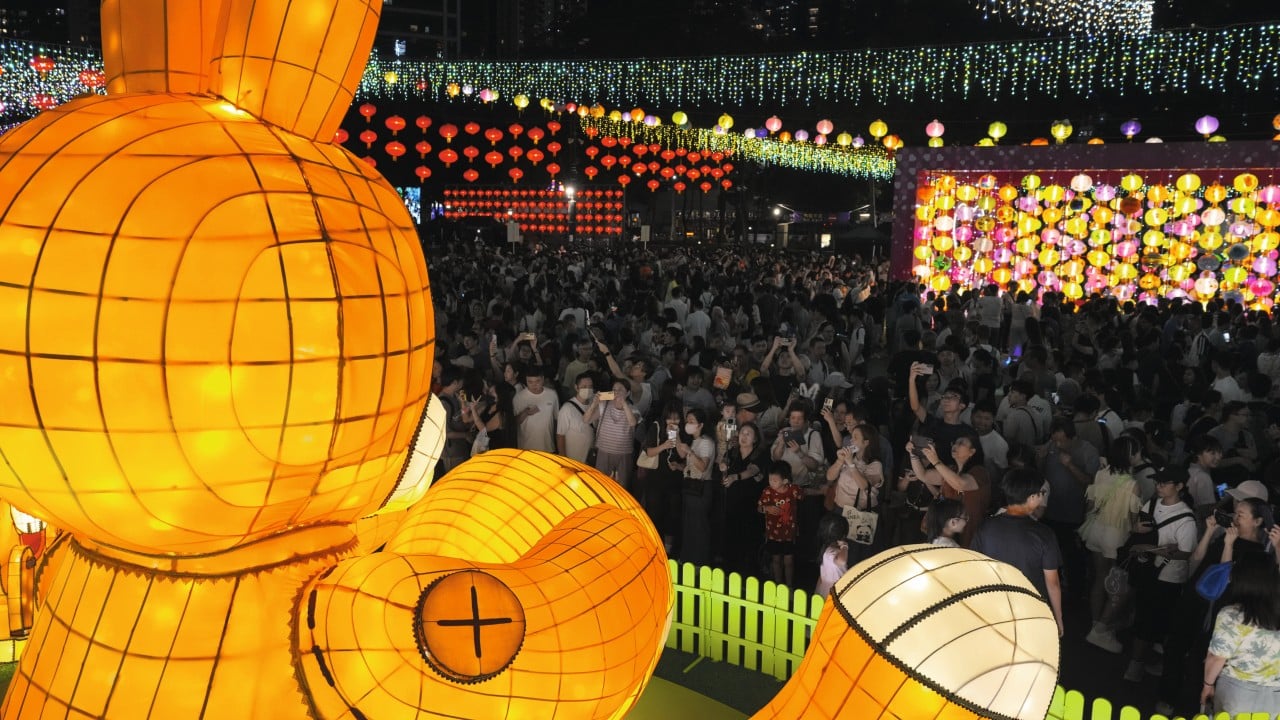
Maya adjusted her daughter’s red wool cap, feeling the familiar, grinding pinch of anxiety that accompanies any major public gathering in a post-modern city. Around them, the park had swollen into an ocean of parkas and upturned faces, all directed toward the horizon. There, suspended in the dark, hung the grand lantern display—a shimmering constellation of silk and wire, roaring with artificial fire and celestial color. It was magnificent. It was also a pressure cooker.
Then came the announcement. A metallic crackle over the loudspeaker, a stutter of feedback, and a flat directive that flattened the festive mood like a dropped cake. Entry hours cut short. Gates closing early. Turn around, please.
To the municipal board sitting in their quiet, wood-paneled offices three miles away, it was a data point. A safety calculation. A line item on an incident report involving crowd density thresholds and liability curves. But down here, in the freezing mud of the courtyard, it was something else entirely. It was the sudden, crushing realization that beauty, when scaled up for the masses, carries a hidden toll.
We built these modern spectacles to bring us together. Instead, we keep finding new ways to fence ourselves out.
The Anatomy of a Crush
Crowds have a physics all their own. They behave less like collections of thinking individuals and more like viscous fluids, flowing through bottlenecks, pooling in courtyards, and building pressure gradients against barriers. When thousands of people converge on a single, luminous focal point, individual agency dissolves into the collective pulse.
Consider the mathematics of aspiration. Organizers design displays to catch the eye from blocks away, advertising wonder through glossy brochures and targeted social media feeds. They cast a wide net, inviting families, teenagers, and the elderly into a shared space. But concrete plazas have finite perimeters. Fire codes do not bend to holiday cheer.
When the human tide crested at the gates of the exhibition grounds this week, the infrastructure did not merely strain; it screamed. Security personnel found themselves standing shoulder-to-shoulder against a human wave, watching the pedestrian counters tick past safe maximums with terrifying speed.
It is easy to blame the planners for a lack of foresight. Why didn't they build wider walkways? Why wasn't the ticketing timed more rigorously? Yet, to lay all the blame at the feet of administration is to misunderstand the peculiar hunger of our era. We are desperately lonely. We live behind screens, scroll through curated windows of other people's lives, and crave tangible, breathtaking wonder. When a city offers a glowing dragon or a palace of lanterns, we do not just attend. We descend. We swarm. We seek an antidote to isolation, only to find ourselves shoulder-to-shoulder in a bottleneck, wondering if we made a terrible mistake.
The Ripple Effect of Caution
Safety is a silent guardian. When it works, nothing happens. No sirens wail, no limbs are crushed, no news vans park outside emergency rooms. Because of this invisibility, safety measures are almost always perceived as an insult.
When the gates shut early, the immediate reaction in the crowd was not understanding; it was rebellion. Voices rose. Children began to cry, their exhaustion colliding with the abrupt termination of their reward. Teenagers who had spent hours navigating public transit stood in disbelief before locked steel grates.
This is where the human cost of crowd control reveals itself. It is not just about missing out on a photo opportunity. It is about the erosion of trust between the citizen and the city. When public spaces feel increasingly precarious—when we must constantly calculate whether a festival is too dangerous to attend—we begin to withdraw. We retreat behind our doors, trading shared civic joy for private safety.
Municipalities find themselves walking a razor-thin tightrope. On one side lies the risk of catastrophic overcrowding, where a single tripped barrier or panicked surge can lead to tragedy. On the other lies the death of spontaneity, where every public gathering is so heavily regulated, fenced, and truncated that the joy is squeezed right out of it.
Rethinking the Glow
Standing outside the gates that evening, watching the disappointed faces reflect the amber glow of distant lanterns, a harder truth settled in. We cannot simply engineer our way out of this through tighter security and earlier curfews. Cutting hours is a bandage on a gushing wound. It manages the symptom while ignoring the disease—our desperate, monocultural rush to experience the exact same thing at the exact same moment.
We crowd into the same parks during the exact same opening weekend, driven by algorithms that tell us where to be and when to feel amazed. We turn wonder into a commodity, and commodities get congested.
Perhaps the answer isn't better crowd control. Perhaps the answer is decentralization. Perhaps beauty needs to be scattered, broken into smaller, quieter pieces and distributed across neighborhoods so that people don't have to break down city gates just to catch a glimpse of the light.
Maya turned her car around, the red taillights bleeding into the wet pavement. In the backseat, her daughter had fallen asleep, her tiny hand still clutching a glowing plastic wand that hummed with a dying battery. They didn't see the grand display. They didn't walk beneath the silk dragons.
Yet, as the city slipped past the window, wrapped in its cold, indifferent winter coat, the darkness felt vast. The lanterns were still burning out there, casting their fierce, lonely brilliance into an empty night, guarded by locked gates and empty streets.