The coffee in your mug didn’t just appear. It traveled across an ocean, likely passing through a choke point so narrow that a single misplaced tanker could send global markets into a rhythmic, violent seizure. We live in a world held together by thin blue lines on a map—nautical corridors that most people never think about until the flow stops. Right now, one of those lines, the Strait of Hormuz, is being squeezed. And the response from Washington isn't a diplomatic nudge; it is a promise of fire.
Donald Trump has never been a man of half-measures or quiet whispers. Faced with a blockade that threatens to paralyze the global energy supply, his stance has shifted from campaign rhetoric to a vow of "immediate elimination." This isn't just about geopolitics. It’s about the price of the bread in your pantry and the heat in your home.
The Choke Point
Picture a map of the Middle East. Look at the Persian Gulf, that thumb of blue water poking into the desert. To get out into the open Arabian Sea, every drop of oil from Iraq, Kuwait, Saudi Arabia, and the United Arab Emirates must pass through a gap only twenty-one miles wide. This is the Strait of Hormuz. It is the jugular vein of the modern world.
When Iran begins a blockade here, they aren't just stopping ships. They are holding a knife to the throat of the global economy. Approximately one-fifth of the world’s total oil consumption passes through this tiny stretch of water every single day. If that door slams shut, the numbers stop being abstract statistics and start becoming personal crises.
Consider a hypothetical logistics manager in Rotterdam named Elias. He doesn't care about the ideological struggle between Tehran and Washington. He cares that the three tankers he expected by Friday are now sitting idle, terrified of minefields or drone strikes. If those ships don't move, the refineries stop. If the refineries stop, the trucks stop. If the trucks stop, the grocery store shelves in your neighborhood begin to empty within forty-eight hours.
The stakes are invisible until they are agonizing.
The Vow of Elimination
Trump’s rhetoric has always been built on the principle of overwhelming force. To him, a blockade isn't a chess move; it’s an act of war that demands an asymmetrical response. When he speaks of "immediate elimination," he isn't talking about a long, drawn-out occupation or a decade of nation-building. He is talking about the surgical, violent removal of the threat.
History shows us that when the flow of oil is threatened, the United States moves with a speed that defies its usual bureaucratic sludge. In the 1980s, during the "Tanker War," the U.S. Navy launched Operation Praying Mantis. It was a one-day strike that destroyed half of Iran's operational fleet. It was fast. It was brutal. It worked.
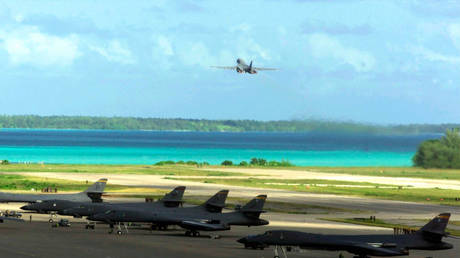
The current promise follows that same logic, but with 2026 technology. We are looking at a scenario where the "elimination" involves stealth bombers, autonomous underwater vehicles, and cyber-attacks that turn off the lights in Tehran before the first missile even hits its mark.
But there is a catch. There is always a catch.
The Human Cost of High Stakes
War is often discussed in terms of "assets" and "targets." We talk about carriers moving into position and the range of ballistic missiles. We forget the nineteen-year-old sailor on the deck of a destroyer, squinting into the heat haze of the Gulf, wondering if a swarm of explosive motorboats is about to crest the horizon.
We forget the families in Tehran who are watching the skies, caught between a government that uses their geography as a weapon and a superpower that sees their infrastructure as a target.
The volatility of this moment is a weight we all carry. When Trump vows to eliminate the threat, he is betting that the world would rather endure a short, sharp shock of violence than a slow, agonizing death by economic strangulation. It’s a gamble. It assumes that the other side will blink.
But what if they don't?
The Ripple Effect
Markets hate uncertainty more than they hate bad news. The moment the blockade began, the price of Brent crude didn't just rise; it leaped. This is the "fear premium." It’s an invisible tax on every human being on the planet.
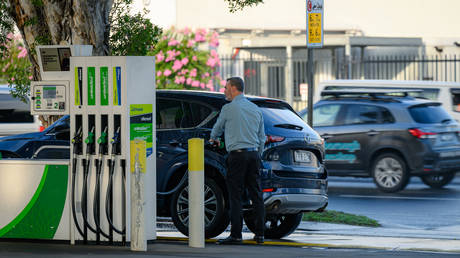
For a mother in Ohio, this means the $50 she spent to fill her tank last week is now $85. That $35 difference is her daughter's new shoes or a week’s worth of fresh produce. Multiply that by millions. That is the true power of the Strait of Hormuz. It is a lever that can move the entire world's standard of living with a few well-placed naval mines.
The blockade is a test of will. Iran is betting that the West is too fractured, too tired of "forever wars," to respond with anything more than a strongly worded letter. Trump is betting that the American public’s tolerance for high gas prices is lower than their distaste for military intervention.
The Anatomy of a Threat
The Iranian strategy isn't about winning a conventional naval battle. They know they can't go toe-to-toe with a U.S. carrier strike group. Instead, they use "mosquito tactics"—hundreds of small, fast boats, shore-based anti-ship missiles, and mines that cost a few thousand dollars but can disable a billion-dollar vessel.
It is asymmetrical. It is messy. It is designed to make the cost of entry too high for the merchant marines who actually crew the tankers. If a shipping insurance company decides the Strait is a "total loss zone," the blockade is successful even if not a single shot is fired. The world simply stops coming.
Trump’s response is designed to shatter that calculation. By promising "immediate elimination," he is attempting to reset the risk-reward ratio. He is telling the insurance companies, the sailors, and the Iranian leadership that the obstacle will be removed before the first day’s trading closes.
The Ghost of 1973
To understand the gravity, we have to look back. In 1973, an oil embargo transformed the American way of life overnight. Lines at gas stations stretched for blocks. Christmas lights were dimmed to save power. The national speed limit was dropped to 55 mph. It was a humiliation that burned into the psyche of a generation.
We are standing on the edge of that same abyss, but the world is more interconnected now than it was then. Our "just-in-time" supply chains mean we have no buffer. We have no reserves that can last more than a few months.
The tension in the air is thick, like the humidity in the Gulf during mid-July. You can feel it in the frantic trading on Wall Street and the hushed tones in the Situation Room.
The Silent Ships
Tonight, somewhere in the darkness of the Strait, a tanker is sitting with its transponder turned off. The crew is silent. They are watching the radar, waiting for a signal that may never come or a strike that will change the course of history.
Behind them, the world waits. We wait for the price of bread. We wait for the cost of the commute. We wait to see if the vow of "immediate elimination" is a deterrent that preserves the peace or the first spark of a conflagration that no one knows how to put out.
The sea is black. The stakes are everything. And the clock is ticking toward a morning that will either be defined by the roar of engines or a silence that breaks the world.