July in northern Italy usually smells of salt water, fried basil, and cheap espresso. In July 2001, Genoa smelled of tear gas and scorched rubber.
If you were standing near the Piazza Alimonda on July 20, the air didn't just carry heat. It stung your eyes before you could even see the smoke. Thousands of people had poured into the harbor city to protest global economic inequality at the 27th G8 summit. World leaders sat behind high barricades inside the Red Zone, debating trade agreements and debt relief over lavish dinners. Outside, the streets belonged to riot police, armored vehicles, and an increasingly desperate crowd.
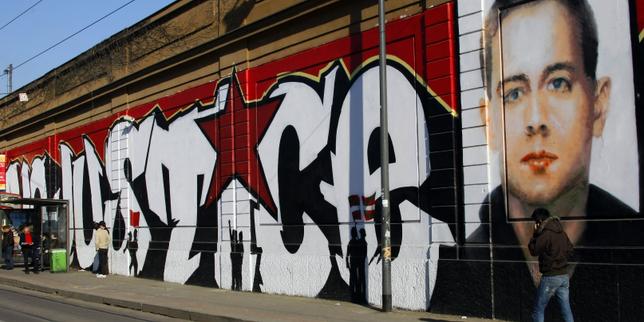
By the end of the weekend, a twenty-three-year-old protester named Carlo Giuliani lay dead on the asphalt, shot by a panicked officer and run over by a police Land Rover. Hundreds more lay bleeding in hospital wards or cowering on the concrete floors of police barracks.
More than two decades later, the physical scars have faded. The political ones remain raw.
The Siege of Diaz Pertini
To understand why Genoa remains an unhealed fracture in European history, you have to look at what happened after the street clashes ended.
It was midnight on July 21. Most of the violent demonstrators—the ones dressed in black who had smashed storefronts earlier in the day—had already melted away into the hills. Inside the Diaz Pertini school complex, dozens of young people, independent journalists, and international volunteer medics were unrolling sleeping bags on the floor. They were exhausted, bruised, and ready to go home.
Then the iron gates were forced open.
Hundreds of officers from the Italian state police, equipped with helmets, shields, and wooden batons, surged into the hallways. What followed was described years later by the European Court of Human Rights not as a law enforcement operation, but as an act of torture.
Imagine lying on a cold tile floor in your socks, hands raised above your head, trying to explain in broken Italian that you are a student from Hamburg or a journalist from London. The response was not a demand for identification. It was a rhythmic, relentless storm of strikes. Batons cracked against ribs, teeth, and wrists. Blood smeared across the whitewashed classroom walls.
Out of ninety-three people inside the school, sixty-one were seriously injured. Thirty-one were rushed to hospitals, many unconscious, with fractured skulls and internal bleeding. Police planted two Molotov cocktails in the building after the raid to justify the assault, a fabrication later exposed in court.
The Dark Chamber of Bolzaneto
The violence did not stop inside the school. Those who could walk were loaded into vans and driven to a temporary detention center in Bolzaneto, on the outskirts of the city.
There, human rights were suspended entirely. Detainees were forced to stand against walls for hours with their arms raised. Officers hurled verbal abuse, forced prisoners to sing fascist chants, and threatened sexual violence. Doctors on site failed to intervene as beatings continued inside the holding cells.
It took years of legal battles for the truth to be fully recognized by international courts. Italy had no legal definition for torture on its statute books in 2001. Because of that legal vacuum, many senior officers involved in ordering and executing the raids escaped meaningful criminal penalties, protected by statutes of limitations.
The European Court of Human Rights eventually condemned Italy in 2015 for its actions at Genoa and its failure to punish those responsible. The court explicitely labeled the police conduct as torture.
A Ghost That Refuses to Rest
Walk through Genoa today and you will find little official recognition of what occurred during those three days in July. Piazza Alimonda has a small, unofficial memorial plaque for Carlo Giuliani, frequently vandalized and quietly restored by locals.
The trauma of Genoa reshaped civil society across the continent. It changed how citizens view state authority, how protests are policed, and how fragile democratic rights become when security forces act without oversight. For an entire generation of European activists, Genoa was the moment innocence evaporated. They came to demand a fairer world; they left learning how quickly a state can turn its power against its own people.
Justice in a courtroom is precise and slow. Healing, however, requires accountability. Until those who ordered the violent midnight raids acknowledge the human cost of their choices, the air in Genoa will always carry a faint, ghostlike sting.