The basement of any county courthouse in November smells exactly the same. It is a potent mix of stale drip coffee, damp cardboard, and the faint, ozone tang of overheating laser printers. For decades, regular people—retired schoolteachers, local mechanics, quiet neighbors who only surface for civic duties—have sat in those basements. They stare at glowing screens. They cross-reference paper ledgers. They perform the exhausting, unglamorous ritual that keeps a democracy spinning on its axle.
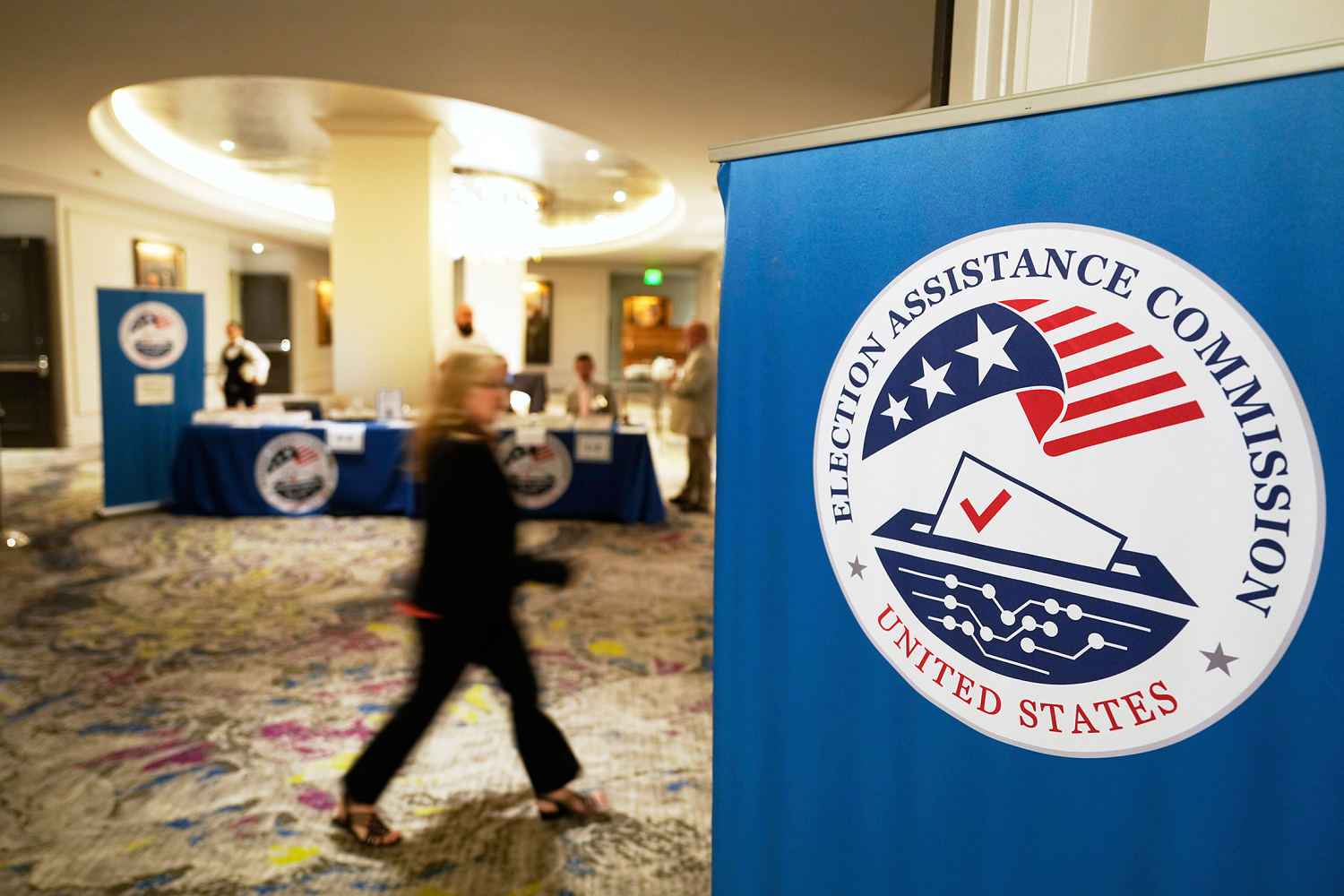
Most of them have never heard of the Election Assistance Commission. They do not know the names of the commissioners who sit in Washington. They do not need to. In related news, we also covered: The Strait of Hormuz Threat Is a Geopolitical Illusion.
But the work done in those anonymous federal offices dictates whether the machine in that county basement actually functions when a voter pulls the lever.
Then, the administrative axe fell. Al Jazeera has provided coverage on this critical topic in great detail.
With a few strokes of a pen, the White House cleared out the remaining leadership of the tiny, obscure federal agency tasked with safeguarding the nation’s voting infrastructure. The move was not announced with a prime-time address. It did not come with a sweeping manifesto about reform. Instead, it happened in the quiet manner of bureaucratic purges: a sudden vacancy, a refusal to renew terms, a deliberate emptying of the seats where decisions are made.
To the casual observer scanning the headlines, it looked like standard partisan maneuvering. Another day in Washington. Another agency hollowed out.
But down in the basements, the silence grew heavier.
The Invisible Shield
To understand what happens when an agency like this is stripped bare, consider a hypothetical election worker named Clara. She is seventy-two. She wears orthopedic shoes and brings a thermos of chicken noodle soup to the precinct. Clara does not understand the intricacies of foreign cyber-espionage. She does not know how to patch a server or audit a cryptographic key.
She relies on the shield.
The Election Assistance Commission was created in the wake of the 2000 election fiasco. Remember the hanging chads? The punch-card chaos that dragged the highest office in the world into a weeks-long legal swamp? The country realized, with sudden horror, that its voting tech was a patchwork of outdated junk.
The commission was the answer. It became the entity that tested the voting machines, certified the software, and issued the guidelines that kept local officials from drowning in a sea of technological confusion. It was designed to be stubbornly bipartisan. Equal seats. Equal voice.
It was a clunky, frustrating, slow-moving shield.
But it was theirs.
When you remove the people who run that shield, the shield drops. The technology inside our polling places does not suddenly stop working on Wednesday morning. The screens still light up. The scanners still pull the paper ballots into their dark bellies.
The rot happens invisibly.
Without commissioners to sign off on new voting system guidelines, the tech stagnates. Hackers evolve. Security flaws are discovered by researchers in university labs, but the bureaucratic mechanism required to officially warn the counties and mandate the fixes is paralyzed. The steering wheel is unhooked from the tires. The car keeps rolling down the hill, but no one is steering.
The Weight of an Unsigned Paper
We live in an era obsessed with the grand gesture. We watch the television screens for explosions, for mass protests, for dramatic confrontations on the steps of the Capitol.
The real shifts happen in empty rooms.
Imagine a conference table polished to a high sheen. Four chairs sit around it. On the table lies a document detailing the latest security protocols for wireless ballot transmission—a vital update to prevent localized interception of vote tallies.
The document needs three signatures to become official federal policy.
There is only one person left in the room.
He looks at the paper. He looks at the empty chairs. He puts his pen back in his pocket.
This is how vulnerability is manufactured. It is not an invasion. It is an intentional absence. By leaving the seats empty, the administration effectively neutralized the agency without having to pass a single bill through Congress. It is a strategy of starvation.
Local election directors across the country suddenly found themselves isolated. If a voting machine vendor in Texas claimed their new biometric scanner was completely unhackable, who was going to verify that claim? The local clerk who barely has enough budget to buy extra toner?
The burden shifted downward.
The people least equipped to handle the sophisticated onslaught of modern cyber threats were left to figure it out on their own.
The Slow Leak of Public Faith
Let us be entirely honest about the nature of trust. It is incredibly heavy to build and terrifyingly light to destroy.
When citizens lose faith in the system, they do not just stop voting. They start looking at their neighbors with suspicion. They begin to believe that the entire exercise is a rigged theater performance.
The hollowing out of the commission feeds this specific monster.
Consider what happens next: an election occurs in a tight swing district. A minor glitch happens—a machine freezes, or a memory card misreports a tally for twenty minutes before being corrected. In the past, federal authorities could point to rigorous, ongoing certification processes to assure the public that the core system was sound.
Now? The doubt has space to grow.
The skeptic asks a simple question: "Who checked the code?"
The answer is a shrug.
That shrug is lethal to a republic.
The tragedy of this deliberate vacuum is that it affects the red counties just as deeply as the blue ones. A rural precinct in Idaho uses the same underlying technology as an urban precinct in Philadelphia. Both are left vulnerable when the national standard-bearers are dismissed. The vulnerability does not care about your political affiliation. A door left unlocked invites whatever thief happens to walk by.
The Final Count
The sun comes up on another day, and the empty offices in Washington remain dark. The dust settles on the desks where experts used to debate the nuances of optical scan ratios and post-election audit math.
The political commentators have moved on to the next scandal, the next tweet, the next press briefing outrage.
But the local workers remain.
Clara sits in her basement, her fingers stained with ink, looking at a stack of provisional ballots that need to be verified by hand because the automated system didn't register the signatures correctly. She sighs. She rubs her eyes. She trusts her own hands, but she wonders, for the first time in thirty years, if the machine sitting in the corner of the room is really on her side.
Outside, the wind blows a discarded sample ballot across the empty asphalt of the parking lot.