The wind does not ask permission before it tears a shoreline apart.
Standing on an Orange County beach at midnight, the air tasted of salt and impending violence. Out on the horizon, the ocean was a heavy, churning mass of slate-grey water, whipped into a frenzy by a nameless storm brewing far out at sea. The waves did not break so much as they threw themselves against the sand, eating away at the fragile barrier islands and chewing closer to the dunes with every single pulse of the tide.
Beneath our boots, hidden inches deep in the dark, cooling grains of sand, lay a fragile ticking clock.
Sea turtle eggs. Dozens of them, round as ping-pong balls, parchment-soft and bursting with the quiet, furious architecture of new life. They had been laid weeks earlier by a mother who hauled her heavy, armored body out of the surf, dug a safe flask in the earth with her flippers, and entrusted her genetic future to the high ground.
Only, the high ground was vanishing.
Storm surges do not care about gestation periods. Hurricane-driven waves were marching toward the coast, armed with the destructive weight of a rising sea. Left alone, the nest would have been drowned—the sand saturated, the oxygen cut off, the embryos suffocated in their shells before they ever caught a glimpse of the moonlit water.
This is the story of the night biologists became midwives to the wild, racing a hurricane to dig up life and carry it to safety.
The Calculus of Emergency
Conservation is usually a patient, agonizingly slow science. It is measured in decades of data collection, writing policy, planting dune grass, and turning off coastal lights so hatchlings do not crawl toward a neon hotel sign instead of the reflections of the stars.
Emergency operations are different. Emergency operations look like knee-deep water, headlamps cutting through stinging sea spray, and the quiet, vibrating tension of holding a living future between your fingertips.
Consider what happens when a storm collides with a nesting season. A sea turtle nest is not just a clutch of eggs; it is a delicate biological incubator. The temperature of the surrounding sand determines the sex of the hatchlings. The porosity of the earth lets them breathe. If the ocean breaks over them too early, the water acts like a heavy, cold blanket, sealing the pores of the sand and plunging the developing hatchlings into an underwater tomb.
The decision to relocate a nest is never taken lightly. Under normal circumstances, touching a sea turtle nest is strictly regulated, punishable by heavy fines. Federal and state protections exist precisely because human interference often causes more harm than good.
Except when the alternative is absolute annihilation.
Dr. Aris Vance, a marine ecologist who has spent twenty years watching the shifting coastlines of Southern California, stood over the threatened nest with a flashlight dimmed by a red filter. Red light preserves night vision; it also keeps the wildlife from panicking. His hands were weathered, stained with decades of mud, salt, and sunscreen.
"People think nature always knows best," Aris said over the roar of the surf, his voice tight with fatigue. "And it does. Until we break the baseline. When the ocean rises faster than the coastline can adapt, 'letting nature take its course' stops being a philosophy. It becomes an excuse for inaction."
The math was brutal. The storm surge was predicted to peak at midnight during a king tide. The nest was positioned just ten feet above the normal high-water mark—a safe distance a decade ago, but a sitting duck today.
We had less than an hour.
Into the Sand
To dig up a sea turtle nest without destroying it requires the touch of a safecracker and the patience of a watchmaker.
Aris knelt in the damp sand, sliding his bare hands into the earth with agonizing slowness. He wasn't digging; he was feeling. He mapped the contours of the chamber by touch alone, searching for the precise temperature gradient and the slight, hollow give of the clutch.
I knelt beside him, holding a specially prepared bucket lined with damp sand from the original nest. Every grain mattered. The moisture content, the microbial community clinging to the earth—if we introduced them to foreign soil with drastically different properties, we risked shocking the system.
"Got it," he whispered.
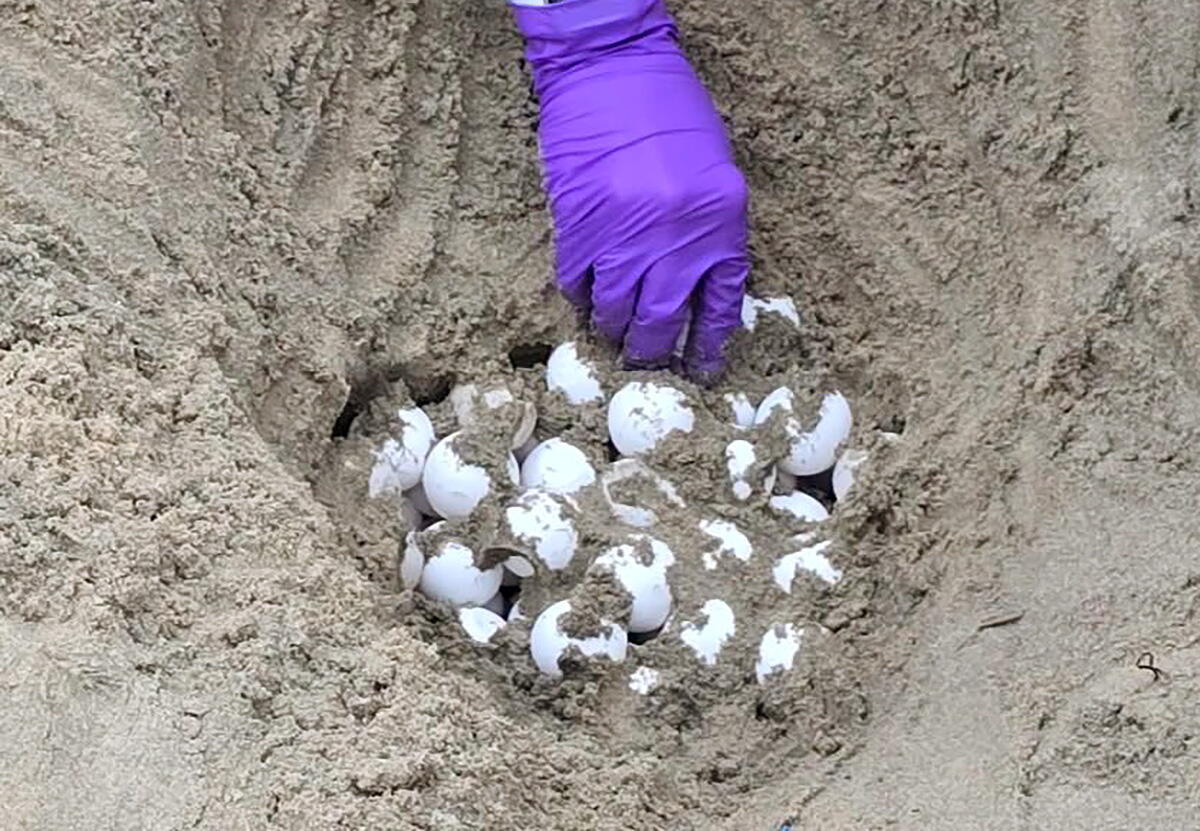
He pulled his hand out, cradling something impossibly delicate. It was a single egg, white and leelike, warm to the touch. It shifted slightly in his palm. Inside that shell, a tiny flipper was already formed, a heart no bigger than a peppercorn was beating, and an ancient instinct was waiting for a cue that would never come if we stayed put.
One by one, the transfer began. Sixty-four eggs, moved with the gravity of a funeral procession and the breathless urgency of an ambulance ride.
We laid them out in a new, man-made chamber dug high up in the primary dune system, well beyond the reach of the storm's angry fingers. We mirrored the depth, the width, and the orientation of the original nest, recreating a tiny, engineered womb in the safety of the heights.
As we shoveled the final layer of dry sand over the top, the first heavy drops of rain began to fall. The sky tore open. Within minutes, the beach we had been standing on was entirely underwater, swallowed whole by the incoming tide.
We sat back in the shelter of a dune crossover, drenched, shivering, and entirely silent, watching the dark water churn where life had been resting only moments before.
The Wider War
The rescue of a single nest in Orange County might feel like a drop of water in an ocean of crisis.
It is. And that is precisely why it matters.
We are living through an era where environmental degradation is often framed as an unstoppable macro-trend. We talk about rising sea temperatures, melting ice caps, and shifting weather patterns with a kind of numb, intellectual detachment. It feels too big. It feels like a movie playing on a screen too far away to touch.
But conservation at the edge of the water is intensely micro. It is messy, physical, and profoundly local. It is a biologist kneeling in the dirt at midnight. It is a bucket of sand. It is the refusal to watch something beautiful vanish simply because the odds are inconvenient.
The broader reality is sobering. Coastal erosion along Southern California beaches has accelerated over the past thirty years, driven by a combination of sea-level rise, up-coast damming that starves beaches of sediment, and increasingly violent storm systems. Green sea turtles and loggerheads—species that once rarely nested this far north in such numbers—are increasingly finding themselves pioneering new territory as their traditional tropical and subtropical habitats warm beyond endurance.
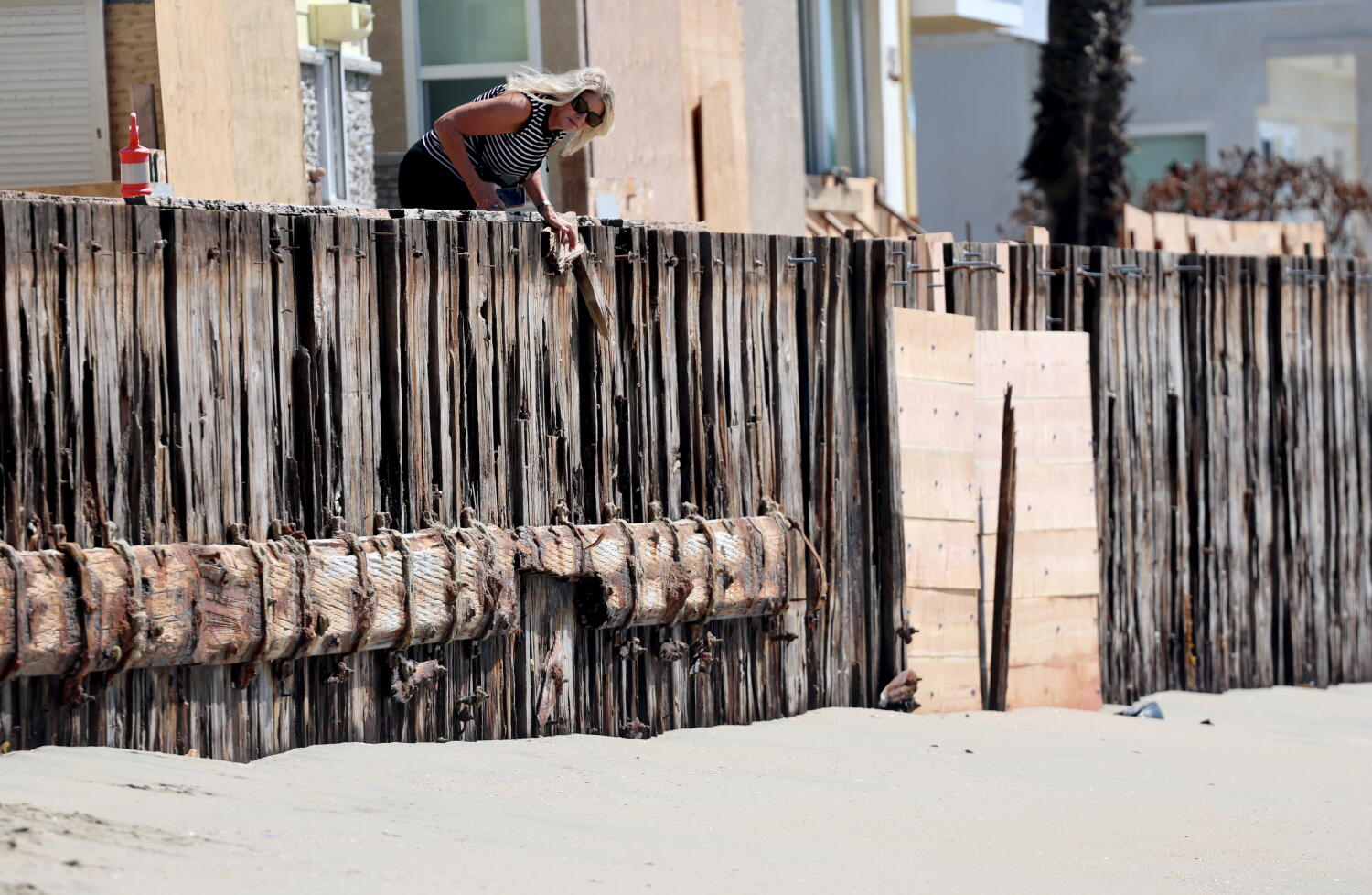
They are moving north. And they are meeting a coastline heavily armored by human intervention—seawalls, parking lots, concrete promenades, and narrow strips of sand squeezed between asphalt and abyss.
When we squeeze the ocean, we squeeze everything that lives in it. When we build hard barriers against the water, we rob the beach of its natural ability to breathe, shift, and roll backward with the tide.
The turtles are adapting. They are looking for high ground where there is no high ground left.
The Long Wait
Back in the lab weeks later, away from the howling wind of that midnight storm, the monitors tell a different story.
Incubation is a quiet miracle. Day after day, the temperature inside the relocated nest was tracked via a tiny, non-invasive probe slipped into the center of the clutch. The numbers held steady. The moisture was right. The embryonic heartbeats, detectable through specialized acoustic sensors, grew stronger, faster, synchronized by some mysterious biological metronome that humans still only partially understand.
They are waiting for the signal.
When the time comes, a sea turtle hatchling does not hatch alone. It is a team sport. One little turtle starts digging upward, then another, and another. They form a writhing, living column of determination, scratching at the ceiling of the sand together, pushing the roof down so they can climb up over the bodies of their siblings, moving as a collective organism driven entirely by light and temperature cues.
They will burst through the sand at dusk or dawn, a boiling eruption of dark flippers and bright eyes, scrambling down the slope of the dune and into the foam.
Most of them will not make it to adulthood. Nature is merciless to the young; fish, birds, crabs, and the deep, cold indifference of the open ocean will take their toll. That is the baseline of the wild. That is the contract every living thing signs when it enters the world.
But they deserve a fighting chance at the starting line.
On nights when the wind rattles the windowpanes and the rain hammers against the glass, I think about that bucket of sand on the dark beach. I think about the weight of those sixty-four fragile worlds resting in a biologist's palm, hauled away from the edge of a rising sea not because it was easy, or efficient, or part of some grand geopolitical strategy, but simply because we were there, and we could.
The storm passed. The tide receded, leaving behind a scarred, reshaped shoreline.
Higher up on the dune, beneath the salt-crusted grass, the sand is quiet. But it is listening. And somewhere down in the dark, a tiny heart is beating, getting ready to run.