The air in Mumbai during the monsoon doesn't just hold moisture; it clings to your skin like a damp wool blanket. Inside the concrete walls of a modest apartment in the suburbs, Aarav Joshi sat at his kitchen table, watching a single plastic fan blade squeak to a halt.
The power was gone. Again.
It wasn't a sudden catastrophic explosion. It was just the familiar, exhausting hum of a grid suffocating under the weight of 1.4 billion lives trying to step into the modern world. Aarav lit a candle, the small flame flickering against the dark. He knew that miles away, in the gleaming data centers powering India’s tech boom, massive diesel generators were coughing thick, black smoke into the night air just to keep the servers cool.
This is the friction of progress. To grow, you need juice. To get juice, you usually have to burn something. And India is running out of things it can afford to burn.
Seven thousand miles away, in a climate-controlled boardroom near Washington, D.C., a group of executives adjusted their ties and checked their flight statuses. They weren't looking at candles or breathing diesel exhaust. They were looking at spreadsheets, regulatory filings, and geopolitical maps. But their destination was the exact same problem keeping Aarav in the dark.
A delegation of American nuclear energy executives was quietly preparing to board a flight to New Delhi. For decades, this specific trip would have been a bureaucratic impossibility. The doors were locked, bolted, and rusted shut.
Suddenly, the keys are turning.
The Monolith and the Matchstick
To understand why a group of American corporate executives traveling to India is a historic shift, you have to understand the stubborn, agonizing history of uranium.
For more than half a century, India treated its nuclear sector like a crown jewel kept in a high-security vault. Only the government could touch it. The Nuclear Atomic Energy Act of 1962 drew a hard line in the sand: state-run companies had an absolute monopoly on building and operating nuclear power plants.
The logic back then made sense to the policymakers of a young nation. Nuclear material was dangerous, highly sensitive, and tied intimately to national defense. You don’t let private profit motives dictate the handling of splitting atoms.
But monopolies breed inertia.
While the private sector revolutionized India’s telecommunications, built its highways, and turned its software industry into a global juggernaut, the nuclear program crept forward at a glacial pace. Building a nuclear plant became a bureaucratic marathon. Projects stretched across decades. Meanwhile, the country’s appetite for electricity skyrocketed.
Consider the sheer scale of the math. India wants to triple its nuclear capacity by 2031. It wants to hit net-zero emissions by 2070. Right now, nuclear power accounts for a meager, frustrating two percent of the nation's energy mix. The rest? Mostly coal. Millions of tons of it, scooped from the earth and burned into the sky.
The Indian government realized it had a Ferrari engines' worth of ambition, but it was fueling it with a eyedropper. They needed capital. They needed speed. Most importantly, they needed the cutthroat efficiency that only the private sector possesses.
So, they broke the glass on the vault.
New policy shifts have begun opening the door for private enterprise to enter the domestic nuclear market. It isn't a total wild-west deregulation—the government will still hold the leash—but for the first time, private capital and foreign expertise are being invited to the table.
That brings us back to the delegation.
Small Reactors, Massive Stakes
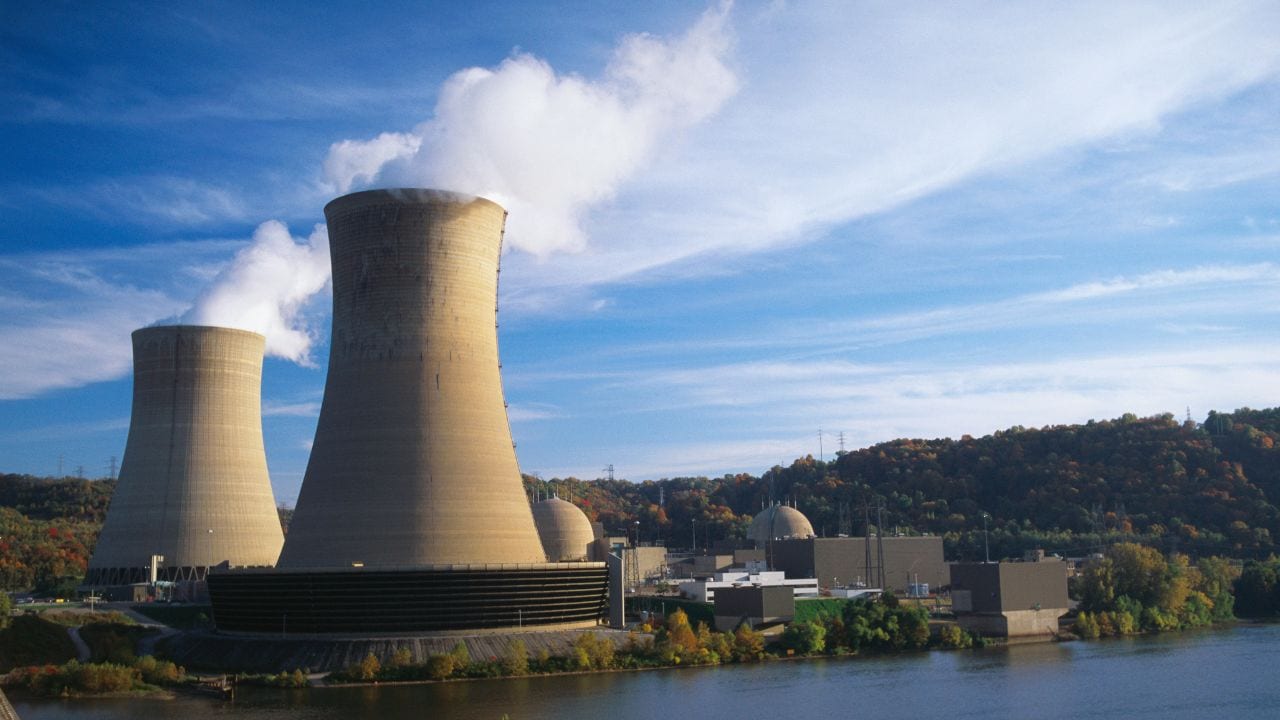
The executives landing in New Delhi aren't pitching the gargantuan, multi-billion-dollar cooling towers of the twentieth century. Those monolithic plants are too slow to build and too expensive to finance. If you tell a private investor that their project will take fifteen years before it generates a single rupee of revenue, they will walk out of the room.
Instead, the American delegation brought blueprints for something entirely different: Small Modular Reactors, or SMRs.
http://googleusercontent.com/image_content/209
Think of a traditional nuclear plant like a custom-built, sprawling mansion. Every piece is cut on-site, weather delays stall construction, and the architectural costs are astronomical. An SMR is more like a high-tech pre-fabricated home. It is built in a factory, shipped on the back of a train or a barge, and assembled where it’s needed.
Because they are small—usually producing less than 300 megawatts—they can be placed in areas that cannot support a massive facility.
Let's use a hypothetical example to see how this plays out on the ground. Imagine a massive steel foundry in Gujarat. Currently, that foundry draws immense amounts of power from a coal-fired grid, fluctuating in reliability and leaving a massive carbon footprint. Now, imagine a private consortium buying an SMR from an American firm, manufacturing the components in an Indian facility under the "Make in India" initiative, and dropping that reactor right next to the foundry.
Suddenly, the factory has clean, unyielding, twenty-four-hour power. The grid is relieved of a massive burden. The air stays clear.
This isn't just about selling hardware; it's about shifting the paradigm of how a developing superpower fuels its destiny. The American firms want to sell the technology and the fuel infrastructure. The Indian firms want to acquire the know-how and build the supply chains locally. It is a corporate courtship where the dowry is measured in gigawatts.
But marriages of convenience are rarely simple.
The Ghost in the Ledger
If this sounds like an obvious win-win, you haven't met the lawyers.
The invisible phantom haunting every room these American executives enter is a piece of legislation called the Civil Liability for Nuclear Damage Act. Passed by India in 2010, the law contains a clause that sends chills down the spine of any corporate compliance officer.
In most of the world, if a nuclear accident happens, the operator of the plant bears the financial liability. The companies that supplied the pipes, the valves, or the software are protected. This ensures that companies are willing to supply high-quality components without fearing that a single freak accident will bankrupt their entire global enterprise.
India’s law flipped the script. It allowed the operator to sue the supplier if an accident was caused by a faulty component.
To the Indian public, scarred by memories of the 1984 Bhopal gas tragedy—a non-nuclear industrial disaster caused by a foreign company that left thousands dead—this law was a moral imperative. Foreign corporations must be held accountable.
To foreign nuclear suppliers, however, it was an existential threat. They looked at the clause and essentially said, We want to help you power your country, but we aren't going to bet our entire corporate existence on it.
This legislative standoff is why, despite a landmark civil nuclear deal signed between the US and India way back in 2008, American reactors haven't been sprouting across the Indian countryside. The technology was ready. The political will was there. The legal risk was simply too high.
The current delegation isn't just traveling with engineers; they are traveling with legal architects. They are trying to find the linguistic seams in the regulations, utilizing insurance pools and specific corporate structuring to build a bridge over this legal chasm.
The private sector entry offers a fresh slate. By shifting the players from massive state enterprises to nimble private partnerships, there is hope that new risk-sharing models can finally break the decade-long deadlock.
The Geopolitical Chessboard
Nothing happens in a vacuum, especially not when uranium is involved. This corporate expedition takes place against a backdrop of intense global maneuvering.
While the US and India have spent years dancing around liability clauses, Russia has been quietly building reactors. State-owned Russian energy giants don't have to answer to private shareholders or worry about quarterly liability reports in the same way American firms do. They have already established a firm foothold in India's nuclear landscape, notably at the Kudankulam plant.
Washington looks at this and sees a geopolitical vulnerability.
Every time an American company secures a contract for a critical infrastructure project in a developing nation, it binds that nation closer to Western standards, Western security protocols, and Western alliances. Nuclear energy is the ultimate long-term commitment. A nuclear plant built today will operate for sixty, eighty, perhaps even a hundred years. It requires a century-long relationship for fuel supply, maintenance, and decommissioning.
When India invites private US firms into its nuclear sector, it isn't just buying reactors. It is choosing a partner for the next century.
It is an acknowledgment that the traditional ways of doing business—relying solely on state budgets and bureaucratic agreements—cannot move fast enough to counter the twin crises of climate change and energy scarcity.
The Human Bottom Line
It is easy to get lost in the grand language of geopolitics and corporate strategy. We talk about gigawatts, liability clauses, and bilateral frameworks as if they are abstract tokens in a board game.
But the real story isn't happening in the air-conditioned conference rooms of New Delhi’s luxury hotels, where the delegation is currently shaking hands with Indian tycoons.
The real story is happening back in that suburban Mumbai kitchen.
Aarav’s candle has burned halfway down. The heat is oppressive, the kind that settles into your bones and makes sleep impossible. He has a presentation to deliver tomorrow to a client in London, via a laptop that is currently at four percent battery. His story is multiplied by hundreds of millions of individuals, every single day.
Students studying under streetlights. Small business owners watching their perishable stock spoil because the refrigeration cut out. Hospital administrators praying the backup generators hold through a surgical procedure.
The opening of India’s private sector to foreign nuclear giants is an admission that the old ways have run their course. The state cannot do it alone. The climate cannot wait for the bureaucracy to cure its own inertia.
Whether this delegation succeeds or fails won't be determined by the press releases issued at the end of the week. It will be determined years from now, when the components of a small, quietly humming reactor are lowered into place in an industrial zone outside Ahmedabad or Chennai.
If they figure it out, the lights stay on. The air stays clear. The fan keeps spinning, and a young man can blow out his candle, close his eyes, and sleep.


