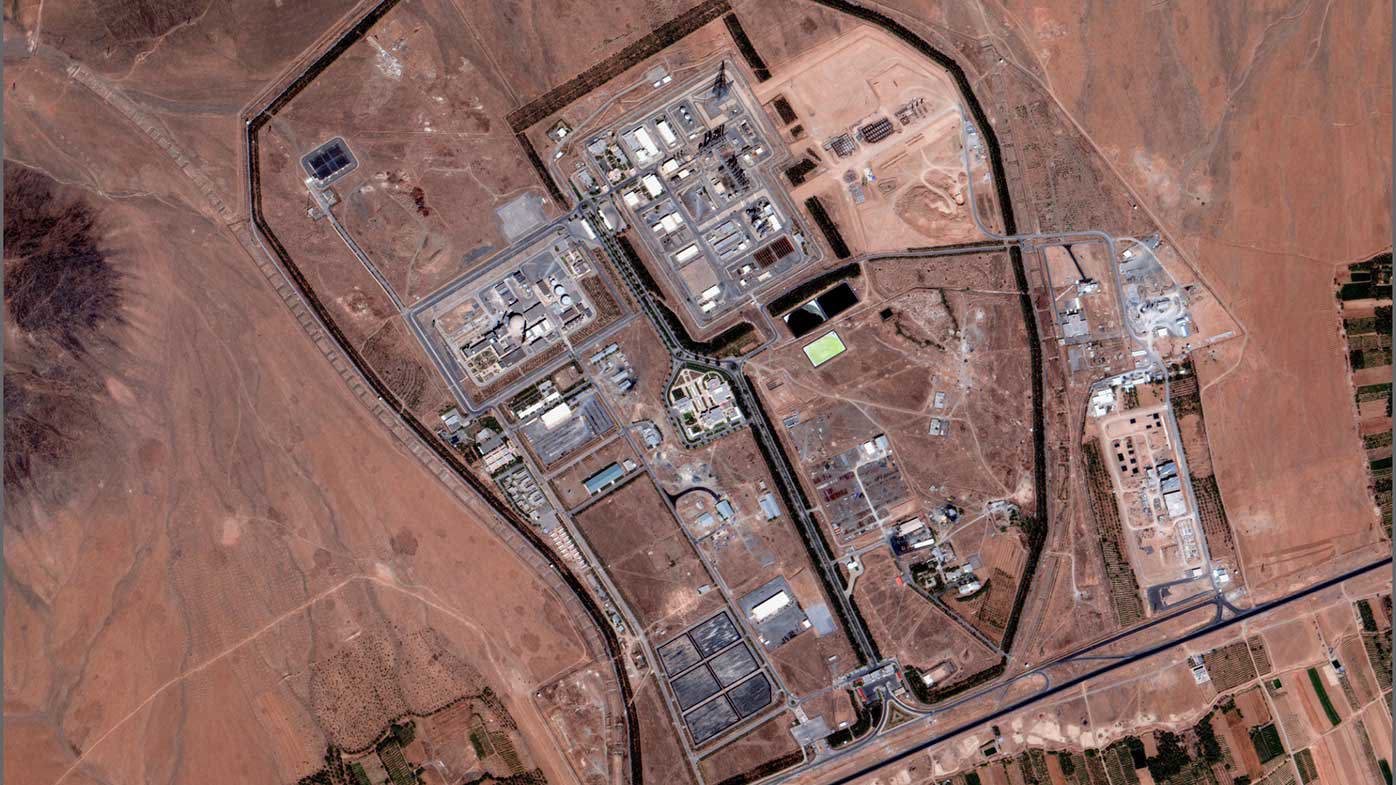
The tea in the glass was still steaming when the windows began to rattle. In the ancient city of Isfahan, where the turquoise tiles of the Naqsh-e Jahan Square usually reflect a timeless blue, the air suddenly tasted of ozone and scorched earth. It wasn't the low rumble of a passing truck. It was the sharp, percussive crack of high-altitude precision meeting concrete and steel.
Deep beneath the mountain ridges, where the centrifuge halls of Natanz hum with a pitch so high it’s almost felt rather than heard, the world shifted. We often talk about geopolitics as a series of chess moves on a map. We see arrows, red circles, and satellite imagery grainy enough to hide the human cost. But for the people living in the shadow of the Zagros Mountains, "geopolitics" is the sound of a daughter waking up screaming because the sky just turned orange at 3:00 AM.
The headlines will tell you that Israel struck. They will tell you that Iran vowed to "exact a heavy price." They will use words like deterrence, escalation, and strategic depth. These words are bandages applied to a gaping wound. They obscure the reality of what it means to live in a world where the atom has been weaponized into a political ultimatum.
The Ghost in the Machine
To understand why the ground shook, you have to understand the silence that preceded it. For years, the conflict between these two powers has been a "shadow war." It was fought in the digital veins of power grids and the silent pings of maritime GPS spoofing. It was a war of whispers.
Then, the whispers stopped.
When an F-35 releases a payload designed specifically to penetrate meters of reinforced shielding, it isn't just targeting a facility. It is targeting a regime’s sense of invulnerability. Imagine a vault you’ve spent forty years building. You’ve buried it deep. You’ve surrounded it with anti-aircraft batteries and hidden it behind layers of diplomatic obfuscation. And then, in twenty minutes of surgical violence, someone proves the vault has no roof.
The technical reality of these strikes is staggering. We are talking about munitions that use GPS and inertial guidance to find a specific ventilation shaft from miles away. This isn't the carpet bombing of the previous century. This is a scalpel. But even a scalpel leaves a scar that never quite fades.
The Weight of the Vow
In Tehran, the response was immediate. It was rhythmic. It was predictable. The rhetoric of "crushing blows" and "unimaginable consequences" is a currency that has been devalued by decades of overprinting. Yet, this time, the tone felt different. There was a jagged edge to the official statements, a sense that the red lines hadn't just been crossed—they had been erased.
When a nation vows to "exact a heavy price," they aren't just talking to their enemy. They are talking to their own people. They are trying to reassure a shopkeeper in Tabriz and a student in Shiraz that the state can still protect its pride. But pride is an expensive shield.
The "heavy price" often translates into a jagged reality for the rest of the world. It means tankers in the Strait of Hormuz suddenly finding themselves in the crosshairs. It means cyber-attacks on desalination plants or hospital registries. It means that the price of oil, and by extension the price of the bread on your table, is now tied to a grudge held by men in darkened command centers thousands of miles away.
The Invisible Stakes
We often focus on the "nuclear" part of the nuclear sites. We worry about fallout, about radiation, about the nightmare scenario of a mushroom cloud. But the real fallout is psychological.
Consider a hypothetical engineer named Arash. He works at a facility not because he wants to build a weapon, but because he is a brilliant physicist who wants to serve his country's scientific advancement. After the strikes, Arash doesn't just see a damaged lab. He sees the fragility of his entire life’s work. He realizes that he is a target, not because of what he has done, but because of what he represents.
This is the human element that gets lost in the "standard content." Every missile strike is a message sent to a million Arashes. It tells them that nowhere is safe, that the invisible lines of international law are as thin as the paper they are written on.
The technical experts will argue over whether the centrifuges can be replaced in six months or two years. They will debate the U-235 enrichment levels and the thermal signatures of the impact zones. They miss the point. The damage isn't just in the hardware. The damage is in the trust.
The Calculus of Revenge
What does a "heavy price" actually look like?
History suggests it isn't a single event. It’s a slow, grinding accumulation of friction. It’s a drone launched from a desert hideout. It’s a localized blackout in a Mediterranean city. It’s the constant, low-grade fever of anxiety that defines modern life in the Middle East.
The strategy of "tit-for-tat" assumes that both players are rational and that they both know when to stop. But war isn't a game of chess. It’s a game of poker played in a room full of gunpowder with everyone holding a match. One player thinks they are "restoring balance." The other thinks they are "defending honor." Neither realizes the floor is soaked in kerosene.
Modern warfare has moved beyond the battlefield. When Israel strikes a site like Natanz or Isfahan, they are using kinetic force to achieve a diplomatic result. When Iran threatens a counter-strike, they are using the threat of economic and regional chaos to regain leverage. It is a dialogue of explosions.
The Echo in the Streets
The most profound impact of these strikes isn't found in the craters. It's found in the grocery stores.
Whenever the drums of war beat louder, the Iranian Rial shivers. Prices for imported medicine climb. Families start hoarding rice and oil. The "heavy price" is paid first by the mother trying to find affordable formula for her child while the government's budget is diverted toward replacing charred anti-aircraft systems.
The tragedy of the modern conflict is that the people who have the least to do with the decisions are the ones who bear the full weight of the consequences. The "invisible stakes" are the dreams of a generation that just wants to be part of the global community but is instead tethered to a cycle of strike and counter-strike.
We watch the news and see the smoke rising from a desert facility. We think, That is over there. That is a news story. But in a globalized world, "over there" doesn't exist. The microchips in your car, the gas in your tank, and the security of your digital identity are all connected to that smoke.
The Breaking Point
There is a limit to how much tension a bridge can hold before the steel itself begins to scream. We are reaching that point. The transition from "covert sabotage" to "direct military strike" is a fundamental shift in the architecture of the region.
The silence that used to follow these events has been replaced by a roar.
It isn't just about uranium. It’s about the fact that we have forgotten how to de-escalate. We have built a world where "winning" is defined by who can cause the most grief without triggering a total collapse. It is a precarious way to live.
The night the silence broke in Isfahan, it wasn't just a military operation. It was a reminder that the shadows are receding. The war is moving into the light, and the light is blinding.
The dust will eventually settle on the ruins of the nuclear sites. The rubble will be cleared. New machines will be ordered. But the memory of that orange sky stays. It lingers in the minds of the children who learned that night that the world is a place where the mountains can be broken.
The "heavy price" isn't a future threat. We are already paying it. We pay it in the loss of certainty, in the hardening of hearts, and in the slow, agonizing death of the hope that tomorrow might be quieter than today.
The glass of tea is cold now. The windows have stopped rattling. But in the stillness that follows, you can hear the sound of a thousand lives being recalculated, waiting for the next crack in the sky.
Would you like me to analyze the historical parallels between this escalation and previous Mediterranean conflicts?